
Educating Humanity, Revitalising Pancasila
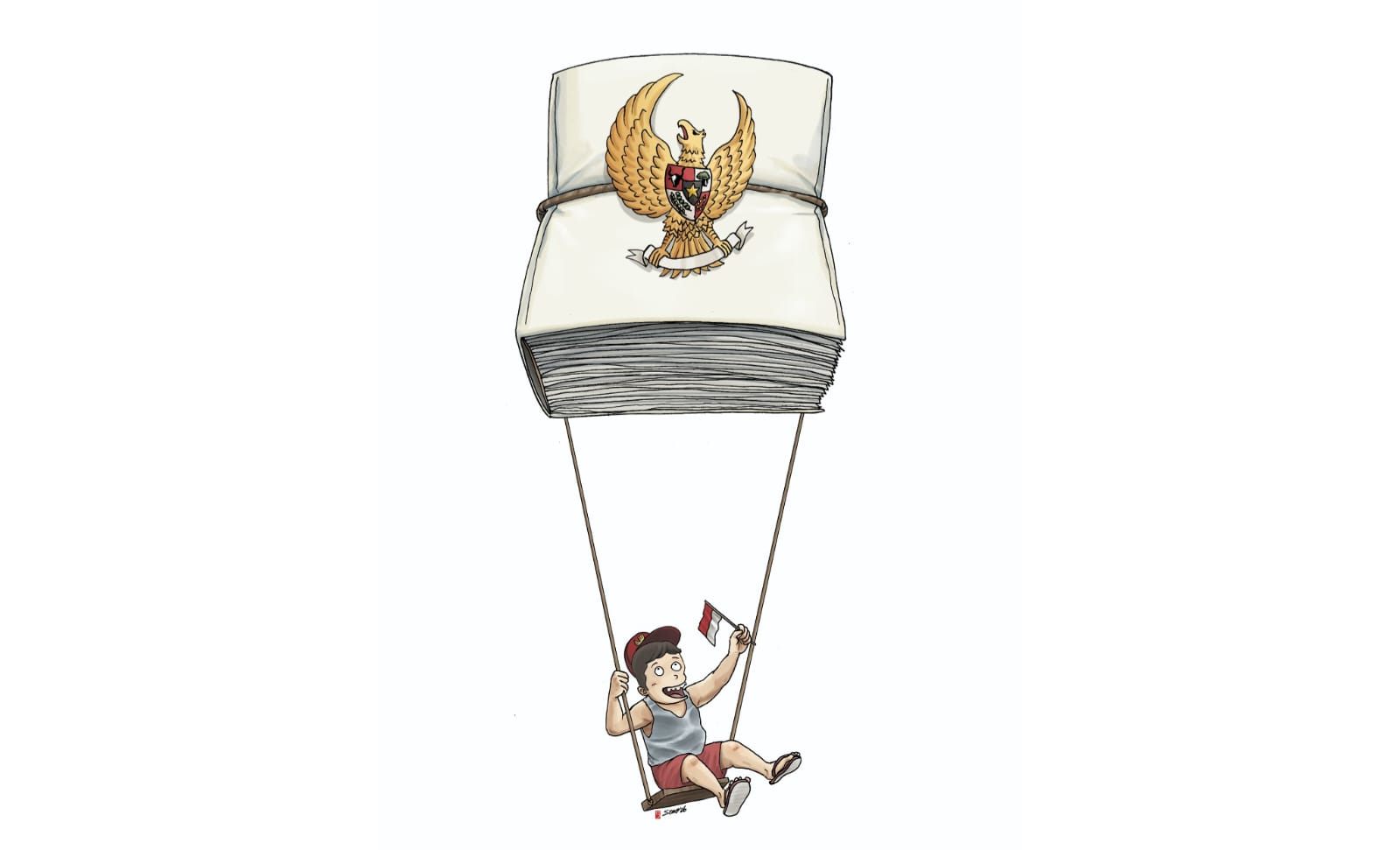
As the nation’s moral force, Indonesia’s largest Islamic community organisations recognise that amidst the rise of school bullying, hate speech on social media, the spread of fake news, and increasing intolerance in public spaces, the relevance of Pancasila has become an urgent question. Are the values inherited from the nation’s founders still alive in our society? More specifically, is Indonesian education still capable of producing individuals who embody Pancasila values?
Every 1st of June, the Indonesian nation commemorates the Birth of Pancasila. This momentum is not merely a ceremonial agenda, but a reminder to reassess the extent to which Pancasila is present in national life, particularly through education. This question becomes relevant as various moral and social issues continue to plague the public sphere. Bullying, intolerance, low social empathy, the spread of hoaxes, and declining ethics in communication indicate that advancements in science and technology are not necessarily accompanied by character maturity. We may succeed in producing academically intelligent generations, but we may not necessarily succeed in producing generations that are wise in using their intelligence.
In this context, the Birth of Pancasila must be interpreted as a call to strengthen the role of education as a means of building the whole human being. Pancasila is not just the state foundation, but also a way of life that guides the behaviour of citizens in daily life.
Education that Humanises
Pancasila contains the ideals of an Indonesian people who are faithful, uphold humanity, love unity, prioritise deliberation, and strive for social justice. These values are oriented towards respecting human dignity. Therefore, education based on Pancasila must be education that humanises humans. This idea is not new in the Indonesian educational tradition. Ki Hajar Dewantara positioned education as a process of guiding all the innate strengths within a child so they may achieve the highest level of safety and happiness as individuals and members of society. Education is not merely the transfer of knowledge, but also an effort to help humans grow fully—intellectually, morally, socially, and spiritually.
Humanising education means viewing students not as mere numbers in learning reports, but as unique individuals with different potentials and backgrounds. Schools are not only tasked with producing academically superior graduates but also with shaping individuals who possess empathy, are capable of cooperation, and are responsible for their social lives. This idea has been practised by various educational institutions in Indonesia, such as the Sukma Bangsa School in Aceh, which was born from the spirit of post-2004 tsunami recovery. By making humanity the foundation of education—even interpreting ‘Sukma’ as the ‘School of Human Excellence’—this experience shows that education rooted in humanity is not merely an ideal, but can be realised in daily practice.
This philosophy has a strong connection to Pancasila values. When a school places humanity at the core of education, it is essentially bringing the second principle to life. When students are accustomed to respecting differences and cooperating with everyone, they are learning to practice the third principle. When they are invited to engage in dialogue and deliberation, they are practising the fourth principle in real life. Thus, Pancasila does not have to be taught through rote memorisation alone. Its values can grow through a school culture that respects human dignity, warm relationships between teachers and students, and learning that fosters social concern and tolerance.
Instilling Pancasila
Schools are not just places to transfer knowledge, but also spaces for the formation of national character. Therefore, the instilling of Pancasila values is not enough through theoretical learning in the classroom; these values must be realised in daily practice. When students are taught to respect differences in religion, ethnicity, and social background, they are learning to practice the values of unity and humanity. When they are involved in deliberations to solve shared problems, they are practising democracy. When they are encouraged to care for peers experiencing difficulties, they are learning about social justice.
Furthermore, humanising education places the teacher as a role model. Exemplary behaviour has a far greater influence than verbal advice. Students will more easily understand the values of honesty, discipline, and responsibility when they see these values present in the lives of their teachers. This challenge becomes increasingly complex in the digital era. The younger generation lives in an environment filled with limitless information, but also faces the risks of hoaxes, hate speech, radicalism, digital bullying, and an instant culture that can erode character. In such a situation, Pancasila values become even more relevant. The second principle teaches respect for human dignity, serving as a bulwark against bullying and verbal violence in digital spaces. The third principle reminds us of the importance of maintaining unity amidst differing views. The fourth principle teaches a culture of dialogue as an alternative to the increasing polarisation found in public discourse.
Source: jawawa.id (https://jawawa.id/newsitem/educating-humanity-revitalising-pancasila-1780872471)
Originally published by Media Indonesia (https://mediaindonesia.com/opini/897997/mendidik-manusia-menghidupkan-pancasila), translated from Indonesian