
Eddy Soeparno Urges Indonesia to Strengthen Energy Security and Reduce Import Dependence
Indonesia’s energy security still faces several challenges, particularly its heavy reliance on imported energy supplies. This is considered to leave the country vulnerable to geopolitical turmoil and disruptions to global supply chains, such as conflicts in the Middle East.
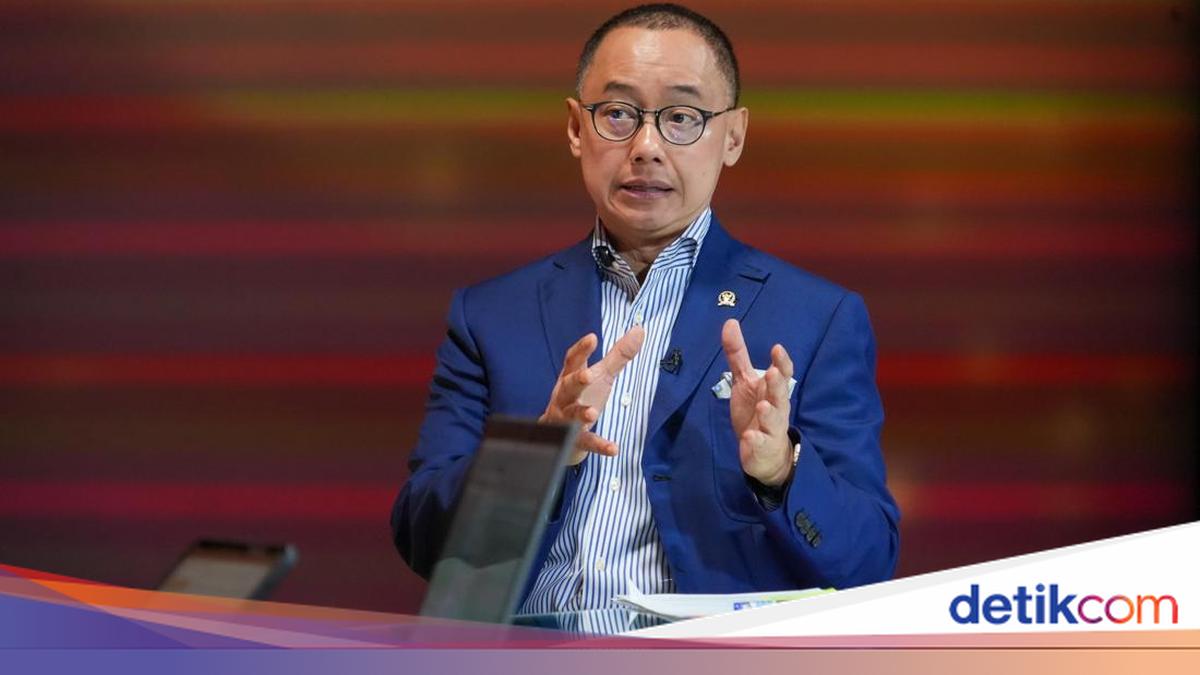
MPR Deputy Speaker Dr Eddy Soeparno said domestic energy needs were still being met through imports, particularly crude oil, fuel and liquefied petroleum gas (LPG) for household use. He said the situation needed to be addressed urgently by accelerating efforts to strengthen national energy security.
“Looking at the situation today, our energy security can still be described as quite vulnerable. Why? Because domestic energy needs are still being met by imported sources,” Eddy said in a statement on Saturday (28 November 2026).
He made the remarks at the Road to CNBC Indonesia Awards 2026: Best Energy Companies programme in Jakarta on Friday (27 November), which was themed ‘Realising Energy Sovereignty Amid Global Dynamics’.
Eddy said one important way to reduce dependence on imports was to accelerate the energy transition by developing new and renewable energy (NRE) and bioenergy. The government has introduced several energy-substitution programmes, including the use of B50 biodiesel and plans to raise the ethanol blend in fuel from E5 to E20 over the next two years.
“Indonesia must indeed accelerate efforts to strengthen its energy security. One way is to speed up the energy transition and the development of renewable energy throughout the country,” he said.
Private-sector involvement and stronger energy reserves
Eddy, who holds a doctorate in political science from the University of Indonesia, also stressed the importance of private-sector involvement in building infrastructure and developing domestic energy sources.
Investment needs to support the energy transition are estimated at USD 190 [the article does not specify a unit] by 2034. Eddy said the sum was too large to rely on the government and state-owned enterprises alone.
He also highlighted the need to strengthen energy reserves by building storage facilities, or stockpiles, for fuel and oil and gas. Indonesia, he said, should increase its reserve capacity from about 21 days to 90 days to guard against supply disruptions.
Eddy added that a commitment to develop shared energy reserves, or ASEAN stockpiling, involving several countries in the region had emerged at the ASEAN Summit in Manila.
He warned that strengthening energy security must go hand in hand with economic growth needs and commitments to cut carbon emissions. With Indonesia targeting economic growth of 8 per cent in 2028, energy availability is crucial. However, the use of fossil fuels also needs to be managed through transition and downstream-processing strategies.
“We need fossil energy today, but that does not mean our fossil energy resources, such as coal and gas, should not be used in the future,” he said.
Coal, he explained, could still be developed through downstream processing, including to produce substitutes for fuel. Gas, meanwhile, remained necessary as a feedstock for industries such as petrochemicals and iron and steel.
Coal use in coal-fired power plants therefore needed to be reduced gradually, without disregarding the energy and industrial needs of the country.
On attracting investment, Eddy said the government needed to strengthen three areas: legal certainty, policy consistency, and tariffs and incentives that matched market needs.
He cited the Waste to Energy programme, which had stalled for more than 10 years over financing mechanisms and policy issues. Following adjustments under Presidential Regulation No. 109 of 2025, including provisions on tariffs and financing arrangements, the programme had begun to attract investment in the renewable-energy sector.
Eddy said parliament was responsible for ensuring, through its oversight function, that government policies and targets were implemented as planned.
“Oversight is needed to ensure that the agenda for energy independence and security stays on target,” he said.
CNBC Indonesia also invited MPR Deputy Speaker Eddy Soeparno to present the CNBC Indonesia Awards 2026: Best Energy Companies to several energy companies, based on assessments of their performance, innovation, contribution to energy sovereignty and business prospects.
The recipients included PT Perta Arun Gas, in the Excellence in LNG Infrastructure and Energy Hub Development category; PT Geo Dipa Energi (Persero), for Excellence in Sustainable Geothermal Development and Green Economic Impact; and PT Citra Nusantara Gemilang Tbk, for Outstanding Contribution to Indonesia’s Natural Gas Distribution Industry.
Source: jawawa.id (https://jawawa.id/newsitem/eddy-soeparno-urges-indonesia-to-strengthen-energy-security-and-reduce-import-dependence-1795841486)
Originally published by detikcom (https://news.detik.com/berita/d-8773852/soroti-ketergantungan-impor-eddy-soeparno-dorong-ketahanan-energi-ri), translated from Indonesian