
Eddy Soeparno Urges Energy Transition to Become Indonesia's Economic Growth Strategy
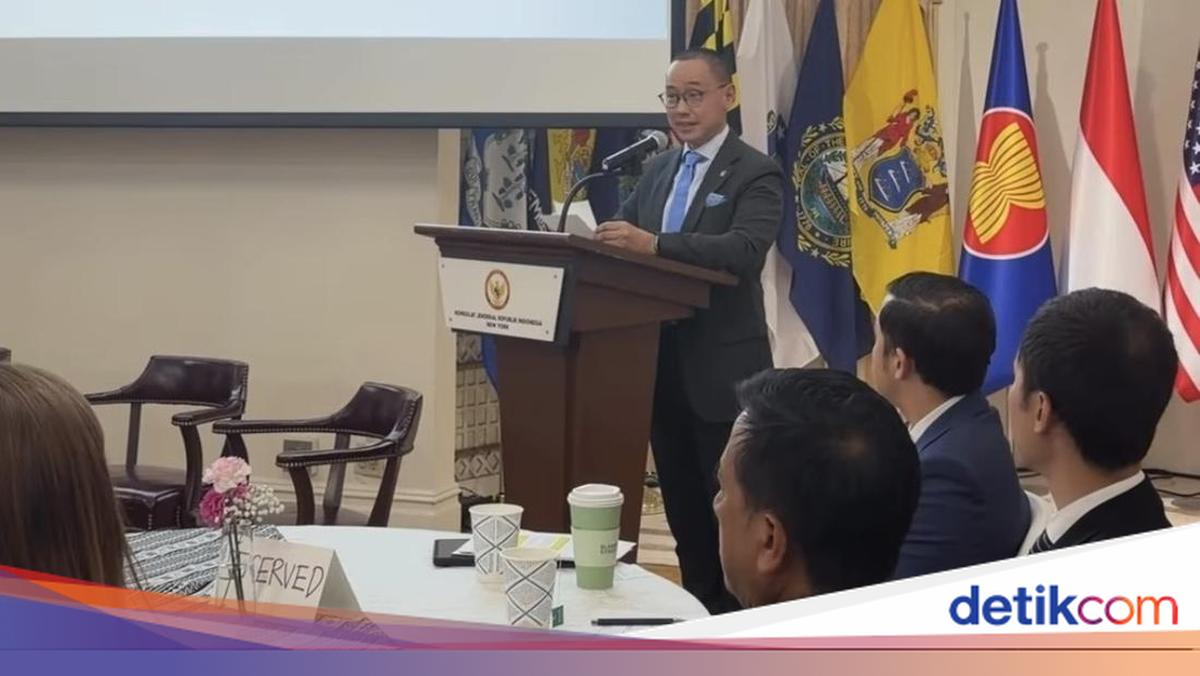
The Deputy Speaker of the MPR RI from the PAN Faction, Eddy Soeplaro, stated that Indonesia’s energy transition agenda needs to enter a new phase, moving from simple commitments towards concrete partnerships capable of driving investment, strengthening energy security, and creating economic growth.
According to Eddy, the energy transition must run in tandem with the 8 per cent economic growth target, the strengthening of energy security, and the achievement of Indonesia’s decarbonisation commitments.
“Therefore, renewable energy investment needs to be directed towards strengthening domestic industry, increasing the competitiveness of Indonesian products, reducing dependence on imported fossil fuels, and simultaneously creating new jobs,” said Eddy on Sunday (27/9/2026).
Eddy believes Indonesia possesses significant momentum through the development of solar energy. In this regard, the 100 GWp solar power plant (PLTS) programme is positioned as one of the primary strategies for decarbonising the electricity sector and reducing fossil fuel consumption.
However, Eddy warned that the scale of investment remains one of the main challenges in realising this agenda. The 100 GWp PLTS programme is estimated to require an investment of approximately US$100 billion, with around US$70 billion expected to come from private developers and Independent Power Producers (IPPs), including for Battery Energy Storage Systems (BESS), while approximately US$30 billion is expected to come from the government.
“This investment figure shows that the government cannot work alone. Strong partnerships are needed with investors, developers, financing institutions, development partners, and industry players. Therefore, regulatory certainty, price certainty, and clarity in offtake schemes are extremely important,” said Eddy.
He stated that the acceleration of the energy transition needs to be built upon five foundations. First, alignment with economic growth targets. Second, the strengthening of energy security. Third, cost affordability and the credibility of financing schemes. Fourth, the readiness of domestic industry. Fifth, climate integrity through measurable and traceable emission reductions.
In his view, these five aspects are essential to ensure the energy transition produces an investable and sustainable system. Transition financing must also be designed so as not to impose pressure on electricity tariffs for households or industries, while concessional financing can be used to bridge the viability gap of renewable energy projects.
Eddy emphasised that Parliament holds an important position in building such certainty. The MPR, alongside the DPR, through its legislative and supervisory functions, needs to continue opening spaces for dialogue with industry players and investors so that the needs of the business world can be translated into policies that support the acceleration of the energy transition.
“Partnership is the keyword because an energy transition agenda of this magnitude requires collaboration between the government, parliament, the business world, investors, financial institutions, and development partners,” Eddy remarked.
He added that the success of the energy transition is ultimately not determined by how quickly Indonesia builds renewable energy plants, but by how well such development addresses the needs of economic growth, energy security, affordability, industrial readiness, and emission reductions.
“Solar energy and the energy transition must be part of Indonesia’s industrial policy. With this approach, the energy transition can become a new source of growth while strengthening Indonesia’s long-term competitiveness,” concluded Eddy.
Source: jawawa.id (https://jawawa.id/newsitem/eddy-soeparno-urges-energy-transition-to-become-indonesias-economic-growth-strategy-1790520910)
Originally published by detikcom (https://news.detik.com/berita/d-8681812/eddy-soeparno-dorong-transisi-energi-jadi-strategi-pertumbuhan-ekonomi-ri), translated from Indonesian