
Eddy Soeparno Says Energy Transition Is a Long-Term Strategic Move
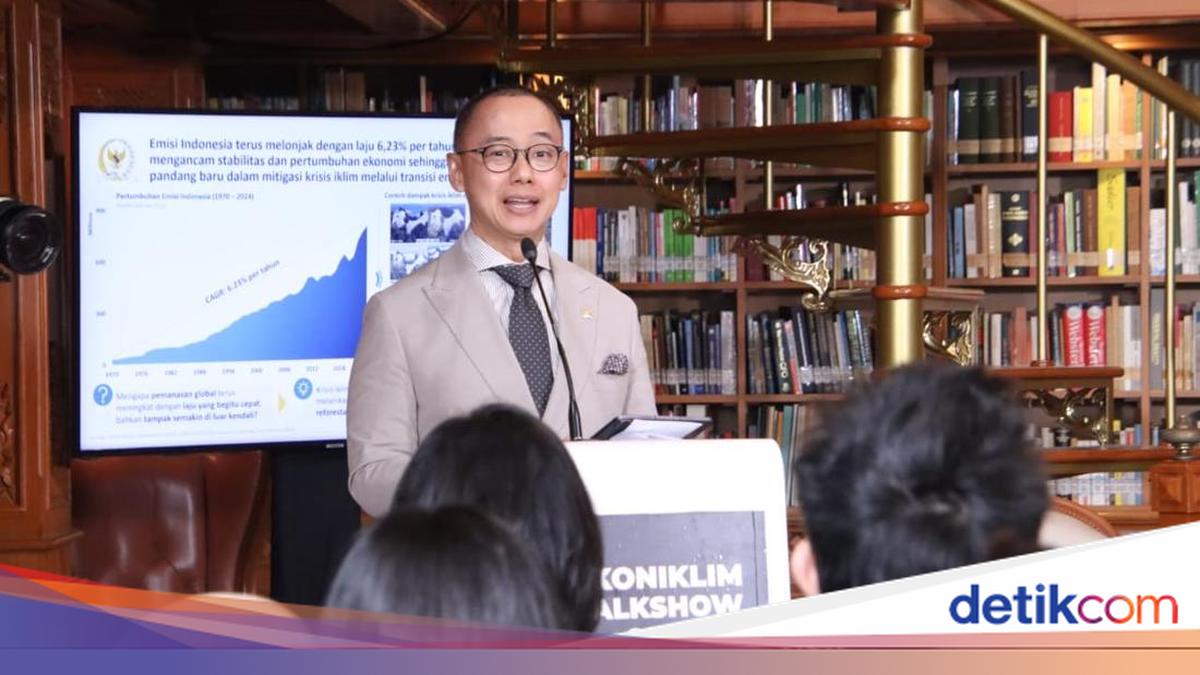
Deputy Speaker of the People’s Consultative Assembly (MPR RI) from the National Mandate Party (PAN), Eddy Soeparno, has asserted that the need for an energy transition is not solely a short-term response to global geopolitical upheaval, including the ongoing conflict in the Middle East. Eddy stressed that the energy transition is a long-term strategic necessity to strengthen energy security, maintain national economic competitiveness, and protect Indonesia from the impacts of the climate crisis. He made the remarks while delivering a keynote speech at the Ekoniklim 2026 forum organised by CNBC Indonesia in collaboration with the Climate Policy Initiative (CPI) at Wisma Habibie-Ainun, Kuningan, Jakarta. “The conflict in the Middle East indeed reminds us how vulnerable the global energy system is to geopolitical turmoil. However, I want to emphasise that with or without geopolitical conflict, the energy transition is a necessity and an inevitability for Indonesia,” Eddy said on Tuesday (28/7/2026). “Conflicts may subside, but the need to build a more resilient, cleaner, and more competitive energy system will always exist,” he added. The University of Indonesia political science doctorate holder stated that the energy transition is often positioned merely as a solution to oil price spikes or threats of energy supply disruptions. In fact, the more fundamental issue is how Indonesia builds an energy system capable of sustaining economic growth for decades to come, in line with President Prabowo Subianto’s vision. “If our orientation is only towards today’s crisis, then our energy policy will always be reactive. What we need is a long-term vision for 2045, 2060, and beyond, not just a response to the global situation in 2026,” he continued. Furthermore, the PAN deputy chairman explained that Indonesia has significant capital to become a major player in the global green economy. The country’s new and renewable energy potential reaches approximately 3,600 GW, supported by the world’s largest reserves of forests, peatlands, and mangroves, as well as the potential for developing CCS/CCUS and a carbon economy that can attract substantial new investment. However, to date, the renewable energy potential that has been utilised remains very small compared to the total capacity available. Therefore, Eddy reminded Indonesia not to fall into the trap of a dichotomy between energy security and energy transition. “A country that is too dependent on fossil energy will always be vulnerable to price fluctuations and geopolitical uncertainty. Therefore, a gradually designed energy transition with careful planning is the foundation of long-term energy security,” Eddy said. “Indonesia must maintain a balance between energy availability, price affordability, and electricity system reliability, so that the transition process takes place fairly without disrupting economic growth or public welfare,” he concluded.