
Eddy Soeparno Praises President's Decision Not to Raise Electricity Tariffs
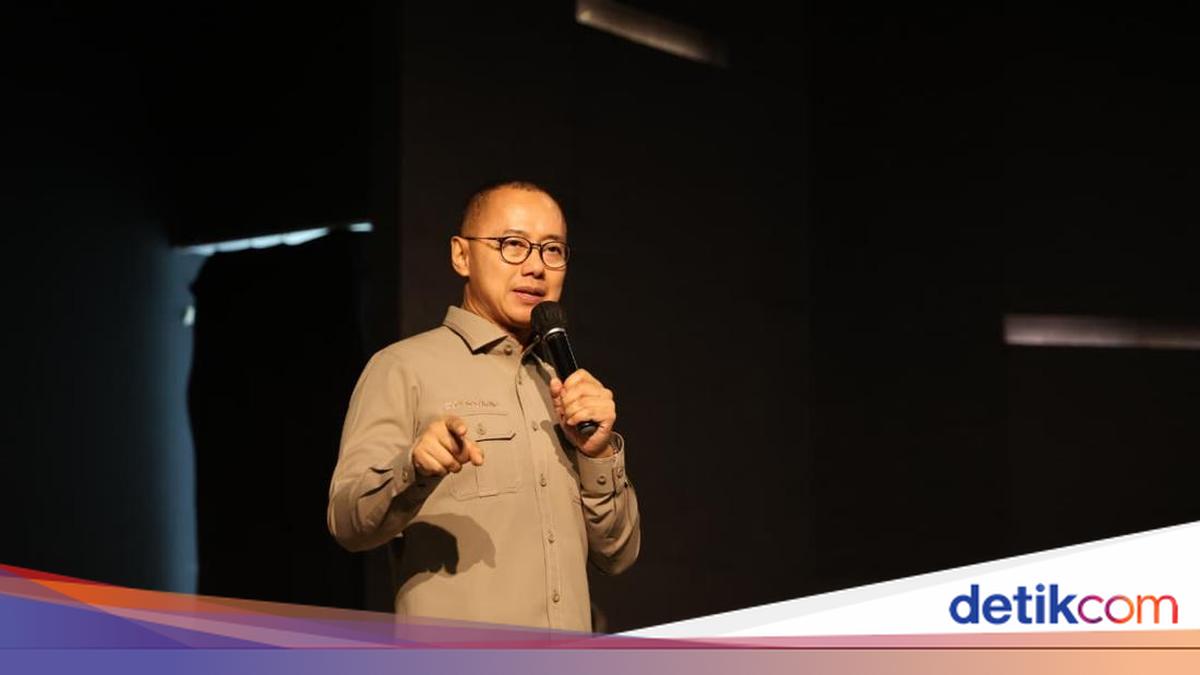
The Deputy Speaker of the MPR RI from the PAN Faction, Eddy Soeparno, believes that President Prabowo Subianto’s decision not to increase electricity tariffs is a strategic move that demonstrates the state’s commitment to the people amidst heavy pressure from both global and domestic energy sectors.
According to Eddy, this policy is inseparable from the current situation in the national electricity sector, particularly regarding the dependence on coal and gas as the primary sources for power generation. In this context, the state is facing not only price dynamics but also supply issues disrupted by geopolitical shifts.
“I appreciate that these electricity tariffs will not rise. We are currently facing two major challenges. First, the challenge of providing coal supplies that meet the needs and capacity of PLN’s power plants. Second, the availability of gas supplies, as coal and gas are the two main energy sources driving our power plants today,” Eddy stated in a written statement on Wednesday (1/7/2026).
Eddy emphasised that in a situation where global energy costs are experiencing high volatility and supply chain pressures are intensifying, the decision to hold electricity tariffs is not merely a populist policy, but a crucial instrument for economic stabilisation. He noted that without state intervention, an increase in electricity tariffs could potentially trigger a chain reaction affecting inflation, production costs, and public purchasing power.
However, the more fundamental subsequent challenge is ensuring that electricity subsidies are truly targeted, efficient, and equitable.
“What needs to be emphasised is that if electricity prices do increase in the future, they must still consider electricity for the lower economic classes. Particularly those in the 450 VA, 900 VA, and perhaps even 1,300 VA categories. For the industrial sector, especially small MSMEs with 2,200 VA capacity, attention must also be paid,” he continued.
He supports the government in conducting a thorough overhaul of the energy subsidy scheme, using a data-driven approach and cross-sector integration. Eddy believes that the main challenge regarding subsidies has not only been the budget size but also the accuracy of distribution and the prevention of potential misdirected subsidies.
Furthermore, he highlighted that electricity tariff policies must follow the principle of distributive justice, where wealthier groups no longer enjoy subsidies that should be allocated to vulnerable groups.
“For the larger consumption groups, I think it is similar to the analogy of fuel; for Pertamax, adjustments must be made, and for Pertamax Turbo, adjustments are necessary, but Pertalite must be maintained. Therefore, for MSMEs and the lower economic classes, it must be maintained. If possible, even the electricity discounts they currently enjoy should continue,” Eddy remarked.
Eddy also emphasised that the government should utilise this momentum to implement a more sustainable energy policy transition. The dependence on coal and gas, while still dominant, needs to be gradually reduced through energy diversification and the acceleration of investment in new and renewable energy.
“In the future, we cannot continuously remain in a cycle of holding prices every time pressure occurs. There must be an effort to build an energy system that is more resilient to global shocks, while simultaneously ensuring fair energy access for all Indonesian people,” he concluded.