
Eddy Soeparno Hears Students’ Views on Accelerating the Energy Transition
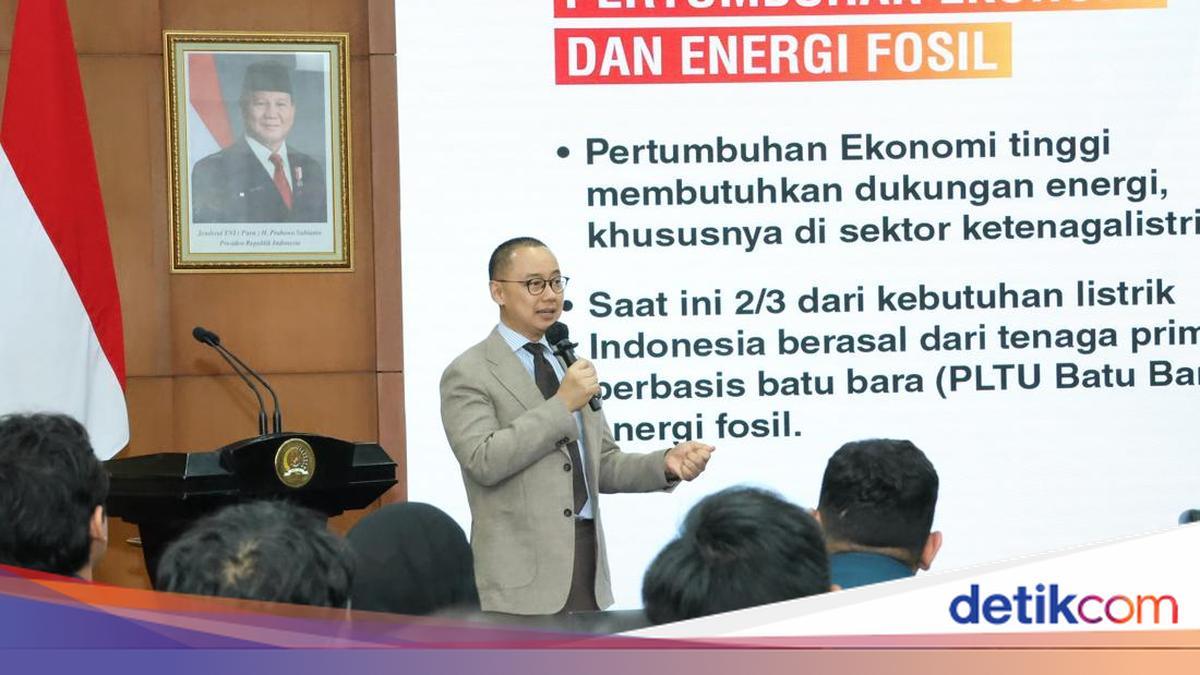
Eddy Soeparno, Deputy Speaker of the People’s Consultative Assembly (MPR) representing the National Mandate Party (PAN), received a delegation of student representatives from the Student Executive Board of Brawijaya University’s Faculty of Law at the MPR. During the discussion, Eddy outlined President Prabowo Subianto’s and the legislature’s commitment to accelerating the energy transition and preventing a climate crisis.
“Energy transition is a strategic step to reduce Indonesia’s dependence on energy imports, confront the impacts of the climate crisis and strengthen national energy security,” Eddy said in a statement on Thursday (22 October 2026).
The PAN deputy chairman urged students to view the energy transition not only as an environmental issue, but also as a matter of the economy, development priorities and social justice.
“Energy transition is a necessity, not a choice,” he said.
Eddy explained that around 65 per cent of Indonesia’s electricity supply still comes from fossil fuels, with coal among the main sources. This dependence supports the reliability of electricity supplies, but also produces greenhouse gas emissions.
According to Eddy, the effects of the climate crisis are increasingly apparent in rising temperatures, extreme weather, floods, changing seasonal patterns and threats to agricultural and fisheries productivity. These impacts could also push up food prices and increase economic vulnerability among the public.
“Future economic growth cannot ignore sustainability. We want to grow and develop, and we want reliable energy sources, but we must not forget our commitment to decarbonisation, or reducing carbon emissions,” he said.
Eddy, who holds a doctorate in political science from the University of Indonesia, called for greater use of solar, geothermal, wind, hydro and bioenergy to reduce dependence on imported energy. Developing these sectors could also strengthen domestic industry, attract investment and create jobs.
“Efforts to address the climate crisis are part of fulfilling the constitutional mandate. This is set out in Article 28H(1), concerning the right to a good and healthy environment, and Article 33(4), concerning a national economy that is sustainable and environmentally conscious,” he added.
Eddy also reaffirmed his commitment to completing the Draft Law on New and Renewable Energy (RUU EBET) and the Draft Law on Climate Change Control (RUU PPI), which are currently included in the House of Representatives’ National Legislation Programme.
He said the legal framework was important to clarify the direction of the energy transition, reduce greenhouse gas emissions, strengthen climate-change mitigation and adaptation, and protect the most vulnerable groups in society.
“Economic growth and environmental preservation must go hand in hand. If necessary, we must sacrifice various economic and industrial programmes if they have a very negative impact on the environment,” he said.
At the meeting, Eddy called on academics and students to play an active role in developing solutions to energy challenges and the climate crisis. He said these challenges could not be resolved by the government or legislature alone, but required collaboration across all sections of society.
“Climate issues and the energy transition cannot be addressed by one party alone, whether the government or businesses. They must be tackled collectively, in collaboration with all elements of society,” he concluded.