
Eddy Soeparno Discusses the Urgency of Energy Transition for Economic Growth
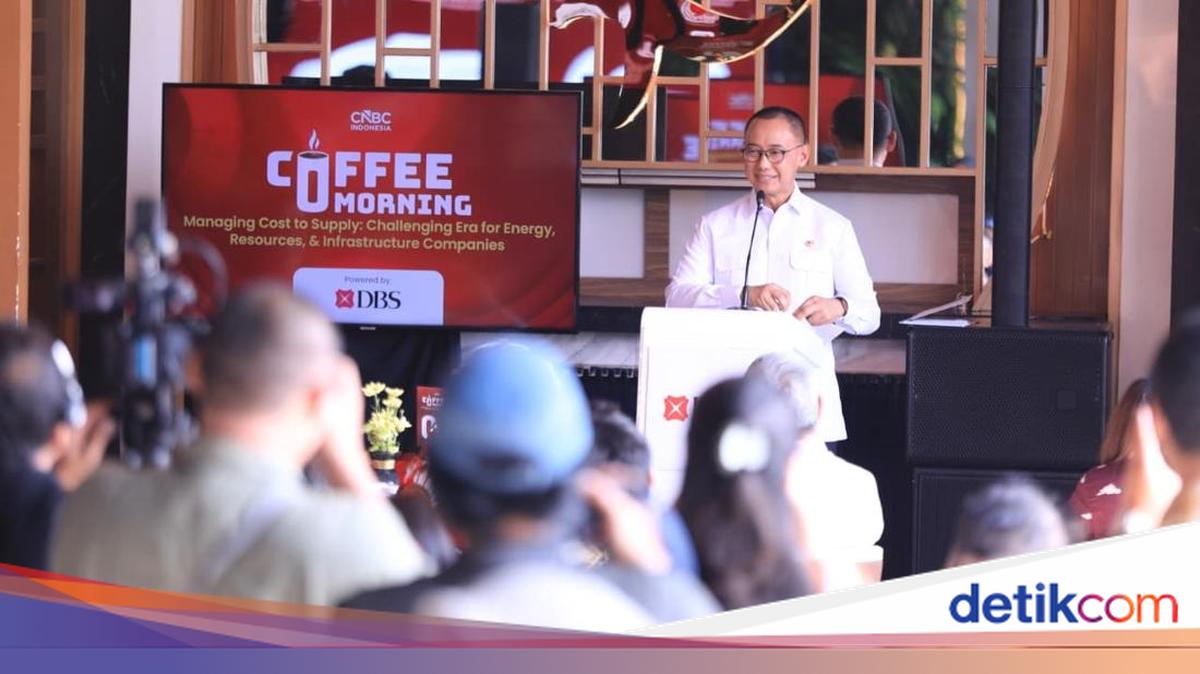
Eddy Soeparno, Deputy Speaker of the People’s Consultative Assembly (MPR RI) from the PAN faction, has asserted that amid rising global geopolitical uncertainty, Indonesia must accelerate its steps towards energy self-sufficiency so as not to remain dependent on energy imports that are vulnerable to global political and economic dynamics.
According to him, the various conflicts and geopolitical tensions of recent years demonstrate that energy resilience has become an inseparable part of economic resilience and national security.
Eddy made these remarks whilst serving as keynote speaker at the DBS–CNBC Indonesia Morning Coffee discussion titled ‘Indonesia’s Energy Resilience Amid the Global Geopolitical Crisis: Challenges, Potential, and Policy Direction’ in Jakarta.
“Amid rising global geopolitical uncertainty, Indonesia must not continue to depend on imported energy. Energy self-sufficiency must become a national priority because it concerns economic stability, industrial competitiveness, and the welfare of the people,” Eddy said on Thursday (23/7/2026).
He stressed that the energy transition must become a strategic instrument to achieve three objectives simultaneously. First, strengthening energy resilience through the diversification of energy sources and the reduction of import dependence. Second, serving as an engine of national economic growth towards the 8 per cent target through the creation of new investment, industrial downstreaming, and green jobs.
“Third, fulfilling Indonesia’s commitment to reducing carbon emissions and accelerating decarbonisation towards sustainable development. These three targets, according to Eddy, are not conflicting agendas but can be achieved simultaneously through the right policies,” he continued.
The Deputy Chairman of PAN explained that the path towards energy self-sufficiency must be pursued through an accelerated energy transition grounded in the strength of national resources. Indonesia possesses enormous potential in new and renewable energy, ranging from solar, geothermal, hydro, and wind to bioenergy, all of which must be utilised optimally to reduce dependence on imported fossil fuels.
Beyond accelerating the development of new and renewable energy, Eddy believes that governance reform in the energy sector must also become a priority. The preparation of a national oil and gas balance, improvements to the Domestic Market Obligation (DMO) mechanism, greater investment certainty, and the strengthening of national energy planning are all needed so that Indonesia’s energy system becomes more efficient, robust, and capable of anticipating various global risks.
“Energy resilience is built by adding production capacity whilst at the same time improving good governance, regulatory certainty, and long-term planning so that Indonesia is ready to face various global challenges,” he concluded.