
Eddy Soeparno Discusses Indonesia's Opportunity to Become the Largest CCS Hub in Asia-Pacific
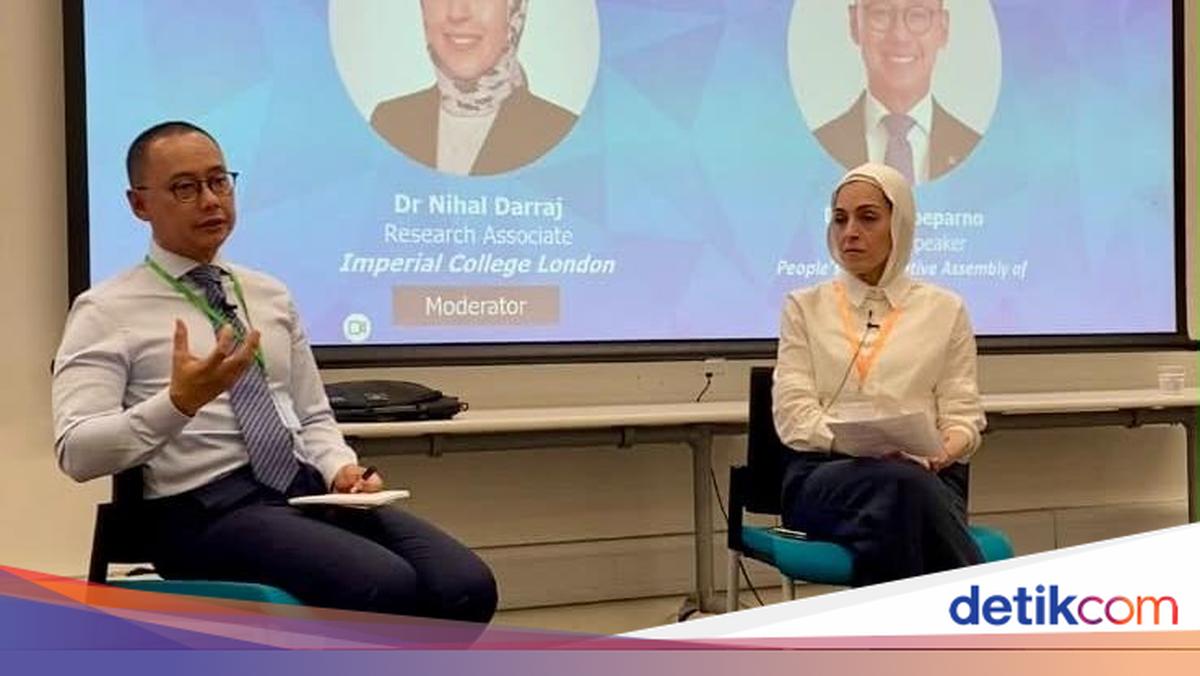
The Deputy Speaker of the MPR RI from the PAN Faction, Eddy Soepostarno, asserted that Indonesia possesses a strategic opportunity to become the largest carbon storage hub in the Asia-Pacific region. This role would play a vital part in advancing the regional decarbonisation agenda.
Eddy shared these insights as a keynote speaker during a Fireside Chat at London Climate Week 2026, held at Imperial College London, United Kingdom. Speaking before an audience of academics, industry leaders, investors, and international policymakers, Eddy explained that decarbonisation challenges in the Asia-Pacific cannot be solved by individual nations acting in isolation.
He noted that regional collaboration is essential, connecting countries with high emission reduction targets to those possessing adequate carbon storage capacity and supporting infrastructure. “Indonesia holds a massive advantage as it is estimated to have a carbon storage capacity of approximately 600 gigatonnes of CO2, the largest in Southeast Asia. This potential positions Indonesia not only to reduce domestic emissions but also to serve as part of the regional infrastructure supporting decarbonisation across the Asia-Pacific,” Eddy stated in a release on Thursday (25/06/2026).
Eddy added that the development of Carbon Capture and Storage (CCS) technology is a crucial instrument for lowering emissions in hard-to-abate sectors, such as natural gas processing, petrochemicals, cement, steel, and power generation. According to the PAN Deputy Chairman, Indonesia possesses strong foundations to accelerate CCS development through over five decades of experience in the oil and gas sector, extensive subsurface data, existing infrastructure, and evolving technical expertise. Currently, Indonesia has identified at least 19 CCS and CCUS projects at various stages of development.
During the session, Eddy also highlighted the importance of strengthening cross-border cooperation in carbon management. He assessed that the success of cross-border CCS development requires regulatory harmonisation, intergovernmental cooperation, internationally recognised monitoring and verification standards, and investment certainty for businesses.
“Indonesia has taken a step forward by building a comprehensive CCS regulatory framework, including opening space for cross-border CCS activities. This serves as an essential foundation for making Indonesia a strategic partner in regional decarbonisation cooperation,” said Eddy.
He explained that Indonesia has strengthened international cooperation regarding the carbon economy and CCS, including through the Article 6 scheme of the Paris Agreement with Norway, increased cooperation with Singapore, and the development of dialogues and feasibility studies with Japan and South Korea.
Furthermore, Eddy emphasised that CCS is part of a national development strategy that integrates emission reduction goals with enhanced industrial competitiveness, energy security, and job creation. He noted that CCS development has the potential to attract investments of up to approximately USD 43 billion and contribute significantly to the national economy.
“The energy transition must go hand in hand with economic growth. Indonesia does not view emission reduction and development as two conflicting agendas. Rather, through technologies such as CCS, both can proceed together to create sustainable and competitive development,” asserted the UI Doctor of Political Science.