
Ecuador Becomes Global Shrimp King, Indonesia Faces Fierce Competition
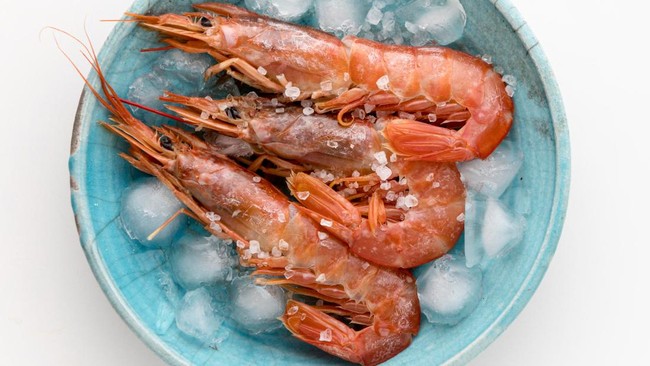
Ecuador’s shrimp industry serves as a vital lesson for Indonesia, demonstrating how marine commodities can evolve into a primary economic powerhouse. The Ecuadorian shrimp industry has flourished by relying on technology, disease-resistant breeding, lower pond densities, and automated feeding and oxygenation systems.
This technology has enabled shrimp survival rates in Ecuador to reach approximately 95%, significantly higher than the Asian average. Over the last decade, Ecuador’s shrimp exports have quadrupled, projected to exceed US$8 billion (approximately Rp 141.04 trillion) by 2025. Ecuador has been the world’s largest shrimp exporter since overtaking India in 2020, with the United States, China, and the European Union serving as its primary markets.
Technological advancement is not the only factor driving Ecuador’s shrimp industry; shifts in global trade have also opened new markets, particularly in the United States. While Ecuador was already a major supplier to the EU and China, penetrating the North American market—previously dominated by Indian shrimp—was difficult. This situation changed following US tariff policies against India. Last year, India faced tariffs of up to 50% after the Donald Trump administration pressured the nation regarding Russian oil purchases. With combined duties reaching nearly 60% for Indian shrimp compared to approximately 10% for Ecuadorian shrimp, US importers shifted to Ecuadorian products. Consequently, American consumers now consume more shrimp from Ecuador than from any other nation, a position Ecuador has maintained even after tariffs were eased earlier this year.
However, surging production is now presenting new challenges. Since recovering from white spot disease outbreaks, the country’s shrimp production has increased by about 15% annually, causing a supply glut that has pressured global market prices. In May, the price of Ecuadorian shrimp at the farmer level was around US$2.40 per kilogram, lower than India’s US$2.99 and China’s US$5.32. Some nations have also begun taking steps to protect their domestic industries; China periodically restricts imports citing plant and animal health concerns, while Brazil has implemented high import duties, and Mexico faces issues with shrimp smuggling.
Climate change is also adding complexity to the industry. The El Niño phenomenon, which raises temperatures in Pacific coastal regions, can disrupt various agricultural commodities, yet warmer conditions actually support shrimp growth. With increasing supply, Ecuador’s next challenge is no longer just producing more shrimp, but finding new buyers. Balkan nations and the Persian Gulf are being viewed as potential markets. In the US, companies are also developing higher-value-added products, such as peeled and breaded shrimp. Fast-food restaurants are incorporating shrimp into burger menus, while the food industry promotes various shrimp-based dishes like ceviche, tempura, and risotto. For Ecuador, production expansion has transformed shrimp from a pond commodity into a vital economic sector. The next challenge is ensuring that supply growth is balanced with demand growth.
What about Indonesia? Indonesia is also a country with an export-oriented shrimp industry. Data from the Indonesian Central Bureau of Statistics (BPS) shows that the value of Indonesia’s wild-caught shrimp exports has fluctuated in recent years, with a sharp surge in 2024 and remaining at a high level in 2025. According to BPS data, export values were recorded at US$59.7 million in 2021, US$55.4 million in 2022, and US$62.7 million in 2023. The value then surged to US$138.9 million in 2024, before slightly declining to US$136.7 million in 2025, or approximately Rp 2.4 trillion.
This potential decline may be due to several pressures facing Indonesia, ranging from US import tariffs and food safety issues to competition with Ecuador. Notably, in August 2025, the US Food and Drug Administration (FDA) detected Cesium-137 (Cs-137) in a single sample of frozen shrimp from Indonesia, sourced from PT Bahari Makmur Sejati. However, it was confirmed that the product did not reach US consumer markets. Following this finding, the United States began implementing special certification for shrimp originating from Java and Lampung as of 31 October 2025, to ensure exported products are free from Cs-137 contamination. The Indonesian government, through the Ministry of Marine Affairs and Fisheries (KKP), has been appointed as the certifying body to ensure every shipment to the US meets these safety requirements.
Source: jawawa.id (https://jawawa.id/newsitem/ecuador-becomes-global-shrimp-king-indonesia-faces-fierce-competition-1788602049)
Originally published by CNBC Indonesia (https://www.cnbcindonesia.com/research/20260905135116-128-765265/ekuador-jadi-raja-udang-dunia-ri-hadapi-persaingan-sengit), translated from Indonesian