
Economy Slows, MSME Ecosystem Needs Strengthening from Upstream to Downstream
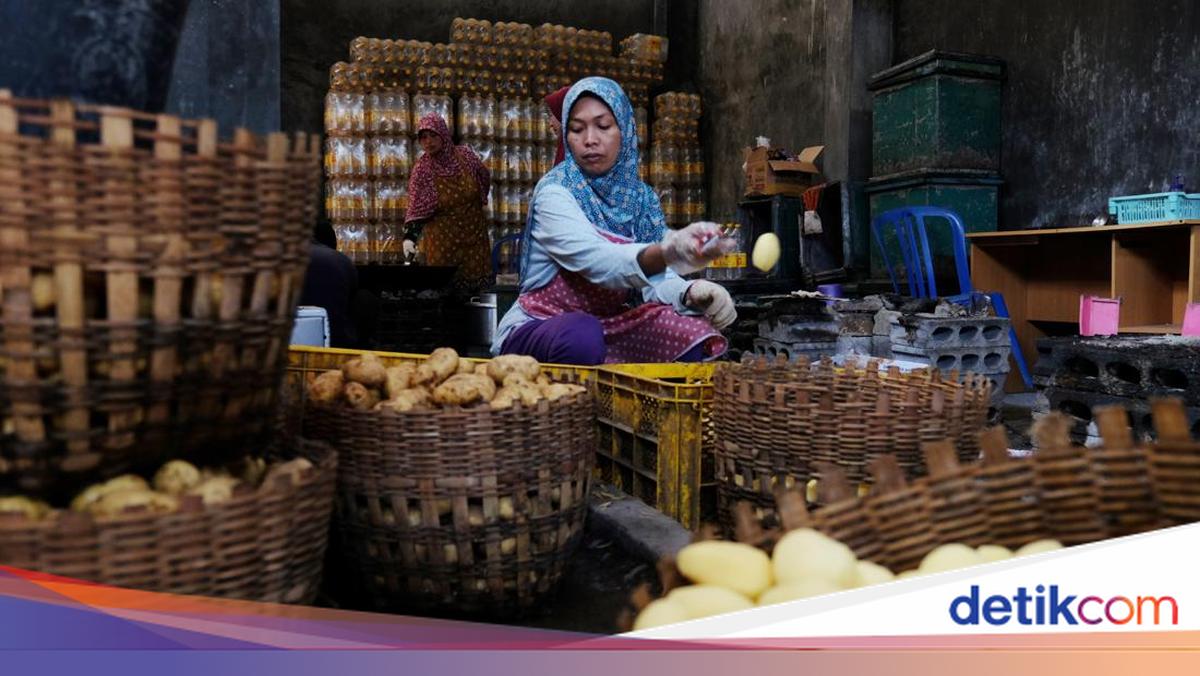
Weakening purchasing power and a global economic slowdown are challenges that the micro, small, and medium enterprise (MSME) sector must urgently address. Strengthening the ecosystem that connects business actors with the government, universities, and markets is considered vital to ensure MSMEs remain the backbone of the national economy.
Deputy Speaker of the People’s Consultative Assembly (MPR) Lestari Moerdijat stated that the challenging global and national economic conditions require a precise policy response, especially as the decline in public purchasing power directly pressures the MSME sector. ‘MSMEs are the backbone of the people’s economy. Facing these heavy global and national economic conditions requires caution and the right policies,’ she said during an online discussion themed ‘Challenges for MSMEs Amid the Global Economic Slowdown’ held by the Denpasar 12 Discussion Forum on Wednesday.
Moerdijat highlighted that the main problem currently is the lack of market demand, rather than just a shortage of working capital. She emphasized the need for appropriate policies and support from various parties to maintain and encourage the growth of the national MSME sector.
Deputy for Entrepreneurship at the Ministry of MSMEs, M. Riza Damanik, acknowledged that the sector cannot face these difficult conditions alone. He noted that his ministry has implemented various policy innovations to address the challenges. With over 56 million MSME units recorded, the vast majority of which are micro-enterprises, Riza expressed hope for the development of integrated data to consolidate the sector’s information for better development efforts. The government has also issued Presidential Regulation Number 38 of 2026 on National Entrepreneurship Development, serving as a 20-year roadmap aimed at ensuring MSMEs not only grow in number but also improve in quality.
Agus Purnomo Wibisono of Batoo Farm Adventure revealed that MSME development is often hampered by a lack of connection between producers and markets, with producers frequently unable to access quality seeds and fertilisers. He argued that this issue is not limited to agricultural MSMEs but is a general problem, stressing the need to build an ecosystem where all stakeholders and MSME actors are interconnected from production to marketing.
Wawan Shokib Rondli, Head of the Research and Community Service Institute (LPPM) at Muria Kudus University, pointed out a disconnect between MSMEs and universities. He assessed that the sector cannot transform on its own, whereas universities can serve as a source of knowledge and innovation through their research outcomes.
Member of Commission VII of the House of Representatives (DPR), Yoyok Riyo Sudibyo, argued that the fundamental need for MSMEs is to ensure everything they produce can be sold. He noted that the large domestic population could provide a market for MSME growth but warned against the market being dominated by imported goods. Yoyok proposed that MSMEs be given broad opportunities to participate as raw material suppliers for the government’s Free Nutritious Meals (MBG) programme and called for an end to sectoral ego among stakeholders to advance the national economy.
Eva Kusuma Sundari of the NasDem Women’s Academy Steering Committee stated that the global economic slowdown has a serious impact on domestic conditions. She revealed that the National Development Planning Agency (Bappenas) and the International Labour Organization (ILO) have prepared an economic action plan in the form of a care economy, which could positively impact several sectors, including food. Eva expressed hope that the government could assist daycare businesses facing various challenges, noting that the development of the care economy is creating new opportunities and jobs in the MSME sector.
Senior journalist Saur Hutabarat observed that in normal economic times, the MSME sector is almost invisible because it is doing well. However, in abnormal conditions, the strength of MSMEs becomes apparent, as seen during the 1998 economic crisis and the pandemic. He stressed the importance of maintaining the health of the MSME sector during normal times so that it can serve as the nation’s economic resilience during crises.