
Economists View Pressure on Middle Class and Rising Rents as Triggers for Santa Market's Decline
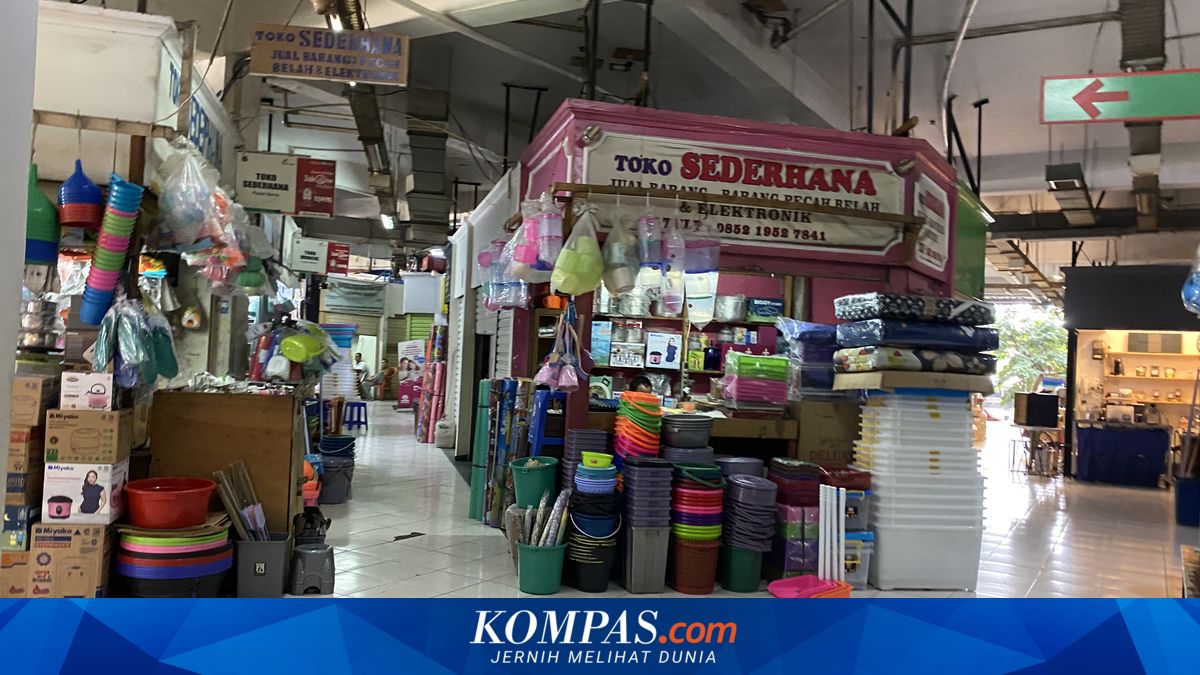
The dimming of Santa Market in Kebayoran Baru, South Jakarta, is not merely interpreted as a drop in visitor numbers but also as a reflection of shifts in urban economic structures and the reconfiguration of creative spaces in South Jakarta.
Santa Market, which once served as an icon of creative space for young people in the mid-2010s, is now facing a different phase.
The bustle that was once synonymous with coffee communities, music, and independent creators is slowly being replaced by a calmer and more sporadic atmosphere.
He assesses that Santa Market’s heyday occurred when the space managed to differentiate itself from other consumption centres in South Jakarta. However, that advantage did not last long as economic and social dynamics changed rapidly.
He emphasises that Santa Market initially grew as an alternative space offering a different experience from malls or conventional cafes.
“Santa Market reached its peak around 2014 when coffee communities, vinyl, books, and creative business actors entered and transformed the market space into a hangout spot as well as a community space,” said Adrian when contacted by Kompas.com on Wednesday (22/4/2026).
However, according to him, that success actually became the beginning of new pressures that later emerged in the space.
As popularity increased, rental prices were also pushed up. This condition made many small tenants who previously formed part of the creative ecosystem start struggling to survive.
In addition to cost pressures, Adrian highlights that Santa Market also faces more structural issues, namely changes in the purchasing power of the middle class.
He explains that the middle class group plays a significant role in supporting consumption spaces like Santa Market.
“BPS data shows that the middle class and those approaching the middle class comprise 66.35% of the population and contribute 81.49% of societal consumption,” he stated.
However, he added that pressures on this group have also become increasingly evident in recent years.
“The IMF notes that the middle class share in Indonesia has been declining since 2019. This means that pressure on real consumption is indeed occurring,” said Adrian.
According to Adrian, changes in consumer behaviour now are no longer just about buying goods or visiting a place, but about the efficiency of experiences.
He assesses that this shift makes spaces like Santa Market increasingly difficult to compete with more integrated areas.
Blok M, for example, is cited as an area that has managed to utilise spatial consolidation more effectively.
Adrian explains that Blok M now no longer stands as a single point, but as an ecosystem of areas.
Within it, there are various nodes of activities from M Bloc Space, Blok M Hub, Blok M Plaza, to the Literacy Park, all of which are connected spatially and functionally.
“This is what is called agglomeration economy. The more business actors gather in one area, the greater the efficiency and attractiveness,” said Adrian.
According to him, this condition creates a chain effect that strengthens visitor flows and extends visit durations.
Adrian also highlights that Blok M’s success is not only determined by business actors, but also by the integration of policies and public infrastructure.
“The revitalisation of Blok M Hub, the development of the Literacy Park, to transportation connectivity make this area more accessible,” he stated.
He assesses that the combination between the public and private sectors is an important factor in building sustainable urban spaces.
In this context, Santa Market is seen as lacking equivalent ecosystem support.
When other creative spaces began to emerge with more curated and integrated concepts, Santa Market lost the uniqueness that once made it stand out.
“When a space no longer has differential advantages, it will be difficult to maintain its position as a destination,” said Adrian.
He added that in the context of modern cities, the competitiveness of spaces is not only determined by products, but also by the experiences offered.
Adrian also sees a shift in the consumption structure of young people that is accelerating this change.
The current young generation, according to him, no longer seeks spaces that are merely places to gather, but those offering clear identity and social experiences.
Source: jawawa.id (https://jawawa.id/newsitem/economists-view-pressure-on-middle-class-and-rising-rents-as-triggers-for-santa-markets-decline-1777009994)
Originally published by Kompas (https://megapolitan.kompas.com/read/2026/04/23/19180241/ekonom-nilai-tekanan-ke-kelas-menengah-dan-kenaikan-sewa-picu-pasar-santa?utm_source=ABC&utm_medium=rss), translated from Indonesian