
Economists urge strengthening fundamentals to stabilise rupiah
Global pressures indeed affect many developing countries’ currencies. However, empirical evidence shows that in the past one to two years, many global currencies have actually strengthened against the US dollar.
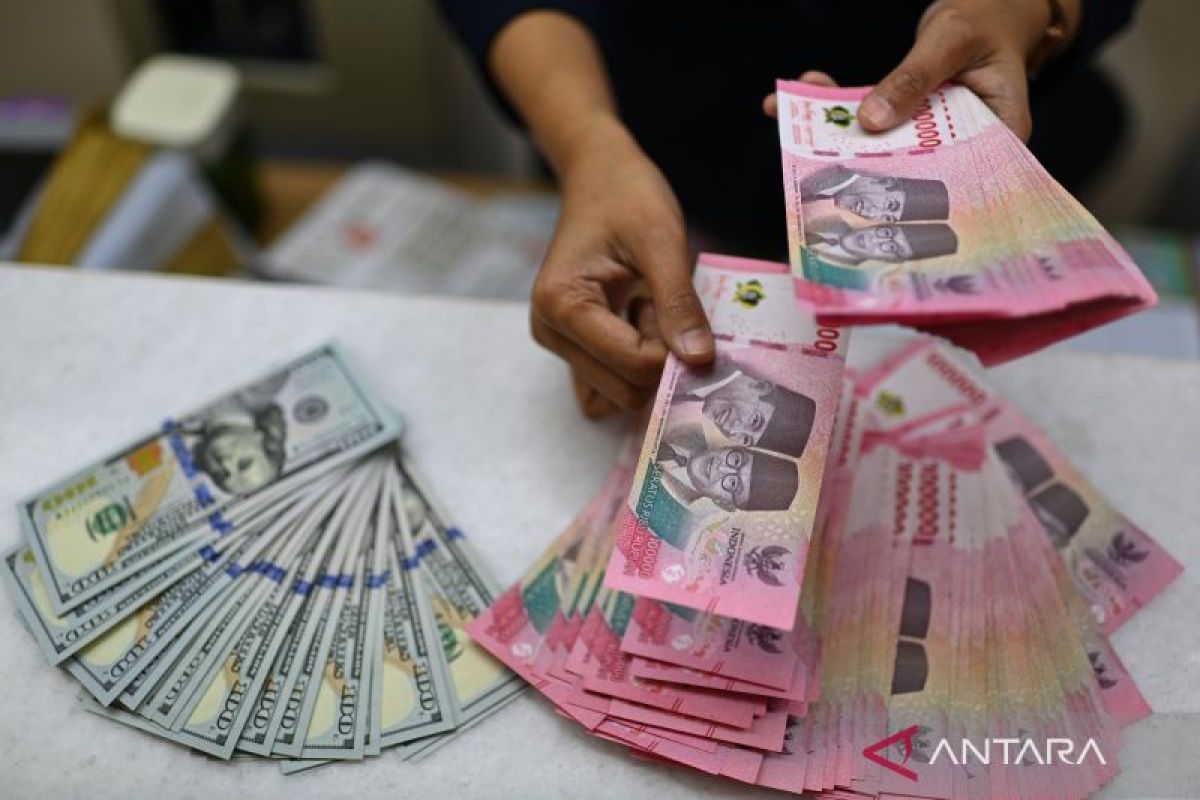
Economists are urging the strengthening of national economic fundamentals to maintain the rupiah’s exchange rate stability, following its weakening against the US dollar, which is seen as a signal to bolster the real sector and domestic productivity.
“Global pressures indeed affect many developing countries’ currencies. However, empirical evidence shows that in the past one to two years, many global currencies have actually strengthened against the US dollar,” said Farouk Abdullah Alwyni, Senior Economist at the Center for Financial, Economic and Development Studies at Binawan University.
According to Farouk, the rupiah’s historical weakening against the US dollar should not be viewed solely as a result of global currency strength but as an opportunity to enhance overall national economic resilience.
He noted that currencies such as the Malaysian Ringgit, Euro, Swiss Franc, and several commodity-based and emerging market currencies have shown strength against the US dollar, indicating room for improvement in domestic economic structure.
Farouk stated that rupiah stability cannot be maintained solely through foreign exchange market intervention or interest rate adjustments. While monetary policy remains important for short-term stability, medium- to long-term exchange rate strength depends on the strength of the real sector.
He stressed the importance of bolstering household purchasing power and protecting the middle class as the mainstay of national consumption, tax revenue, and domestic demand stability.
Additionally, Farouk urged a more competitive and equitable tax system, particularly for the middle class, MSMEs, and job-creating sectors, to sustain healthy domestic consumption and economic growth.
He also called for accelerated deregulation and de-bureaucratisation, stronger exports and tourism foreign exchange, and development of strategic import substitution industries to reduce dependence on imported raw materials.
“Currency stability is fundamentally tied to confidence in production capacity, a conducive business climate, and a nation’s economic competitiveness,” he said.
Farouk emphasised that rupiah strengthening must be achieved through structural approaches: bolstering the real sector, expanding the middle class, boosting national productivity, expanding exports and tourism foreign exchange, and reducing strategic import dependence to strengthen Indonesia’s economic fundamentals.