
Economists Say Non-Subsidised Fuel Prices Cannot Immediately Fall Despite Global Oil Price Decline
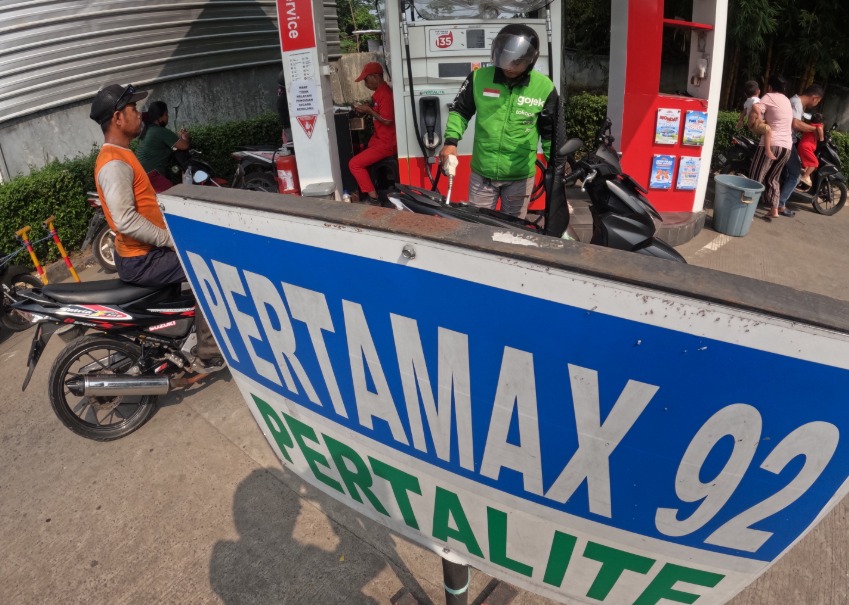
Non-subsidised Fuel (BBM) prices are being questioned by the public as global oil prices decline following the end of the conflict between Iran and the United States (US). Several economists have explained that these non-subsidised fuel prices cannot drop immediately alongside the easing of global oil prices.
“Fuel prices in Indonesia do not always follow global oil prices directly, because the price paid by the public at petrol stations is not determined solely by crude oil prices, but is a combination of regional market prices for finished fuel products, the Rupumn exchange rate, procurement, storage, and distribution costs, corporate margins, and taxes,” said Bank Permata Chief Economist, Josua Pardede, when contacted on Wednesday (17/6/2026).
Josua explained that all these factors must be calculated using an average over a specific period, rather than daily prices. For subsidised fuels such as Pertalite and Solar, he noted that pricing is more of a state policy decision considering public purchasing power and the capacity of the State Budget (APBN). Consequently, when global oil prices fall, the resulting fiscal space may first be used to reduce the burden of subsidies and compensation that had previously swelled.
“It is not immediately passed on as a price reduction at petrol stations. As for non-subsidised fuel, adjustments follow market mechanisms, but they do not move daily as they use an official formula and government oversight; therefore, the real issue is not whether fuel prices should drop, but how transparent the government is in communicating these pricing components to the public to prevent political manipulation,” he said.
Based on his calculations, the ideal economic price for Pertamax currently sits around Rp16,500 per litre, which is approximately Rp250 higher than the current selling price. With the new selling price of Rp16,250, Pertamax is still being sold approximately Rp250 per litre below its economic cost.
According to Josua, the high economic cost of Pertamax was triggered by a surge in global crude oil prices that exceeded the APBN assumption of US$70 per barrel. This condition was exacerbated by the depreciation of the Rupiah, which increased energy import costs.
He assessed that the price increase of Pertamax from Rp12,300 to Rp16,250 per litre was a necessary corrective measure to reduce the financial pressure previously borne by Pertamina due to price suppression.
“If the price of Pertamax is held at Rp12,300 for too long, the burden must be borne by Pertamina,” said Josua.
Separately, energy economics expert from Padjadjaran University (Unpad), Yayan Satyaki, stated that the peace between Iran and the US will serve as a positive sentiment for the global energy market as it has the potential to pressure global crude oil prices. He believes the downward trend in oil prices could eventually impact domestic non-subsidised fuel prices, including Pertamax. However, he noted that a reduction in Pertamax prices back to the Rp12,300 level is unlikely to happen in the short term.
“A price decrease will certainly occur and could impact Pertamax, but reaching the Rp12,300 level again will not happen that quickly,” said Yayan.
Yayan predicted that the decline in global oil prices would occur gradually. In this scenario, oil prices could correct by approximately 1% to 3% per day and continue for the next few months. Nevertheless, the direction of global energy prices will still depend heavily on geopolitical developments and the success of the peace implementation between the two nations.
Yayan noted that the market also needs to monitor the dynamics of Brent oil prices, which are currently showing a weakening trend. He believes Brent prices could continue to fall until early July 2026 before experiencing an increase from August to September as the summer season ends in the Northern Hemisphere.
“We see Brent prices falling further, with the possibility of continuing to decline until early July. After that, there is potential for an increase in early August to September when summer ends,” he said.
Furthermore, Yayan assessed that the global oil market has not yet entered a new price equilibrium in the near future. Based on the Short Term Energy Outlook (STEO) published by the US Energy Information Administration (EIA), the market is still in a transition phase towards a new equilibrium.
He noted that the increase in US oil production, which is expected to reach 14 million barrels per day, will be one of the main factors preventing a surge in global oil prices post-peace. Assuming the conflict ends and global energy supply stabilises, Yayan estimates global oil prices could move within the US$80-US$90 per barrel range until the end of the year. Subsequently, prices could potentially fall further to the US$75-US$85 per barrel range by the end of the year or early next year.
Source: jawawa.id (https://jawawa.id/newsitem/economists-say-non-subsidised-fuel-prices-cannot-immediately-fall-despite-global-oil-price-decline-1781707847)
Originally published by Media Indonesia (https://mediaindonesia.com/ekonomi/901589/ekonom-sebut-harga-bbm-nonsubsidi-tak-bisa-langsung-turun-saat-harga-minyak-dunia-melandai), translated from Indonesian