
Economists Say B50 Strengthens Energy Independence, Foreign Exchange Savings Could Drive Economic Transformation
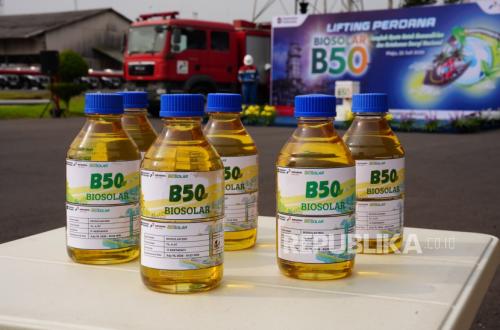
A number of academics have responded positively to the government’s policy of strengthening energy self-sufficiency through the implementation of B50 biodiesel. Economist at Manado State University (Unima) Robert Winerungan assessed that stopping diesel imports provides major benefits for the economy, particularly through foreign exchange savings. “Most of our foreign exchange is spent on fuel imports and paying debts. Now if that fuel, diesel, is no longer imported, that Rp170 trillion is a huge foreign exchange saving. So B50 greatly saves foreign exchange. Our foreign exchange is no longer drained by fuel imports. There are still fuel imports, but no longer diesel,” Robert said when contacted on Saturday (15/8/2026).
According to Robert, the benefits of these foreign exchange savings can be broadened if the space created is used to strengthen Indonesia’s technological capabilities. Mastery of technology is considered capable of increasing productivity and reducing production costs, so that national products become more competitive compared to products from other countries. He also sees that the increased use of palm oil as a feedstock for biodiesel can create certainty of demand, which ultimately helps maintain sales and price stability for the commodity. Robert also appreciated the performance of the Ministry of Energy and Mineral Resources (ESDM) in accelerating the implementation of the energy self-sufficiency policy through B50.
“That is spectacular. So the essence is that the major role for fuel that is no longer imported means foreign exchange can be used for technology transfer. Our Indonesia will be more advanced. So foreign exchange is not drained, and if that foreign exchange is used for technology transfer, it will make our Indonesia even more advanced,” he said.
The magnitude of B50’s benefits for energy security is also reflected in a study by energy economics expert at Padjadjaran University (Unpad) Yayan Satyakti. According to Yayan, the palm oil industry has long played a major role in the economy, from absorbing millions of workers, helping reduce poverty in rural areas, to generating foreign exchange through exports and reducing imports.
Yayan assessed that the increase in biodiesel use to B50 needs to be accompanied by strengthening the supporting ecosystem. This is because the increase in the biodiesel portion also increases the need for feedstock. Therefore, increasing the productivity of smallholder oil palm plantations, diversifying feedstocks, and strengthening financing are important so that B50 can run sustainably.
“Fix the levies and install a safety valve for the blend now, diversify into waste-based feedstocks while protecting food through a Highest Retail Price instead of export quotas, and start increasing smallholder plantation productivity immediately, then B50 becomes an energy security victory that Indonesia can truly bear, both fiscally and environmentally,” Yayan said.
A number of prerequisites highlighted by Yayan have been reflected in the Ministry of ESDM’s policies. Yayan noted that Minister of ESDM Decree Number 113.K/EK.05/MEM.E/2026 has set the policy direction for biodiesel blending until 2030 by considering three important aspects: feedstock readiness, financing, and infrastructure.
With this approach, the B50 policy implemented by the Ministry of ESDM is not solely oriented towards increasing the biodiesel percentage. Ecosystem readiness is also a consideration before the blend is increased. This is important to maintain the programme’s sustainability while ensuring that B50’s benefits for energy security can be obtained optimally.
“The gate requirements are the guide. The decree itself acknowledges that the blending pathway depends on financing readiness, which is precisely the variable the model found to be the binding constraint,” Yayan said.
Yayan’s study also shows that feedstock needs can be managed through increasing productivity and replanting smallholder plantations, so that it does not rely solely on opening new land.
“With adequate financing, feedstock, and infrastructure support, B50 has the opportunity to become an important instrument to strengthen energy security while reducing Indonesia’s dependence on imported energy,” Yayan stressed.
Previously, the government stated that the implementation of B50 is one of the steps in achieving energy self-sufficiency. The programme is marked by the use of palm oil-based biodiesel to meet national diesel needs.
B50 implementation came into effect on 1 July 2026. The policy is also said to have an impact on foreign exchange savings because Indonesia no longer imports diesel in previous quantities. The government estimates foreign exchange savings from the policy to reach Rp170 trillion, or around 9.5 billion US dollars.
Source: jawawa.id (https://jawawa.id/newsitem/economists-say-b50-strengthens-energy-independence-foreign-exchange-savings-could-drive-economic-1786805525)
Originally published by Republika (https://ekonomi.republika.co.id/berita/tjt92p522/ekonom-nilai-b50-perkuat-kemandirian-energi-penghematan-devisa-bisa-dorong-transformasi-ekonomi), translated from Indonesian