
Economist's Notes on the Appointment of Destry Damayanti as Bank Indonesia Governor
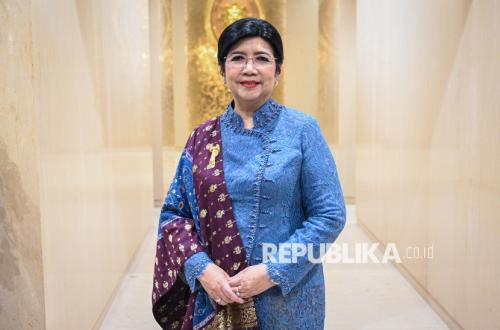
Economist Josua Pardede has commented on the selection process of Destry Damayanti as the Governor of Bank Indonesia (BI) and the future direction of its policies. He emphasised that the independence of the central bank must be preserved.
“From the perspective of the selection process, I see that the institutional mechanism is quite clear and follows the proper stages, but there is one important note regarding independence,” Josua stated when contacted on Thursday (3/9/2026).
He explained that Destry was the sole candidate for BI Governor proposed to the House of Representatives (DPR RI) by President Prabowo Subianto on 10 August 2026. Subsequently, Commission XI of the DPR RI conducted a fit and proper test on 26 August 2026, reaching a consensus through deliberation on 27 August 2026. The DPR RI then granted approval in a plenary session on 1 September 2026, leading to Destry’s inauguration on 2 September 2026, based on Presidential Decree Number 92/P of 2026.
Josua noted that the mechanism complies with regulations, as the BI Governor is appointed by the President with the approval of the DPR RI. The greatest advantage of Destry’s selection is policy continuity.
“Destry is not a newcomer to the BI system, so the risk of sudden policy changes is relatively small. However, because there was only one candidate, the space for the DPR and the public to compare the visions of various candidates was more limited. Therefore, I believe it was appropriate that one of the main issues in the fit and proper test was Destry’s ability to maintain BI’s independence when there is pressure from the government to accelerate economic growth,” he remarked.
Furthermore, Josua assessed that BI’s policy direction under Destry’s leadership is likely to continue existing policies with a stronger emphasis on the balance between stability (pro-stability) and growth (pro-growth).
Destry’s first statement after being inaugurated was deemed very clear by Josua: the short-term priority remains stability, as stability is a prerequisite for creating room for growth. At the same time, she introduced policy principles that are impactful, inclusive, integrated, and supported by inter-institutional synergy. She also emphasised that BI’s mandate, based on the amendments to the Financial Sector Development and Strengthening Law (UU P2SK), includes supporting sustainable growth, the real sector, and job creation.
“So, I see that the BI era under Destry will be more explicit in supporting growth, but this does not mean it will transform into a central bank that pursues growth at the expense of the Rupiah and inflation,” said the Chief Economist of Permata Bank.
Maintaining the BI Rate
In line with this policy direction, Josua projects that BI will maintain the benchmark interest rate, known as the BI Rate, in the upcoming Board of Governors Meeting (RDG) in September 2026. This takes into account inflation levels and global dynamics.
“Concretely, I expect the BI Rate to be maintained at 5.75 per cent in the near future, rather than being immediately lowered to chase growth. The reason is that while domestic inflation is low and controlled, external risks do not yet allow for aggressive easing,” he said.
Inflation for August 2026 was recorded at 3.19 per cent, remaining within BI’s target range of 2.5 per cent plus or minus 1 per cent. Conversely, the current account deficit in the second quarter of 2026 widened to 3.34 per cent of Gross Domestic Product (GDP), the largest since late 2018, following a sharp decline in the goods surplus and an expansion in the oil and gas deficit.
“At the same time, geopolitical uncertainty, oil prices, and global interest rates remain high. In such conditions, cutting interest rates too early could once again increase pressure on the Rupiah,” he explained.
“Therefore, a key characteristic of BI under Destry will likely be the strengthened use of policy mixes, rather than a sole reliance on the BI Rate,” he continued.
Josua added that Destry directly stated that BI has three main policy groups: monetary, macroprudential, and payment systems. Stability can be maintained more through monetary policy, while support for growth can be achieved through macroprudential policy, including incentives for banks to increase credit to priority sectors.
This is consistent with the August RDG decision: BI maintained the rate at 5.75 per cent but increased foreign exchange market interventions, improved market interest rate structures, maintained liquidity adequacy, provided hedging incentives for foreign currency sources and direct investment, and maintained loose macroprudential policies.
“In my view, this approach is appropriate because BI can remain tough on Rupiah risks, while being more flexible and targeted in providing liquidity for the domestic economy,” he concluded.
Source: jawawa.id (https://jawawa.id/newsitem/economists-notes-on-the-appointment-of-destry-damayanti-as-bank-indonesia-governor-1788418735)
Originally published by Republika (https://ekonomi.republika.co.id/berita/tkrxsb490/ini-catatan-ekonom-soal-terpilihnya-destry-damayanti-sebagai-gubernur-bi), translated from Indonesian