
Economists: Finance Minister Suahasil Must Prioritise Productive Spending
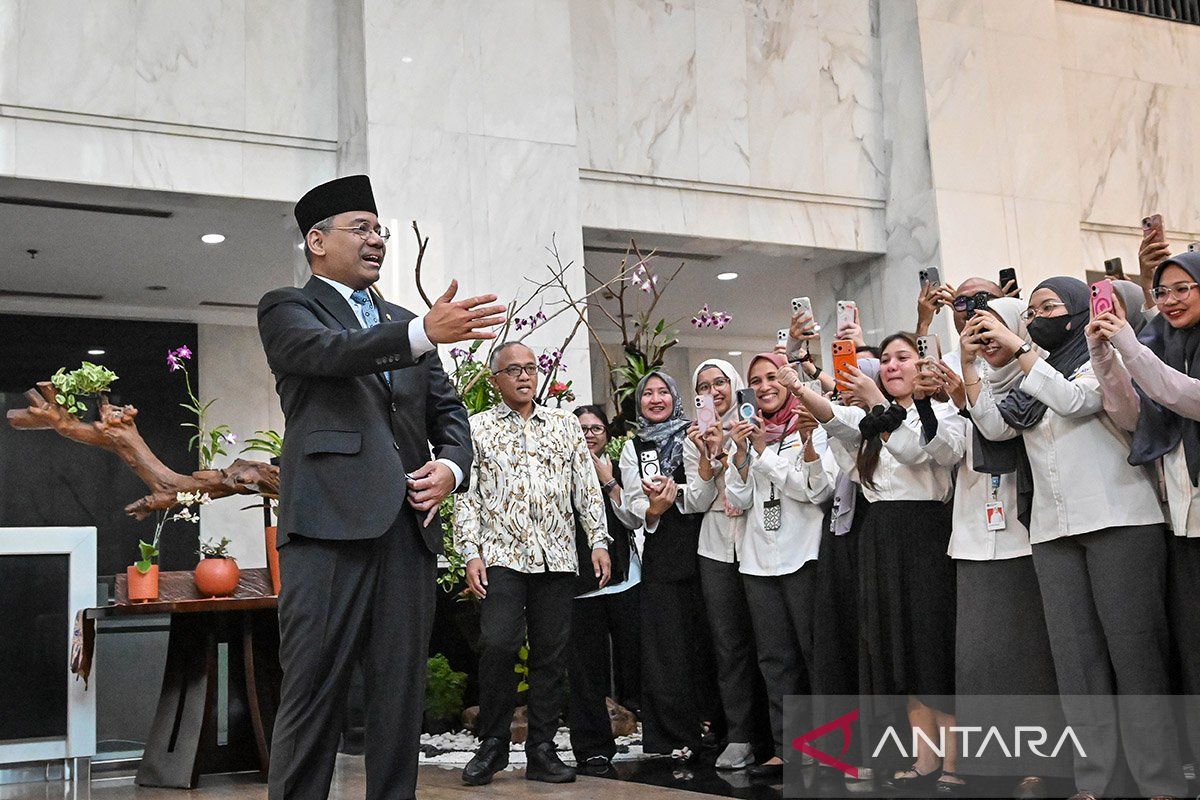
Jakarta (ANTARA) - Economists believe that Finance Minister Suahasil Nazara needs to prioritise productive spending to ensure the State Budget (APBN) remains credible while providing a multiplier effect for economic growth.
Executive Director of the Institute for Development of Engineering and Finance (Indef), Esther Sri Astuti, noted that while Suahasil possesses economic competence, the challenge for the Finance Minister lies in ensuring the budget is directed towards priority programmes with broad, long-term impacts.
“What is needed is a Finance Minister who acts as a good gatekeeper of the APBN and can maintain fiscal discipline,” Esther told ANTARA in Jakarta on Monday. She added that this gatekeeping function involves not only fiscal discipline but also ensuring budget allocations generate widespread multiplier effects for the economy.
Esther stated that implementing fiscal discipline requires a conducive policy ecosystem to allow the Finance Minister to optimally perform their role as the guardian of state finances. She explained that the quality and precision of spending allocations are crucial, as government expenditure must be directed towards activities that provide long-term economic benefits.
Esther believes the target deficit of 2.4 per cent of Gross Domestic Product (GDP) can be achieved through a combination of economic growth, expenditure control, and the strengthening of domestic revenue. “The ‘cleaning up’ programme of Mr Purbaya must continue, and fiscal discipline must be implemented so that the 8 per cent economic growth target for 2029 can still be achieved,” she said.
Meanwhile, Chief Economist of PT Bank Danamon Indonesia Tbk, Irman Faiz, assessed that Suahasil’s appointment as Finance Minister reflects fiscal policy continuity rather than a fundamental change in direction. “We see this reshuffle as a signal of fiscal continuity, not a change in Indonesia’s fiscal regime,” Irman remarked.
According to Irman, Suahasil’s experience as Deputy Finance Minister since 2019 and her background as a technocrat can limit transition risks and maintain institutional continuity in managing the APBN. He noted that the future challenge is balancing the government’s economic growth agenda with available fiscal space while maintaining the credibility of state finances.
The government targets economic growth of 6.0 per cent by 2027, with a draft state budget (RAPBN) deficit of 2.40 per cent of GDP. Meanwhile, the Bank Danamon economist predicts economic growth of around 5.1 per cent by 2027, with a deficit of approximately 2.75 per cent of GDP, which remains below the three per cent deficit limit.
Irman believes these conditions reinforce the importance of maintaining fiscal credibility by shifting low-multiplier spending towards more productive expenditure. “Policy priorities need to shift further from merely increasing spending towards improving quality, multiplier effects, and sustainability,” he said. He added that such an approach allows fiscal policy to support growth while keeping the three per cent deficit limit as an anchor for fiscal credibility.
Irman also highlighted the management of the Excess Budget Balance (SAL) as an aspect of fiscal policy that requires short-term attention. “The SAL must ultimately remain a fiscal buffer, not a permanent source of banking liquidity,” he noted. He stated that the normalisation of SAL placement should be carried out gradually, predictably, and in coordination with Bank Indonesia to minimise pressure on liquidity and funding costs.
President Prabowo Subianto inaugurated Suahasil Nazara as Finance Minister on Monday, replacing Purbaya Yudhi Sadewa, at the State Palace in Jakarta. Suahasil previously served as Deputy Finance Minister since 2019 and was involved in the preparation of the APBN and the formulation of government fiscal policies.
According to Ministry of Finance data, state expenditure realisation until the end of June 2026 reached Rp1,656 trillion, growing by 17.8 per cent compared to the same period the previous year. This expenditure remains directed towards supporting various government priority programmes. During the same period, state revenue reached Rp1,459.4 trillion, resulting in a budget deficit of Rp196.5 trillion, or 0.76 per cent of GDP. The primary balance recorded a surplus of Rp85.1 trillion.
Meanwhile, the government is designing state expenditure in the 2027 draft budget (RAPBN) at approximately Rp4,106.3 trillion, with a deficit of Rp671.2 trillion, or 2.4 per cent of GDP. This structure places the quality, effectiveness, and productivity of spending as vital aspects of maintaining fiscal sustainability and supporting economic growth.
Source: jawawa.id (https://jawawa.id/newsitem/economists-finance-minister-suahasil-must-prioritise-productive-spending-1789387950)
Originally published by Antara (Indonesian) (https://www.antaranews.com/berita/5740352/ekonom-menkeu-suahasil-perlu-prioritaskan-belanja-produktif), translated from Indonesian