
Economists Deem BI's Policy Combination Appropriate to Prevent Further Rupiah Depreciation
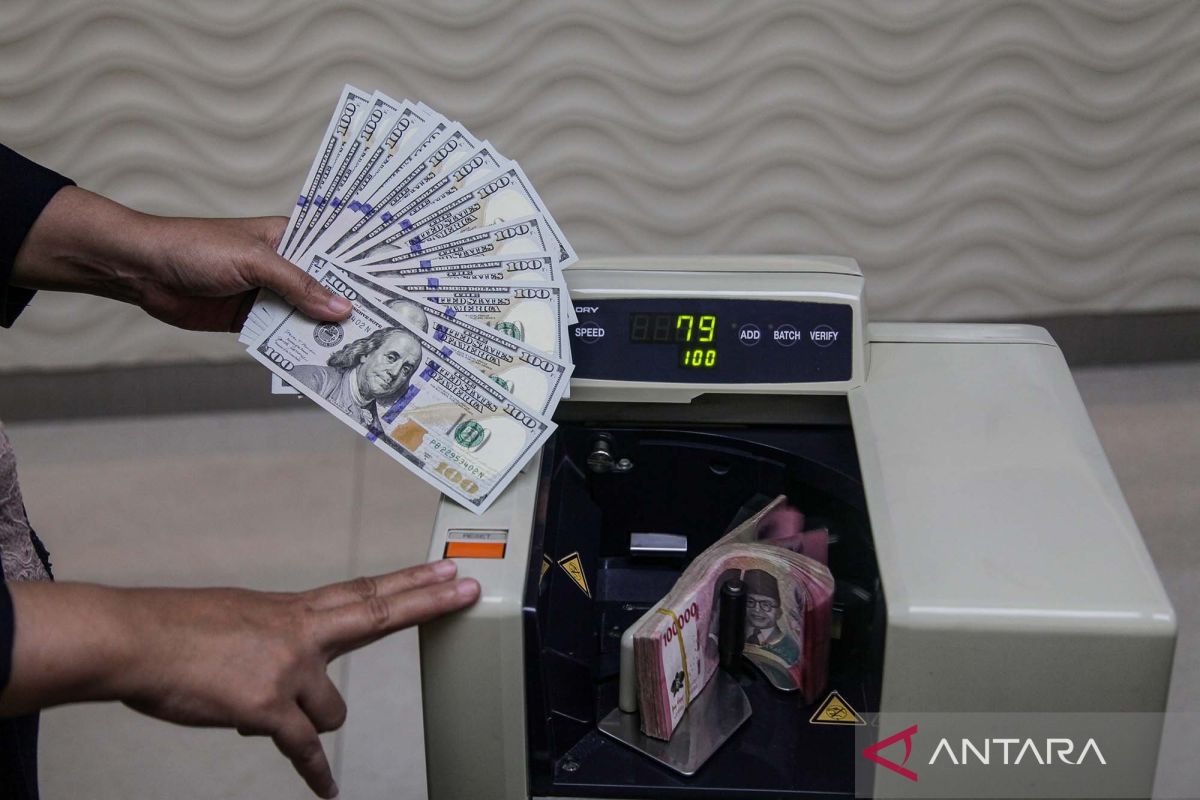
Jakarta (ANTARA) - Macroeconomic and Financial Markets Economist at LPEM FEB UI, Teuku Riefky, assessed that Bank Indonesia’s (BI) combination of policies is appropriate to prevent the rupiah from depreciating further amid pressures from the unresolved conflict in the Middle East.
“I think it’s already right. But indeed, if BI doesn’t do this, the rupiah’s weakening would be even worse,” Riefky said when contacted in Jakarta on Friday.
For context, to address global pressures, BI continues to strengthen rupiah exchange rate stabilisation through interventions, including Non-Deliverable Forward (NDF) transactions in overseas markets as well as spot and Domestic Non-Deliverable Forward (DNDF) transactions in the domestic market.
Recently, BI lowered the cash foreign exchange purchase threshold against the rupiah, effective from April 2026. On the other hand, BI also granted exemptions from the ban on NDF foreign exchange sales transactions against the rupiah in overseas (offshore) markets for certain Primary Foreign Exchange Dealers (PUVA) to support rupiah stability.
Meanwhile, the relaxation of NDF transactions offshore for certain dealers is seen as a more compliance-oriented measure.
Contacted separately, the Head of the Macroeconomics and Finance Centre at the Institute for Development of Economics and Finance (Indef), M. Rizal Taufikurahman, views the combination of policies pursued by the central bank to safeguard the rupiah as on the right track.
However, he warns that these steps come with substantial cost consequences, particularly to foreign reserves which are starting to erode.
Regarding the policy of lowering the foreign exchange purchase threshold, Rizal deems it appropriate in curbing precautionary dollar demand.
“This policy signals that foreign exchange demand must be based on real needs, although it still needs to be managed so as not to disrupt import activities and corporate external payments,” Rizal said.
Meanwhile, regarding the relaxation of NDF offshore for certain dealers, he assesses that this policy is a tactical step to reduce offshore market distortions and bring price formation closer to the domestic market.
Regarding the strengthening of the Rupiah Bank Indonesia Securities (SRBI) interest rate structure pursued by the central bank, he views this step as quite effective as an intermediate instrument to attract inflows, although it cannot serve as a long-term substitute without support from fiscal credibility and policies.
In conditions of controlled inflation, he added, raising the policy interest rate (BI-Rate) should also be the last resort because it risks suppressing growth.
Overall, he views domestic fundamentals as relatively strong, but the rupiah remains vulnerable because the main pressure comes from global factors and rising risk premiums.
The rupiah exchange rate closed at Rp17,229 per US dollar on trading on Friday (24/4), strengthening by 57 points or 0.33 percent from the previous close at Rp17,286 per US dollar.