
Economists: Bank Indonesia's Room to Maintain Interest Rates is Narrowing
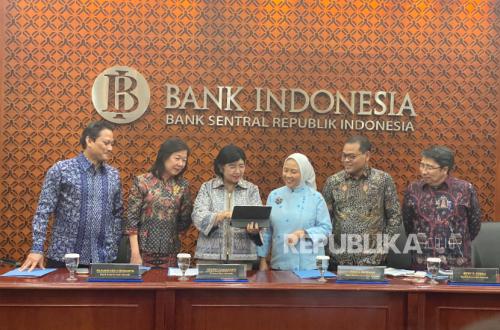
A number of economists view Bank Indonesia’s (BI) decision to maintain the benchmark interest rate (BI Rate) at 5.75 per cent during the September 2026 Board of Governors Meeting as the correct move. However, it is noted that the room for BI to maintain these rates is becoming increasingly narrow.
“Bank Indonesia’s decision to maintain the benchmark interest rate at 5.7lar5 per cent is the right step for now, but it must be understood as a tactical pause rather than the end of tightening,” said Josua Pardede, Chief Economist at PT Bank Permata Tbk, when contacted on Wednesday (23/9/2026).
Josua believes this policy maintains a balance between the need to support the Rupiah and providing space for economic growth, following cumulative interest rate hikes of 100 basis points (bps) between May and July 2026.
“Domestically, there is no strong reason to immediately raise interest rates,” he stated. Inflation in August 2026 was recorded at 3.19 per cent, with core inflation at 2.92 per cent, both remaining within the target of 2.5 per cent with a 1 per cent margin of error. Josua noted that economic growth still needs strengthening as private investment has not yet reached optimal levels, even though household consumption, government investment, and non-oil and gas exports are beginning to improve.
Under these conditions, his analysis suggests that an interest rate hike in September would risk increasing financing costs without providing proportional benefits for inflation control.
“However, the room to maintain interest rates is narrowing because the primary pressure currently originates from abroad. US interest rate hikes, high yields on US government bonds, the strengthening US dollar, as well as geopolitical tensions and oil prices, have been weighing on emerging market currencies,” he explained.
The Rupiah exchange rate was recorded at approximately Rp 17,855 per US dollar on 22 September 2026, while net portfolio investment flows in the third quarter up to 21 September 2026 stood at only about 0.4 billion US dollars. Foreign exchange reserves were recorded at 146.5 billion US dollars, which is considered adequate, but should not be used as a reason to allow pressure on the Rupiah to persist for too long.
“Bank Indonesia’s choice not to rely solely on interest rates is also appropriate. Strengthening foreign exchange interventions, providing hedging cost incentives, developing transactions using local currencies, and deepening the money market can increase the supply of foreign exchange with a more targeted impact and lower costs for the economy. However, the success of these steps must be measured by capital flows that truly persist, rather than just a strengthening Rupiah for a few days following a policy announcement,” Josua added.
Regarding growth, maintaining interest rates is seen as helping to sustain credit distribution. However, according to Josua, the main issue is not merely a lack of liquidity. Bank credit in August grew by 13.65 per cent, supported by investment credit at 25.11 per cent, while Third-Party Funds (DPK) grew by 10.94 per cent, and macroprudential liquidity incentives reached Rp 461.2 trillion.
“These figures show that liquidity and the ability to distribute credit are relatively available. The challenge lies in the even distribution of liquidity between banks, the quality of financing demand, and the distribution of credit to productive sectors capable of creating value-add and employment,” he concluded.
Source: jawawa.id (https://jawawa.id/newsitem/economists-bank-indonesias-room-to-maintain-interest-rates-is-narrowing-1790171720)
Originally published by Republika (https://ekonomi.republika.co.id/berita/tltih9370/ekonom-ruang-bi-pertahankan-suku-bunga-semakin-sempit), translated from Indonesian