
Economist Warns of Risks from False Hopes if Subsidised Fuel Prices Continue to be Held
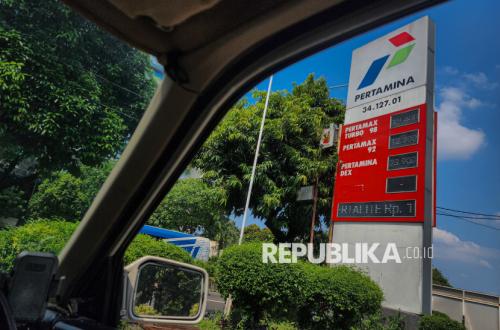
REPUBLIKA.CO.ID, JAKARTA – Energy economics observer from Universitas Gadjah Mada (UGM), Fahmy Radhi, has highlighted the recent increase in non-subsidised fuel oil (BBM) prices. He views the rise in non-subsidised BBM prices as capable of reducing the burden on the State Revenue and Expenditure Budget (APBN) amid the escalation of oil prices due to the war in the Middle East. Nevertheless, he also reminds the government of the budgetary burden if subsidised BBM prices continue to be held steady. “Although somewhat late, the government has finally raised non-subsidised BBM prices, effective from 18 April 2026. This policy is deemed very appropriate as it can reduce the APBN burden for compensating Pertamina for selling BBM below economic prices,” Fahmy said when confirmed by Republika on Monday (20/4/2026). He stated that this significant increase in non-subsidised BBM prices is estimated not to raise inflation. Nor will it significantly reduce public purchasing power. This is because the number of non-subsidised BBM consumers is not too large and they are categorised as upper class with strong purchasing power. “The increase in non-subsidised BBM prices without raising Pertamax and Green Pertamax prices is also highly strategic,” he continued. This is because, he explained, the number of consumers for those two types of BBM is relatively larger compared to the other three non-subsidised BBM types (Pertamax Turbo, Dexlite, and Pertamina Dex). If Pertamax and Green Pertamax prices were raised, it is feared that it would contribute to inflation and reduce public purchasing power. “Moreover, if Pertamax and Green Pertamax prices are raised while Pertalite prices are not, it would encourage a massive migration from Pertamax to Pertalite, which would inflate BBM subsidies,” he revealed. Subsidised BBM Fahmy also addressed the fate of subsidised BBM prices amid the rise in non-subsidised BBM prices. He criticised the government’s guarantee that subsidised BBM prices (Pertalite and diesel) will not rise until the end of this year. He views this as a double-edged sword. “This guarantee indeed provides long-term certainty for consumers, thus preventing panic buying. However, using a time frame is very risky as it could disappoint consumers if the time frame cannot be met, making the guarantee a false hope (PHP),” Fahmy stated. This is because the cause of the oil price increase, namely the war in the Middle East, cannot be precisely predicted in terms of when it will end (unpredictable). “The escalation of the Middle East war cannot be predicted when it will end. The guarantee would be more effective if the government uses the world oil price benchmark rather than a time indicator in deciding subsidised BBM price increases, so that the public is not disappointed by PHP,” he explained. Previously reported, Indonesian Finance Minister Purbaya Yudhi Sadewa stated that BBM prices will not rise until the end of 2026. He also assured that the State Revenue and Expenditure Budget (APBN) for BBM subsidies is sufficient. “I want to emphasise that subsidised BBM prices will not rise until the end of the year, and my budget is sufficient,” Purbaya stated in a press conference on transportation and BBM policies at the Office of the Coordinating Ministry for the Economy, Jakarta, on Monday (6/4/2026). He emphasised that the budget allocation for subsidised BBM will not be eliminated and will continue until the end of this year. Meanwhile, regarding non-subsidised BBM prices, the government is still reviewing. According to Purbaya, he has calculated the policy of not raising subsidised BBM prices. He assured that the budget deficit will not widen beyond the 3 percent threshold. “I have already exercised, with an average world oil price of 100 US dollars per barrel until the end of the year. And with other exercises, cuts here and there, savings here and there, we can ensure the deficit remains around 2.9 percent,” he revealed. Purbaya asked the public to remain calm in responding to the surge in world oil prices, which raises concerns about domestic BBM prices being pulled along and burdening the APBN. According to his observation, world oil prices will not remain above 100 US dollars per barrel for long. “The public doesn’t need to worry, doesn’t need to speculate that I’m running out of money. Even so, we have plenty of money. We’re rich. So, our funds are sufficient,” he stressed.