
Economist Warns Government on Decile-Based Subsidies: Don't Just Ease Fiscal Burden
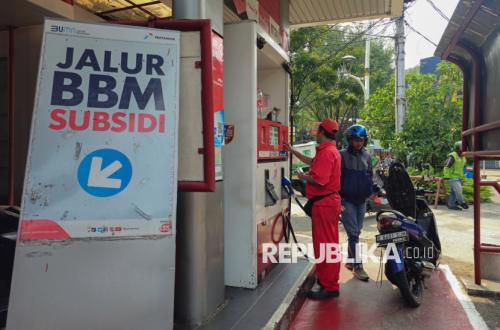
The government plans to use decile-based groupings to distribute various subsidies, including for Pertalite fuel, the Smart Indonesia Card (KIP), and school admission through the affirmation pathway, in an effort to ensure aid is better targeted. An economist has warned that the policy should not be intended to reduce the number of beneficiaries simply to ease the state’s fiscal burden.
Rizal Taufikurrahman, Head of the Macroeconomics and Finance Centre at the Institute for Development of Economics and Finance (Indef), stated that a decile-based subsidy policy is indeed more rational than overly universal subsidies, but its effectiveness is heavily determined by data quality and policy design. “Do not let deciles merely become an administrative instrument to reduce the number of recipients in order to suppress the fiscal burden,” he said.
Rizal explained that, technocratically, the main objective must be to lower inclusion error without increasing exclusion error. This means that the affluent group must be removed, but vulnerable groups should not be eliminated simply because of data misclassification.
The problem, he noted, is that deciles are not a perfect measure of a household’s economic capacity; they only indicate a relative position within the welfare distribution. A household in decile 5 or 6, for example, is not necessarily truly economically secure, as it could face high dependency burdens, job loss, education costs, instalments, or varying living costs across regions.
“Therefore, using a single decile indicator for many policies at once—such as KIP, fuel subsidies, social assistance, and the affirmation pathway—risks creating systemic policy errors if the data basis is inaccurate and not updated quickly,” he said.
For energy subsidies like Pertalite, a decile-based approach is also insufficient. Rizal said the government needs to combine it with vehicle characteristics, fuel consumption patterns, residential location, and economic mobility needs. He gave an example that someone in a relatively high decile but working in the informal sector with high mobility is certainly different from a wealthy household owning several vehicles. If the policy stops merely at a decile cutoff, the subsidy is suspected to become too simplistic for what is actually a multidimensional problem.
“So, the measure of success for subsidy reform is not how many recipients have been cut, but how much subsidy leakage has been reduced without increasing the number of vulnerable groups losing their rights. If recipients decrease because the affluent group is excluded, that is efficiency. But if recipients decrease because the data is inaccurate or the design is too rigid, that is not subsidy reform, but fiscal savings paid for by vulnerable groups,” he concluded.