
Economist Urges Technology Transfer Amid Easier Foreign Worker Permits
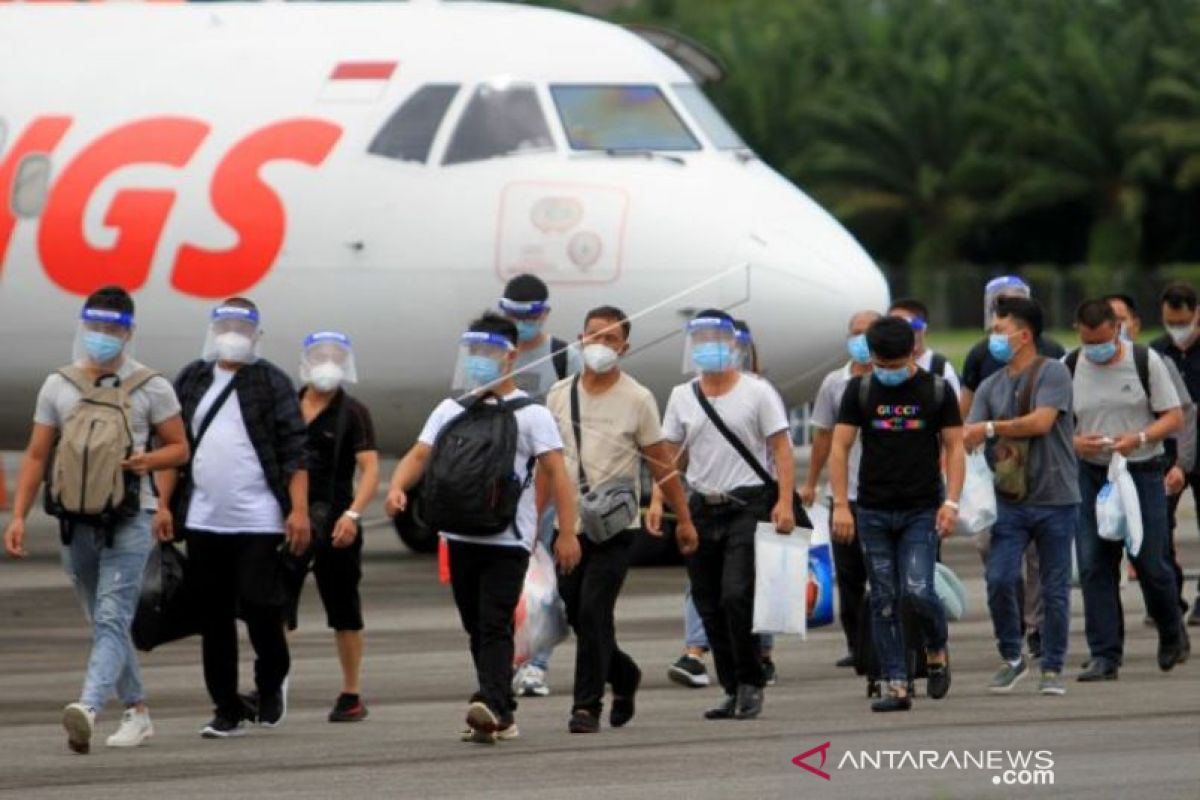
Jakarta (ANTARA) - The Executive Director of the Center of Reform on Economics (CORE) Indonesia, Mohammad Faisal, has requested the government to evaluate the transfer of knowledge and technology from foreign workers (TKA) to the local workforce, following the easing of foreign worker permit processes.
According to Faisal, the simplified permitting for foreign workers must be accompanied by mechanisms that ensure their presence genuinely benefits the enhancement of Indonesian workers’ capabilities. “There must be a mechanism for supervision, monitoring, and evaluation of investments over time, to see to what extent technology transfer has been achieved through the entry of foreign workers,” Faisal stated when contacted by ANTARA in Jakarta on Saturday.
The government previously streamlined the foreign worker permit process to a maximum of five days through the integration of the Online Single Submission (OSS) system as a single entry point for licensing services. This system integration is planned to be fully implemented by the end of September 2026.
In general, Faisal believes that the presence of foreign workers aligns with efforts to encourage Foreign Direct Investment (FDI), as incoming investment should bring more than just capital to Indonesia. He noted that foreign investment must also create learning processes and technology transfer from abroad to Indonesia, including from foreign workers to the local workforce.
Regarding technology transfer, Faisal assessed that high-tech sectors are among the fields requiring foreign workers with specific expertise and skills that are not yet available domestically. “There are many sectors related to high technology, ranging from AI to green technology related to renewable energy, electric vehicle batteries, and so on. There are specific requirements where the source of knowledge and technological mastery originates from abroad,” he said.
Faisal also highlighted the limited capacity of domestic Research and Development (R&D) as one of Indonesia’s challenges in creating its own technology. He noted that the government’s budget allocation for R&D remains relatively small, while policies to encourage the private sector to increase innovation also need strengthening.
Under such conditions, one option is to attract foreign investment while simultaneously absorbing technology from abroad. However, Faisal warned that Indonesia still needs to build the capability to develop its own technology and not merely rely on technology transfer from other nations. “If we only rely on transfers from others, we will forever remain technology followers and users, rather than creating and innovating ourselves,” he said.
He cited several East Asian countries such as Japan, South Korea, China, and Taiwan, which, in the early stages of industrialisation, sent human resources abroad to study technology before developing that knowledge domestically. Faisal noted that Indonesia already has programmes aimed at such efforts through the Indonesia Endowment Fund for Education (LPDP), including prioritising Science, Technology, Engineering, and Mathematics (STEM) fields.
However, he assessed that the link between LPDP graduates in STEM fields abroad and the domestic need for technological mastery still needs to be strengthened. According to him, these graduates need opportunities to occupy strategic positions according to their expertise, as well as access to facilities and appreciation to develop technology in Indonesia. “In terms of technological mastery, facilities must be provided. Furthermore, it is not just about facilities, but also the opportunity and appreciation to work and enhance technological or STEM capabilities domestically. That is the missing link,” he concluded.