
Economist Urges Strengthening of Fiscal Instrument Regulations
Jakarta (ANTARA) - The Chief Economist of Trimegah Sekuritas Indonesia, Fakhrul Fulvian, is pushing for the strengthening of the ‘rulebook’ for the use of fiscal instruments to ensure that the objectives, duration, risk distribution, and exit mechanisms of every policy are increasingly clear.
According to him, the continuity of several policies at the beginning of Finance Minister Suahasil Nazara’s term could serve as a momentum to strengthen the governance of various economic instruments already possessed by the government.
“What is needed now is a rulebook: for what purpose an instrument is used, whose balance sheet is using it, for how long, and what the exit mechanism is,” Fakrans said in a statement in Jakarta on Monday.
Suahasil was inaugurated as Finance Minister on 14 September 2026. Following her inauguration, she emphasised her commitment to safeguarding state finances and ensuring that the State Budget (APBN) continues to serve as an instrument to drive growth while maintaining economic stability.
Fakhrul noted that Indonesia possesses a diverse range of economic instruments and balance sheets, ranging from the APBN and the Budget Surplus (SAL) to state-owned banks, SOEs, Danantara, taxation policies, and various financing instruments.
In his view, the next stage is to clarify the sequence of policies, targets, and the distribution of functions and risks so that each instrument is utilised by the institution most capable of managing it.
One such instrument is the placement of Rp200 trillion from the Budget Surplus (SAL) into state-owned banks. The Ministry of Finance has ensured that this policy will continue until July 2027.
Fakhrul believes that the continuity of SAL placement must be accompanied by an increase in the quality of transmission, looking at the volume of credit created, the sectors receiving financing, the productive assets generated, and the party bearing the risk.
“The ultimate goal is for the use of the public balance sheet to successfully crowd-in the private balance sheet, rather than replacing it permanently,” said Fakhrul.
He added that the utilisation of the government’s balance sheet should be directed towards attracting more private financing, so that state support acts as a catalyst for economic activity rather than a permanent substitute for the private sector.
Fakhrul also noted that the APBN continues to play a vital role as an economic shock absorber, including during periods of pressure on energy prices.
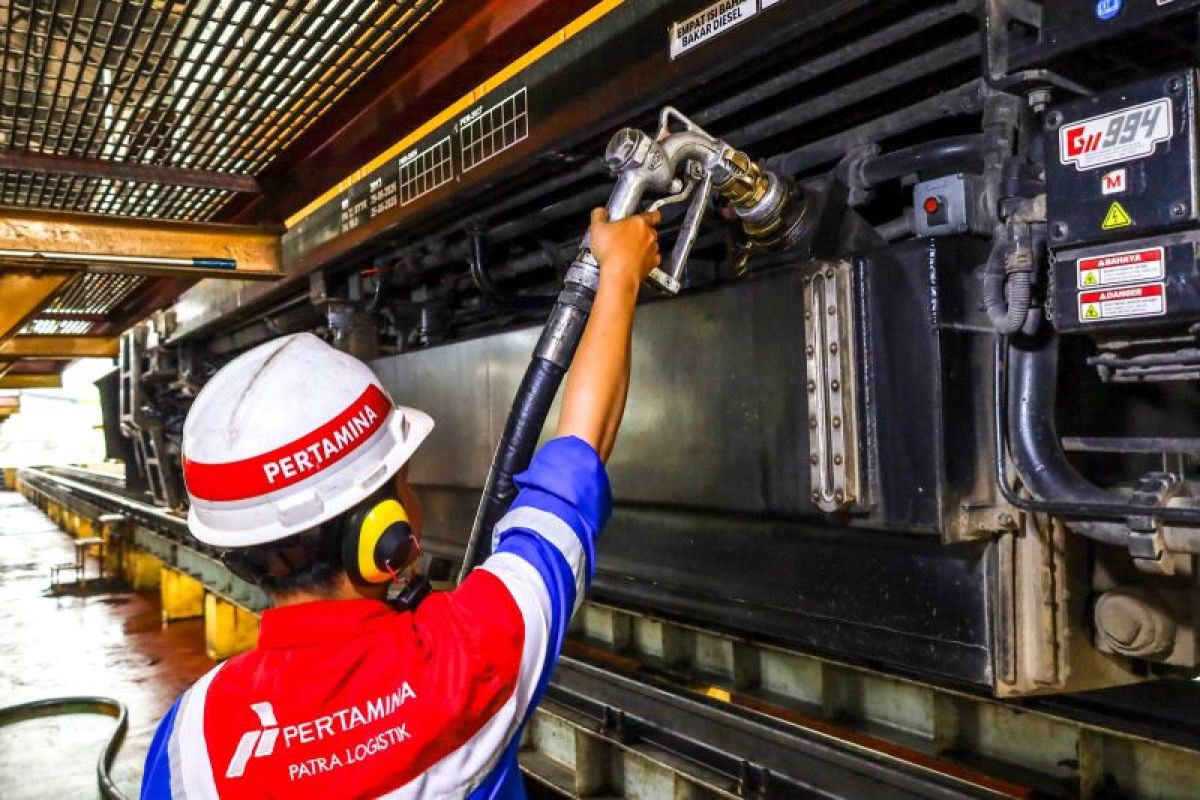
As of 31 August 2026, the government has paid subsidies and compensation amounting to Rp331.4 trillion to Pertamina and PLN. These payments are intended to maintain the ability of both SOEs to provide goods with prices regulated by the government.
“If an oil shock is only temporary, a fiscal buffer is indeed designed to be used. However, if energy prices remain high persistently, the answer cannot indefinitely be subsidies. Policies must begin to reduce the source of the shock itself,” said Fakhrul.
Therefore, he views the development of 50 per cent biodiesel (B50), the strengthening of domestic energy capacity, and energy efficiency as part of the efforts to reduce structural pressure on the fiscal position and the balance of payments, while simultaneously reducing the structural demand for the US dollar.
Regarding taxation, Fakhrul believes that certainty in tax refunds is also a component of fiscal credibility, as the reimbursement of tax overpayments is directly related to corporate working capital.
The Directorate General of Taxes recorded that tax refund realisation as of August 2026 was Rp191.82 trillion, a 37 per cent decrease compared to Rp304.29 trillion during the same period the previous year.
Suahasil previously ensured that refunds which are the right of taxpayers and meet the provisions will continue to be paid according to the applicable taxation mechanisms.
Fakhrul believes that tax compliance must be a two-way street: the business world must fulfil its obligations to the state punctually, and the state must ensure that the rights of business actors are met according as to the regulations.
He also noted that the implementation of Income Tax (PPh) Article 22 collection through marketplaces should be placed within a broader agenda of economic formalisation.
The Directorate General of Taxes has set the collection of PPh Article 22 through marketplaces to take effect on 1 November 2026, after its implementation was delayed until 31 October 2026.
The DGT emphasised that this policy is not a new type of tax, but rather a change in the collection mechanism, which was previously handled by the traders themselves.
Fakhrul believes that the digitalisation of business actors should not only simplify tax administration but also expand access to financing, legal protection, procurement, markets, and government services.
“Formalisation that only makes it easier for the public to be taxed will feel like a cost. Formalisation that also opens access to financing and economic opportunities will feel like development,” said Fakhrul.
Furthermore, he stated that policy continuity must be accompanied by an evaluation of targets, durations, risk distribution, and the termination mechanisms of every instrument to ensure various fiscal policies move towards the same developmental goal.
Meanwhile, in the 2027 Draft State Budget (RAPBN), the government plans for state revenue of Rp3,426 trillion and state expenditure of Rp4,097.2 trillion, with a deficit of 2.40 per cent of Gross Domestic Product (GDP).
The government is directing the 2027 Draft State Budget to support economic growth and increased welfare, while maintaining the APBN as a healthy, credible, and sustainable fiscal instrument.
Source: jawawa.id (https://jawawa.id/newsitem/economist-urges-strengthening-of-fiscal-instrument-regulations-1789981191)
Originally published by Antara (Indonesian) (https://www.antaranews.com/berita/5750985/ekonom-dorong-penguatan-aturan-main-instrumen-fiskal), translated from Indonesian