
Economist urges reindustrialisation to expand formal employment opportunities
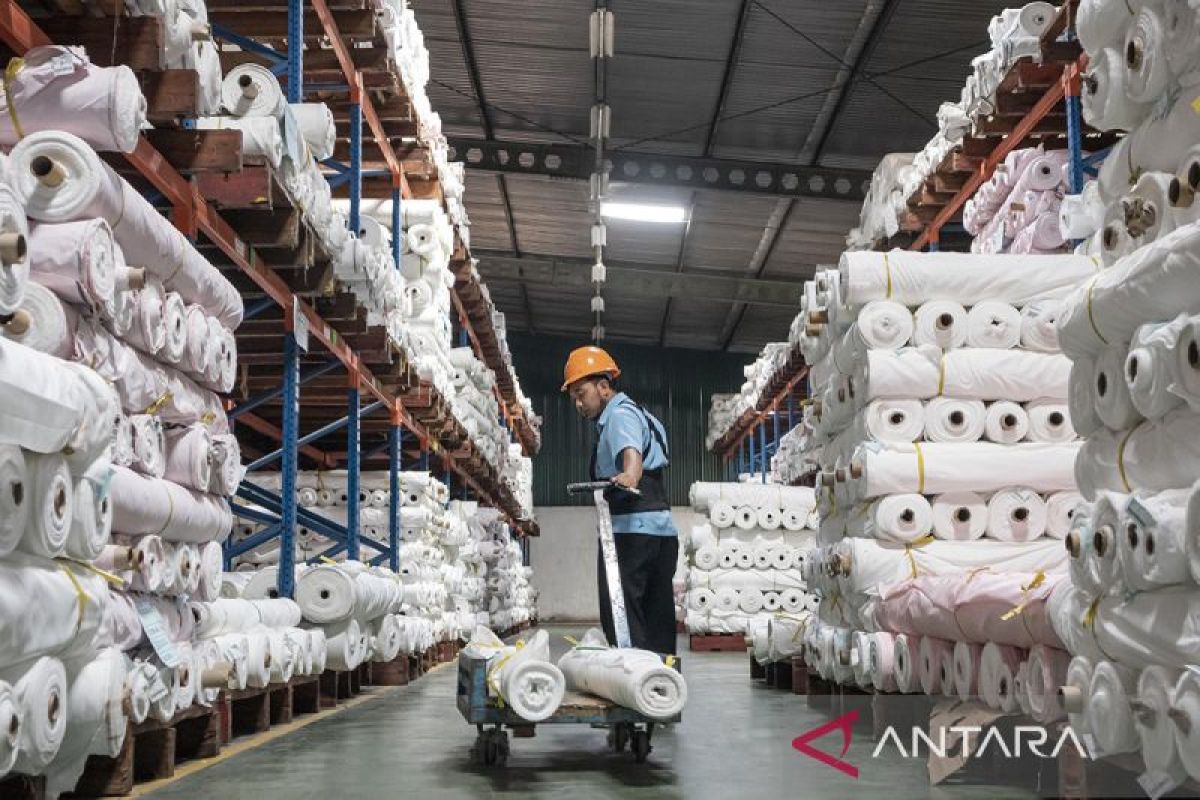
Jakarta (ANTARA) - Economist from the Center of Reform on Economics (CORE) Indonesia, Yusuf Rendy Manilet, is urging the government to accelerate reindustrialisation or the strengthening of the manufacturing sector to expand the creation of formal employment opportunities and improve the quality of national economic growth.
Yusuf stated that the manufacturing sector has historically been the most effective in creating formal jobs on a large scale, but its contribution to gross domestic product (GDP) has continued to decline over the past two decades.
“Strengthening the manufacturing sector needs to become the main agenda… Indonesia requires more aggressive industrial policies to promote modern labour-intensive manufacturing, especially that integrated with technology and global supply chains,” he told ANTARA in Jakarta on Tuesday.
According to him, Indonesia’s current challenge is no longer just pursuing high economic growth, but ensuring that such growth produces higher quality, formal, and productive jobs.
He warned that without improvements in the quality of workforce absorption, Indonesia risks facing a situation where economic growth appears strong, but improvements in worker welfare progress much more slowly.
“If not, we could be trapped in a situation where GDP figures look strong, but workforce welfare increases far more slowly,” he said.
In addition to strengthening manufacturing, he believes the government also needs to accelerate investments in human resource development, particularly vocational education and skills training that align with the needs of modern industry.
According to him, there is still a gap between the competencies of graduates and the needs of the business world, especially in the manufacturing and technology sectors.
He also encourages the acceleration of formalising MSMEs and small businesses to make them more productive and provide better protection for workers.
According to him, many MSME actors have growth potential, but still face obstacles in accessing financing, business legality, and a lack of incentives to enter the formal sector.
He said that formalising MSMEs is important not only to improve worker protection, but also to expand the national productivity and tax base.
Furthermore, labour regulation reforms are also deemed necessary to maintain a balance between the flexibility needs of the business world and protection for workers.
“This balance is important so that investments enter without creating a race to the bottom in wages,” he said.
The non-oil and gas processing industry or manufacturing remains the sector with the largest contribution to national GDP compared to other sectors.
Nevertheless, he said that manufacturing’s contribution to GDP tends to decline compared to the early 2000s, when its share was around 28-29%. In recent years, the sector’s contribution has been around 18-19%.
Data from the Central Statistics Agency (BPS) shows that the manufacturing sector’s contribution to GDP was recorded at 18.34% in 2022, rising to 18.67% in 2023, then increasing again to 18.98% in 2024, and reaching around 19.07% in 2025.
In the first quarter of 2026, the manufacturing sector remains the main pillar of the national economy with a contribution of around 19.07% to GDP.