
Economist: Telecom Infrastructure Prospects Remain Strong for the Next 3-5 Years
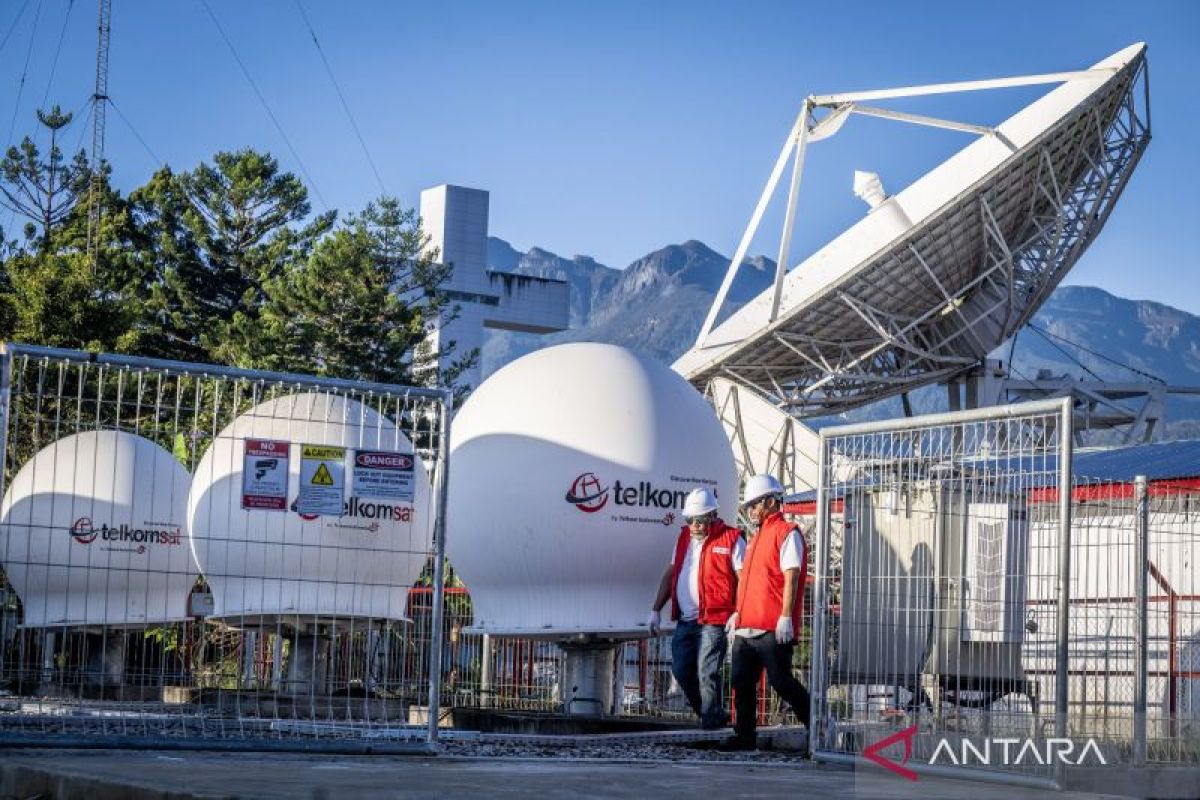
Jakarta (ANTARA) - Dipo Satria Ramli, an economist from the Centre of Reform on Economics (CORE) Indonesia, believes that growth opportunities in the telecommunications infrastructure sector remain substantial for the next three to five years. According to him, the demand for the construction of telecommunication towers and fibre optic networks remains high due to the increasing needs of both individual customers and corporations.
“The prospects for the next three to five years are still large; the need for towers and fibre optics remains high because customer and corporate requirements are continuously increasing,” Dipo stated in Jakarta on Friday.
Explaining the transition from 4G to 5G networks, Dipo noted that this shift requires higher tower density through the construction of microcells. Furthermore, Indonesia’s geographical condition as an archipelagic nation presents both challenges and opportunities for the industry.
He added that the demand for basic infrastructure—such as electricity, telecommunication towers, fibre optic networks, and undersea cables—remains a primary necessity, with the rising use of the internet, AI, and cloud computing acting as key drivers. He emphasised that the supporting telecommunications sector plays a highly strategic role.
“It is very strategic because they are the determinants of the reliability and sustainability of telecommunications infrastructure and the digital economy,” said Dipo.
He noted that unstable electricity supplies and non-integrated fibre optic networks in certain regions make the role of supporting companies vital in Indonesia. “Without the reliability of the internet and telecommunications, the digital economy cannot be established,” Dipo added.
Recently, an issuer in the telecommunications infrastructure sector, PT Bach Multi Global Tbk (BACH), listed on the Indonesia Stock Exchange (IDX). BACH conducted its initial public offering (IPO) on 8 July 2026. Since listing at an IPO price of Rp442 per share, BACH’s stock immediately strengthened by 24.43 per cent on its first day of trading and briefly reached the Rp685 level in the following days before entering a period of consolidation.
Capital market observer Fauzan Luthsa observed that the increased attention towards BACH is also linked to the entry of the Djarum Group through PT Global Telekomunikasi Prima (GTP) as the company’s controlling shareholder.
“The entry of the Djarum Group has indeed acted as a catalyst, increasing investor attention towards BACH. However, I see that the market is also beginning to understand the company’s business model more comprehensively,” he said.
He explained that many investors previously recognised BACH primarily as a generator company. However, according to the prospectus, the company manages approximately 41,000 telecommunications sites. “This means BACH is already part of the telecommunications infrastructure ecosystem. In my view, this understanding is what is starting to develop in the market.”
Fauzan also reminded that ultimately, the market will focus on company performance. However, the shift in perception regarding BACH’s business model is one of the factors driving increased investor interest.