
Economist Suggests Strengthening Personal Finances Amid Rupiah Weakening
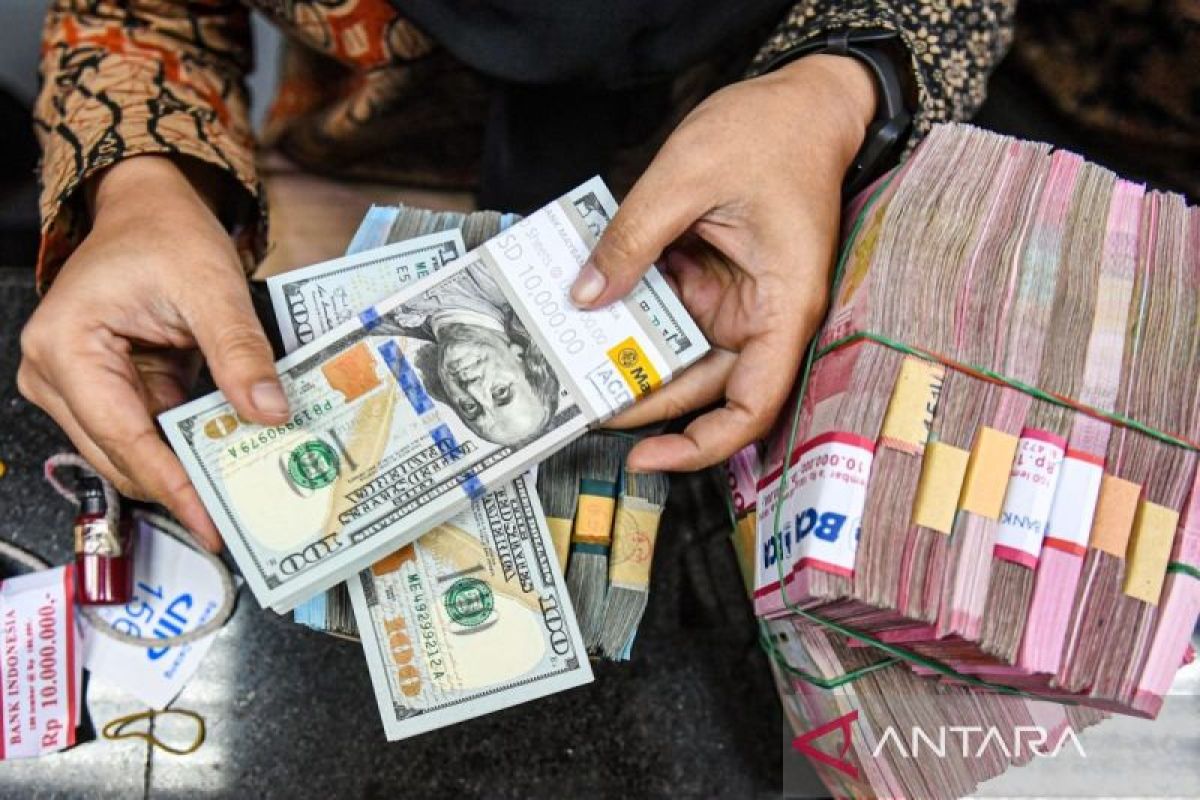
Jakarta - Permata Bank Chief Economist Josua Pardede stated that the weakening of the rupiah should be met with strengthening personal financial resilience. “The weakening of the rupiah needs to be responded to by strengthening personal financial resilience, not by extreme asset transfers,” he told ANTARA in Jakarta on Tuesday.
According to him, the rupiah’s depreciation directly impacts imported goods such as gadgets, electronic goods, vehicles and spare parts, certain medicines, imported foodstuffs like wheat, soybeans, sugar, and milk, as well as household consumer goods that still depend on foreign supply. This is because importers must spend more rupiah to purchase the same goods in US dollars.
In this context, he said the impact of the rupiah’s weakening does not always appear immediately on the same day because businesses usually still have old inventory, price contracts, or are holding back price increases so consumers do not immediately feel the effect. However, if the weakening persists for a long time, the increase in import costs will almost certainly be passed on to selling prices gradually.
He explained that the rupiah’s weakening also indirectly impacts everyday consumer goods through raw materials, energy, transportation costs, fertilisers, animal feed, packaging, and production costs. “So, even goods that appear local can increase in price if their raw materials still contain imported components. For example, processed foods based on wheat, dairy products, certain meats, packaged foods, cosmetics, medicines, and household necessities,” he revealed.
In the context of June 2026, this risk is considered increasingly relevant as Bank Indonesia (BI) recorded that inflation in May 2026 rose to 3.08 percent, with pressure from volatile food prices at 6.24 percent and administered prices at 2.07 percent, partly due to adjustments in LPG, non-subsidised fuel oil (BBM), and avtur in line with rising global energy prices.
Nevertheless, he continued, not all consumer goods will rise by the same magnitude. Goods with a high import content and limited competition tend to rise faster. Meanwhile, goods that are largely produced domestically and have sufficient supply tend to be more restrained. For basic necessities, Josua said the rupiah’s weakening is not the sole determinant of prices because harvests, distribution, weather, government stocks, and pricing policies are also very decisive.
From a purchasing power perspective, the risk is that the public becomes more selective, as BI’s May 2026 Consumer Survey still shows strong consumer confidence with a Consumer Confidence Index (IKK) of 120.9, but down from 123.0 in April, while the assessment of current economic conditions also fell to 112.2 from 116.5. Retail sales in May 2026 are also forecast to remain contracted by 3.2 percent year-on-year, although improving on a monthly basis. “This means consumption has not collapsed, but households are starting to be more cautious, especially for secondary goods and durable goods,” Josua said.
Furthermore, he explained that the increase in BI’s benchmark interest rate to 5.75 percent should also be seen as a response to curb the rupiah’s weakening and prevent imported inflation from widening. This policy is considered appropriate from a stability perspective, but there are consequences for the cost of funds and credit. Banking interest rate assessment data shows that rupiah lending rates are still slightly declining, but new lending rates are starting to rise due to risk adjustments and bank funding conditions. This means the rupiah’s weakening and rising interest rates could pressure households from two directions simultaneously: rising prices of imported goods and more expensive new financing costs.