
Economist suggests PT DSI could serve as supervisor for natural resource export transactions
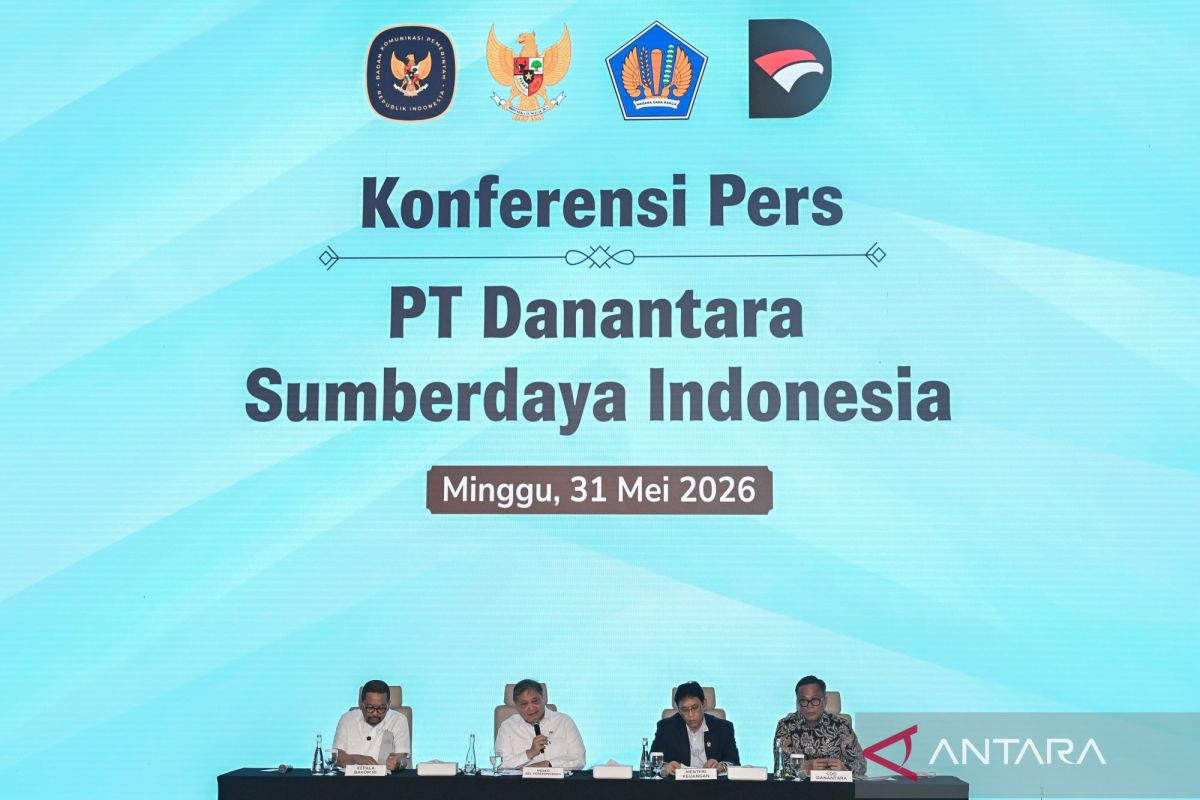
Jakarta (ANTARA) - Senior Economist at Paramadina University, Wijayanto Samirin, suggests that PT Danantara Sumber Daya Indonesia (PT DSI) could be directed to serve as an agency for supervising and monitoring natural resource (SDA) export transactions.
“A more realistic model is to establish DSI as a supervisory body for natural resource export transactions. In its operations, it could be assisted by Surveyor Indonesia and Sucofindo to conduct physical verification on the ground. If necessary, the government could also engage international inspection agencies such as SGS from Switzerland,” Wijayanto stated in Jakarta on Monday.
According to Wijayanto, this approach would allow the government to benefit from increased transparency, better monitoring of export proceeds, and the prevention of underinvoicing and transfer pricing practices without disrupting existing market mechanisms.
“The existing business ecosystem should be maintained. What needs to be strengthened is the supervisory system and governance. In this way, the goal of increasing state revenue can be achieved without sacrificing the investment climate and Indonesia’s export competitiveness,” he said.
The government previously announced plans to establish PT DSI to strengthen the supervision of strategic commodity exports, such as crude palm oil (CPO), coal, and ferroalloy. This policy is aimed at addressing practices of underinvoicing, misinvoicing, and transfer pricing, which are suspected of reducing state revenue and causing export proceeds to be held abroad.
Furthermore, Wijaylyanto emphasised that the government’s objective to close leaks in natural resource export proceeds is a step worthy of support.
“The main issue is not the structure of the export trade, but rather the weakness of supervision, both in terms of the system and the integrity of the human resources managing it,” he said.
However, from an economic perspective, Wijayanto also warned that a single-exporter policy could potentially create uncertainty that might affect the confidence of investors and business players.
“Global importers have many supplier options. If Indonesia’s export process becomes more complicated or lacks certainty, they will switch to other countries. The impact could include a decline in investment, a decrease in export volumes, and a reduction in Indonesia’s competitiveness,” he noted.
He assessed that the impact could be felt directly by the public, particularly smallholder palm oil farmers, whose numbers are estimated to reach 2.5–2.7 million families.
“In the initial stages, prices have the potential to drop. If this condition persists, the subsequent stage could see a decline in trade volumes. Ultimately, farmers are the party most vulnerable to these impacts,” concluded Wijayanto.