
Economist: Strengthening local milk absorption regulations will reduce imports
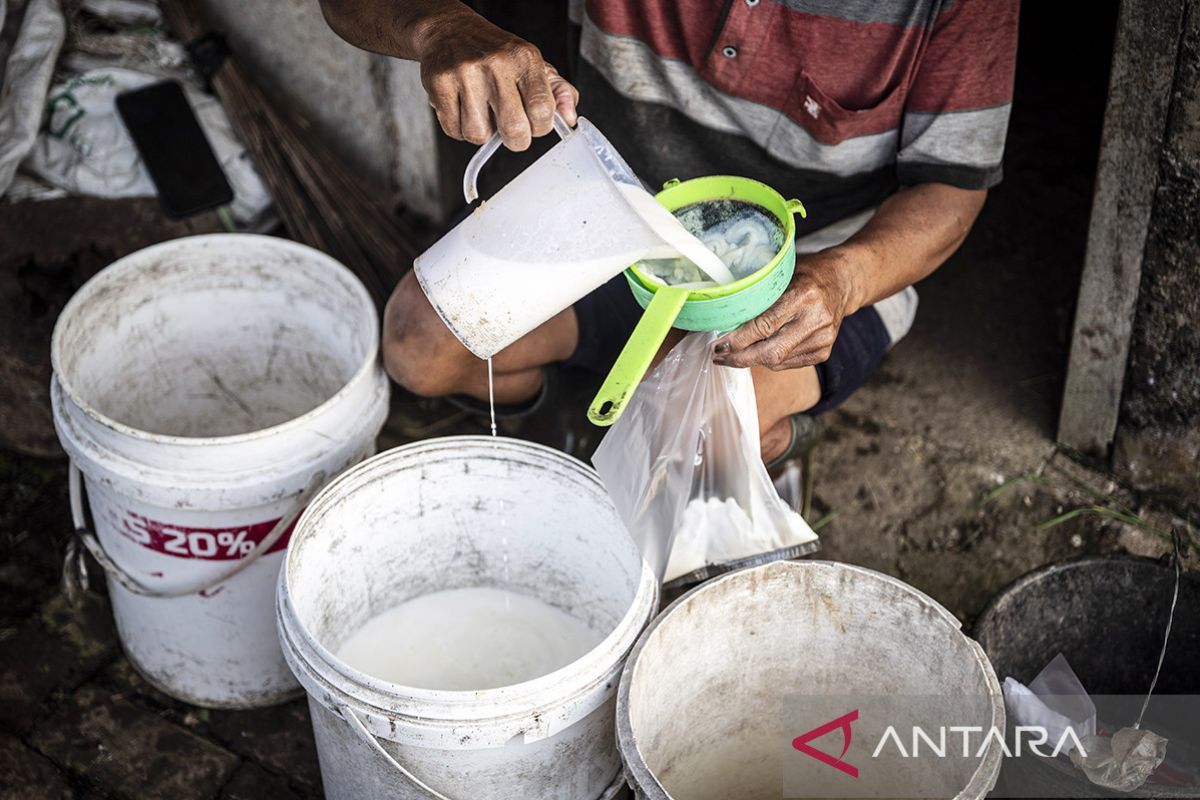
An economist from the Center of Reform on Economics (CORE) Indonesia, Eliza Mardian, has proposed the government strengthen regulations requiring the dairy processing industry to absorb fresh domestic milk production. The move aims to protect farmers, reduce import dependency, and achieve milk self-sufficiency targets.
“To reduce import dependency, there needs to be a regulation that obliges the domestic industry to absorb fresh milk, so this will encourage dairy farmers to actively produce,” Mardian said in Jakarta on Tuesday.
The government is currently accelerating the drafting of a national milk independence roadmap from upstream to downstream. Deputy Coordinating Minister for Food, Hanif Faisol Nurofiq, previously stated that national milk production is only around 1 million tonnes per year, while demand reaches approximately 4 million tonnes, meaning nearly 80 percent is still met through imports.
Mardian noted that the majority of Indonesia’s milk imports are in the form of milk powder, which is relatively cheaper than fresh milk produced by local farmers. This situation leads the dairy processing industry to prefer imported raw materials, limiting the absorption of domestic fresh milk.
She pointed out that the government already has Minister of Agriculture Regulation No. 33/Permentan/PK.450/7/2018, which governs partnerships between the dairy processing industry and local farmers. However, its implementation needs to be monitored to ensure it runs optimally.
“Although there is a ministerial regulation for partnerships between the dairy processing industry and local farmers, there is no clear reward and punishment scheme, so the industry does not feel obliged to fulfil the mandate of the regulation and instead imports milk powder which can reduce production costs,” she said.
Mardian assessed that the government needs to provide a stronger legal umbrella so that the industry is obliged to absorb fresh domestic milk while providing market certainty for farmers. She suggested a scheme similar to the Domestic Component Level (TKDN), for instance, a minimum 25 percent local fresh milk content, with tax incentives for compliant companies.
Similarly, researcher Isnawati Hidayah from the Center of Economic and Law Studies (Celios) believes the government needs to build healthier partnerships between farmers and the dairy processing industry so that benefits and risks are shared more fairly. She noted that current partnership patterns tend to be transactional, with farmers bearing most of the costs and risks to improve milk quality, while the industry holds a stronger bargaining position in setting quality standards and choosing raw material sources.
“The government must encourage a healthy partnership, especially in sharing benefits and risks more fairly. Long-term contracts are needed so farmers have market certainty and dare to invest,” Hidayah said. In addition to long-term contracts, she added that milk pricing should remain quality-based with a floor price that protects farmers from prices that do not cover production costs. The industry should also be involved in providing cooling facilities, training, veterinary services, feed supply, and quality testing.
Hidayah added that the government could provide fiscal incentives to industries proven to increase local milk absorption and provide coaching to farmers, thereby creating a more sustainable milk supply chain. Beyond strengthening industry absorption obligations, she also encouraged the government to develop milk downstream processing at the cooperative or production centre level so that farmers are not entirely dependent on the dairy processing industry. “This way, farmers can process their milk yield, thereby increasing added value and creating new jobs,” she said.
Source: jawawa.id (https://jawawa.id/newsitem/economist-strengthening-local-milk-absorption-regulations-will-reduce-imports-1784635028)
Originally published by Antara (Indonesian) (https://www.antaranews.com/berita/5659024/ekonom-penguatan-regulasi-serapan-produksi-susu-lokal-kurangi-impor), translated from Indonesian