
Economist: Strengthening Exports and Domestic Energy Crucial for External Resilience
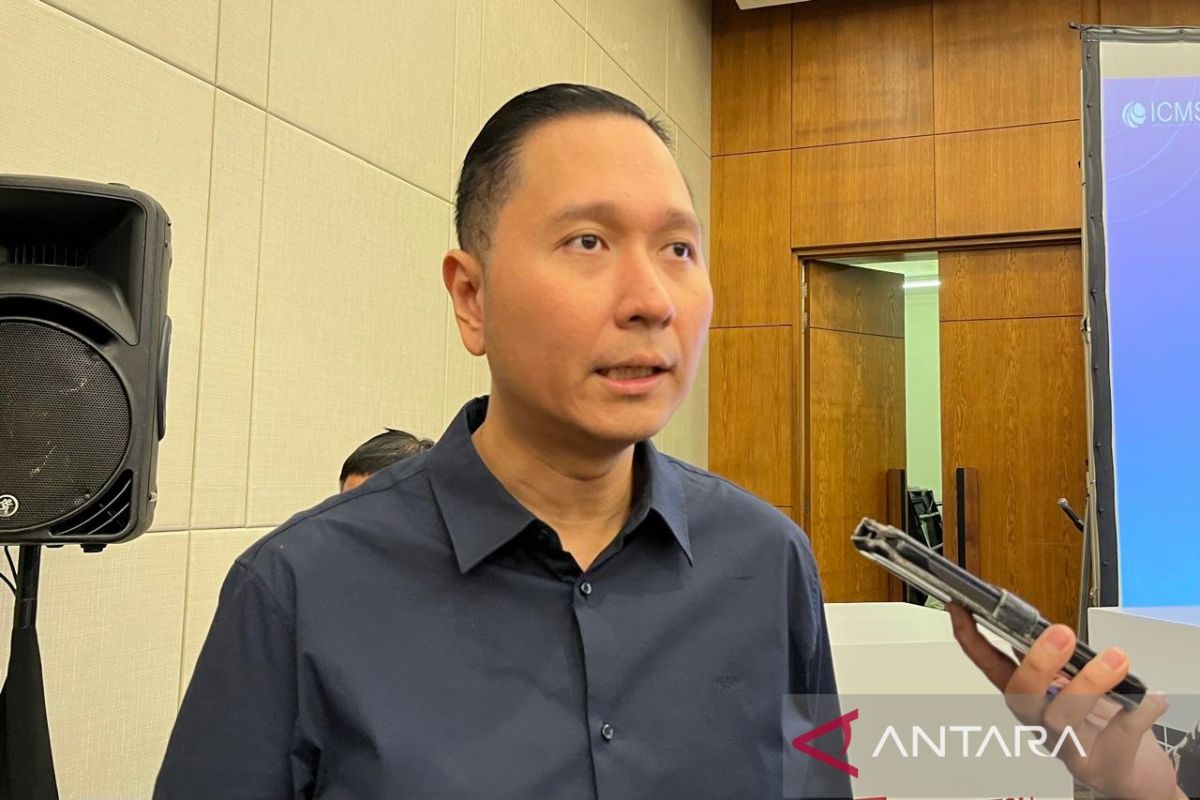
Jakarta (ANTARA) - Permata Bank Chief Economist Josua Pardede believes that strengthening value-added exports and domestic energy production is essential to maintaining a trade surplus and Indonesia’s external resilience amidst an oil and gas deficit.
Josua stated that high oil and gas imports, coupled with rising oil prices, are putting pressure on the trade balance by increasing import bills and the demand for foreign exchange.
“High oil and gas imports amidst expensive oil prices are the most tangible source of pressure on the trade balance and foreign exchange requirements. The impact occurs simultaneously through both price and volume,” Josua told ANTARA in Jakarta on Thursday.
Statistics Indonesia (BPS) recorded that Indonesia’s trade balance for January–July 2026 remained in surplus at US$3.70 billion, or approximately Rp65.69 trillion.
The non-oil and gas surplus reached US$22.45 billion, or about Rp398.55 trillion. However, the oil and gas sector recorded a deficit of US$18.75 billion, or around Rp332.87 trillion.
During the same period, exports grew by 4.43 per cent to US$167.03 billion, while imports increased by 19.94 per cent to US$163.33 billion.
According to Josua, while the maintained surplus serves as a buffer for external resilience, its quality needs to be strengthened by increasing export volumes and value-added manufactured products.
“A trade surplus creates a natural supply of foreign exchange from exporters and reduces Indonesia’s reliance on foreign capital flows, which are more volatile,” he said.
Regarding energy, he assessed that reducing dependence on fuel imports by increasing domestic production, biofuels, gas, and renewable energy is also critical for maintaining the external balance.
“Reducing dependence on fuel imports and increasing domestic production, biofuels, gas, and renewable energy should be viewed not just as energy policy, but as a policy to safeguard the external balance,” he added.
Meanwhile, the government is also strengthening domestic energy supplies. The Ministry of Energy and Mineral Resources (ESDM) noted that national fuel consumption is approximately 1.6 million barrels per day, while domestic production is around 600,000 barrels per day.
The government aims for oil production to reach 1 million barrels per day and is opening investment opportunities in 118 oil and gas working areas.
The government has also implemented a 50 per cent biodiesel mandate (B50) since 1 July 2026. As of mid-September, B50 distribution has reached 6,050 out of 6,412 petrol stations, or approximately 94 per cent.
On the export side, the Ministry of Trade facilitated 546 business matching activities between January and July 2026, involving 1,021 MSMEs with potential international buyers as part of expanding export market access.
Bank Indonesia recorded foreign exchange reserves at the end of August 2026 at US$146.5 billion, equivalent to 5.4 months of imports and above the international adequacy standard of approximately three months of imports.
Furthermore, Josua identified five indicators that need to be monitored until the end of 2026: the oil and gas deficit, the gap between export and import growth, the composition of imports, non-oil and gas export performance, as well as current account transactions and foreign exchange reserves.
He also noted the economic developments in China and commodity prices, as the demand from major trading partners significantly influences Indonesia’s export performance.
Therefore, according to Josua, strengthening export performance should be evaluated not just by the size of the surplus, but also by the source and quality of that surplus.
“A surplus derived from value-added manufacturing exports and increased export volumes will be far more robust than a surplus that relies solely on surges in coal or CPO prices,” he concluded.
Source: jawawa.id (https://jawawa.id/newsitem/economist-strengthening-exports-and-domestic-energy-crucial-for-external-resilience-1789659294)
Originally published by Antara (Indonesian) (https://www.antaranews.com/berita/5746193/ekonom-penguatan-ekspor-dan-energi-domestik-jaga-ketahanan-eksternal), translated from Indonesian