
Economist Sees Opportunity for Batam to Become Indonesia's 'Little Dubai'
Vietnam is running faster than many countries in the region. In the first half of 2026, its economy grew by 8.18 per cent annually. This growth was supported by the industrial and construction sectors, which advanced by 9.81 per cent, while manufacturing grew by 10.23 per cent. Vietnam’s goods exports also increased by 21 per cent to USD 266.52 billion, with 7m9.9 per cent of exports originating from foreign-capitalised companies.
At the same time, Indonesia recorded economic growth of 5.11 per cent throughout 2025. The Central Bureau of Statistics noted that exports of goods and services became the highest-growing expenditure component at 7.03 per cent, while gross fixed capital formation grew by 6.12 per cent in the fourth quarter of 2025.
This difference in growth rates has once again brought investment, exports, and connectivity with global markets to the centre of discussions regarding Indonesia’s sources of economic growth.
Economist at INDEF and Rector of Paramadina University, Prof. Didik J. Rachbini, views investment policy and export orientation as vital parts of the effort to drive higher growth. In a release of his thoughts after exploring Batam, Didik compared Indonesia’s economic development with Vietnam and positioned Batam as one of the regions that he believes has the potential to become a regional investment hub.
“Neighbouring countries like Vietnam are transforming from communist states into state capitalism, which is highly market-oriented and a market economy,” Didik stated in a written statement to KabarBursa.com on Tuesday, 29 September 2026.
According to him, Vietnam’s experience demonstrates the importance of policies that encourage investment and exports. He assessed that Indonesia will not achieve 7–8 per cent growth unless outward-oriented investment and export policies become an essential part of the economic strategy.
Vietnam’s data shows that investment is indeed one of the rapidly developing components. In the first half of 2026, total realised investment in Vietnam reached VND 1,807.8 trillion, growing 12.9 per cent annually. Realised FDI reached USD 13.03 billion, up 11.2 per cent, marking the highest period for the first half since 2022. Registered FDI, including new capital, additional capital, and share purchases, reached USD 34.65 billion, an increase of 61 per cent.
Its export structure also demonstrates the significant role of foreign companies. Of Vietnam’s total goods exports in the first half of 2026, amounting to USD 266.52 billion, the FDI sector contributed USD 213.01 billion, or 79.9 per cent. Simultaneously, manufacturing growth reached 10.23 per cent, becoming the largest contributor to economic value-added growth.
However, these figures do not mean that Indonesia is unattractive to investors. Data from the Ministry of Investment and Downstreaming/BKPM shows that Indonesia’s investment realisation throughout 2025 reached Rp 1,931.2 trillion, growing 12.7 per cent and exceeding the target of Rp 1,905.6 trillion. Foreign Direct Investment (PMA) contributed Rp 900.9 trillion, while Domestic Direct Investment (PMDN) reached Rp 1,030.3 trillion. This investment is reported to have absorbed 2.71 million workers.
Therefore, the issue that arises now is where the capital entering Indonesia will be concentrated, which sectors will develop, how much new production capacity will be formed, and how that investment connects to exports and global supply chains. In this context, Didik directs his attention to Batam.
Batam Growing Above 7 Per Cent
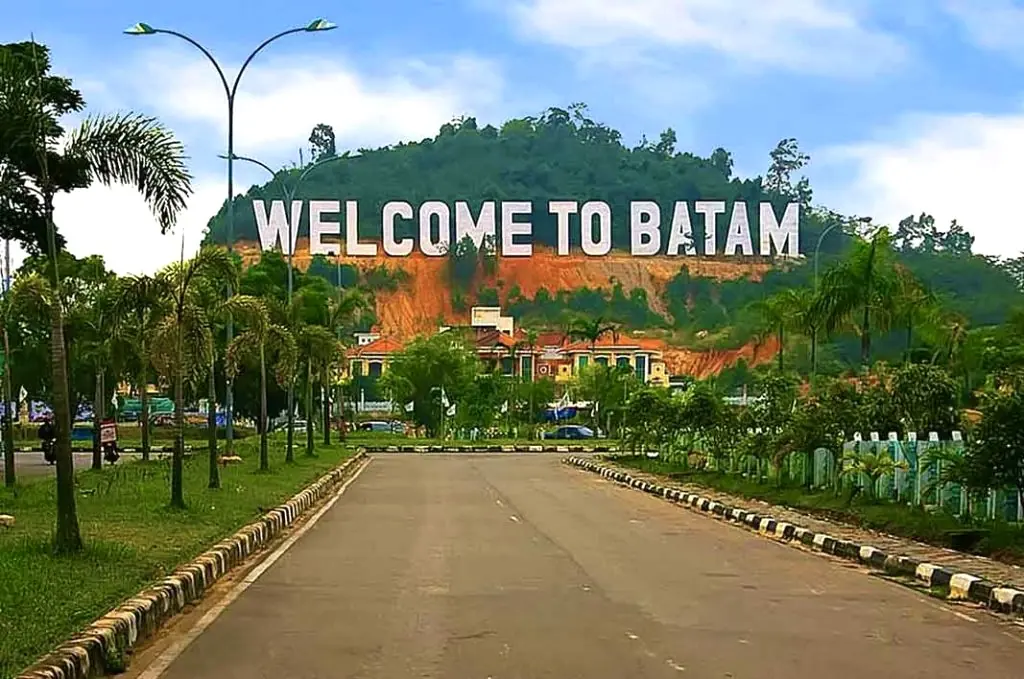
Batam is not a region newly seeking a role as an investment hub. BPS data shows Batam’s economy grew by 6.76 per cent throughout 2025. In the second quarter of 2026, Batam’s economic growth reached 7.28 per cent annually, higher than the Riau Islands’ growth of 6.99 per cent and the national economic growth of 5.29 per cent during the same period. Investment performance has moved in the same direction.
BP Batam recorded real investment realisation throughout 2025 at Rp 69.30 trillion, exceeding the target of Rp 60 trillion. This figure was calculated using an investment methodology developed by BP Batam using a bottom-up approach. Meanwhile, based on the report of capital investment activities (LKPM), Batam’s investment realisation was recorded at Rp 44.01 trillion. Both figures use different measurement bases.
Batam’s investment structure also shows connectivity with the regional economy. According to BP Batam, Singapore was the primary source of investment throughout 2025, followed by Taiwan, China, Malaysia, Hong Kong, the Netherlands, the United States, Japan, Switzerland, and France.
Geographical proximity to Singapore is one of the region’s main characteristics. In Didik’s view, this position can be utilised when global companies diversify investment locations amidst changes in supply chains and increasing geopolitical uncertainty. He then linked this opportunity to investment developments in the Middle East.
According to Didik, geopolitical tensions in the Middle East region could encourage some investors to pursue geographical diversification. He did not suggest that a massive exodus of investment from Dubai, Abu Dhabi, or Qatar has occurred. Instead, he sees this change as an opportunity that other regions, including Batam, can capitalise on.
“Within economic policy design, the Batam region and its surroundings can and should be positioned as a safe, near-Singapore, and low-cost Asian investment alternative,” Didik wrote.
In this context, the term “Little Dubai” used by Didik refers to the idea of making Batam a region capable of attracting global capital by leveraging its geographical position, trade connectivity, special zone facilities, and proximity to regional economic centres.
Supported by Manufacturing and Data Centres
Another change underway in Batam is the influx of investment based on the digital economy. BP Batam noted that the services sector, which includes digitalisation activities, is becoming a…
Source: jawawa.id (https://jawawa.id/newsitem/economist-sees-opportunity-for-batam-to-become-indonesias-little-dubai-1790686373)
Originally published by kabarbursa.com (https://www.kabarbursa.com/makro/ekonom-didik-rachbini-lihat-peluang-batam-jadi-dubai-kecil-indonesia), translated from Indonesian