
Economist Says Working Capital Key for Kopdes Merah Putih to Supply Free Nutritious Meals
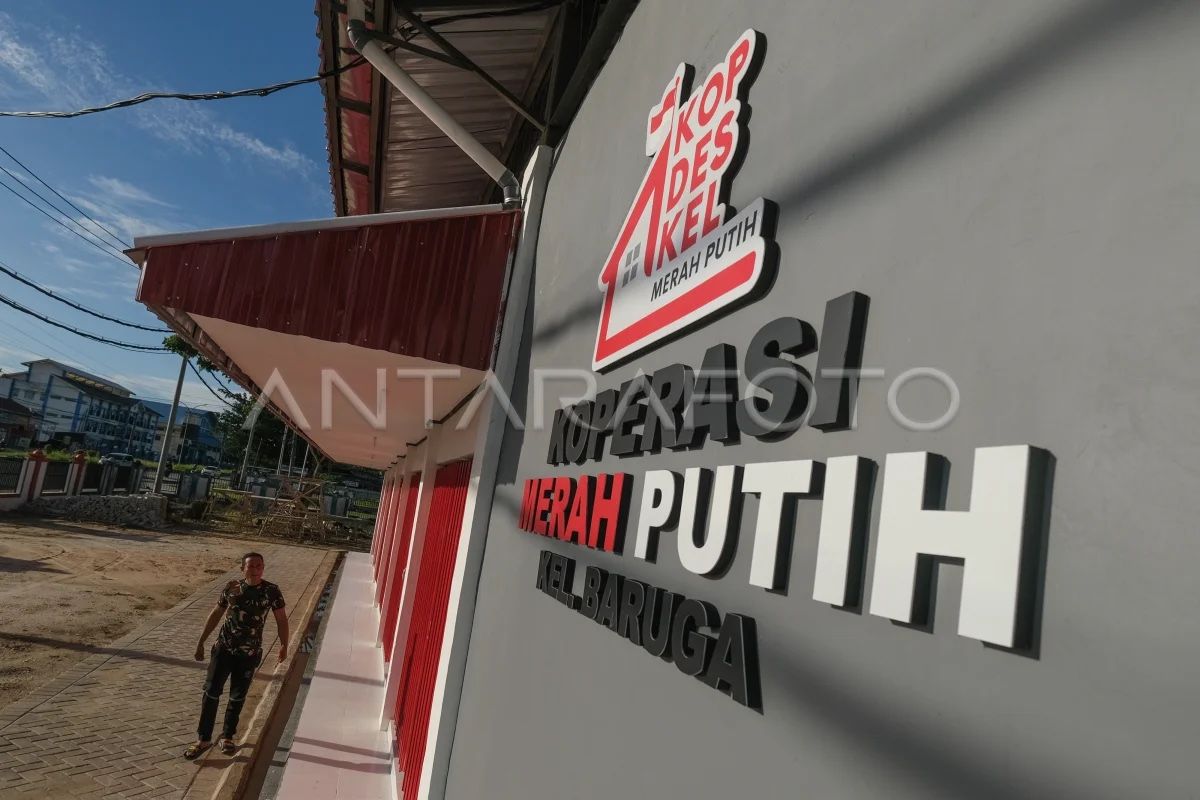
Jakarta (ANTARA) - Economist Yusuf Rendy Manilet from the Center of Reform on Economics (CORE) Indonesia assesses that the availability of working capital is a crucial requirement that must be met before the Kopdes Merah Putih (Red and White Village Cooperatives) can serve as suppliers for the Free Nutritious Meals (MBG) programme.
According to him, conceptually, Kopdes Merah Putih can act as an offtaker and supplier of raw materials for MBG, as it is supported by Presidential Regulation Number 115 of 2025, which mandates that the programme’s food supply prioritises local products and involves cooperatives in the supply chain.
However, Yusuf told ANTARA in Jakarta on Friday that the biggest challenge currently lies not in the regulatory aspect, but in the cooperatives’ business readiness, particularly regarding capital.
“The most fundamental issue is working capital. The offtaker function requires cooperatives to purchase harvests from farmers, store stock, and then wait for payment from the end buyer, in this case the SPPG,” he said.
He explained that during this period, the cooperative’s funds would be tied up in inventory and receivables. Meanwhile, the available financing structures are currently deemed more directed towards physical investments such as the construction of buildings, warehouses, or cold storage facilities.
“These assets are important, but they cannot be used to finance daily commodity purchases. As a result, the cooperatives’ room for manoeuvre to run their business is still limited,” he stated.
Yusuf assessed that the policy focus should not solely be on increasing the amount of credit, but also on adjusting the financing design to suit the cooperatives’ operational needs. He suggested that the ideal working capital scheme should be contract-based or purchase order-based.
In the MBG programme, he continued, cooperatives have the advantage of a relatively certain buyer because the programme is run by the government through the Nutritional Fulfilment Service Unit (SPPG).
“If the cooperative already has a supply contract from the SPPG, the bank can finance its working capital needs based on the contract value. When payment from the SPPG is received, the funds can be directly used to repay the financing facility,” he said.
He assessed that such a scheme is healthier because the credit risk relies on real cash flow, not solely on the developing capacity of the cooperative. The government is targeting Kopdes Merah Putih to act as an offtaker for agricultural, livestock, fishery, and other village products. These products are expected to become one of the sources of raw materials for the Free Nutritious Meals Programme, while simultaneously strengthening the village economy by shortening the distribution chain.