
Economist says strengthening DTSEN will make social assistance better targeted
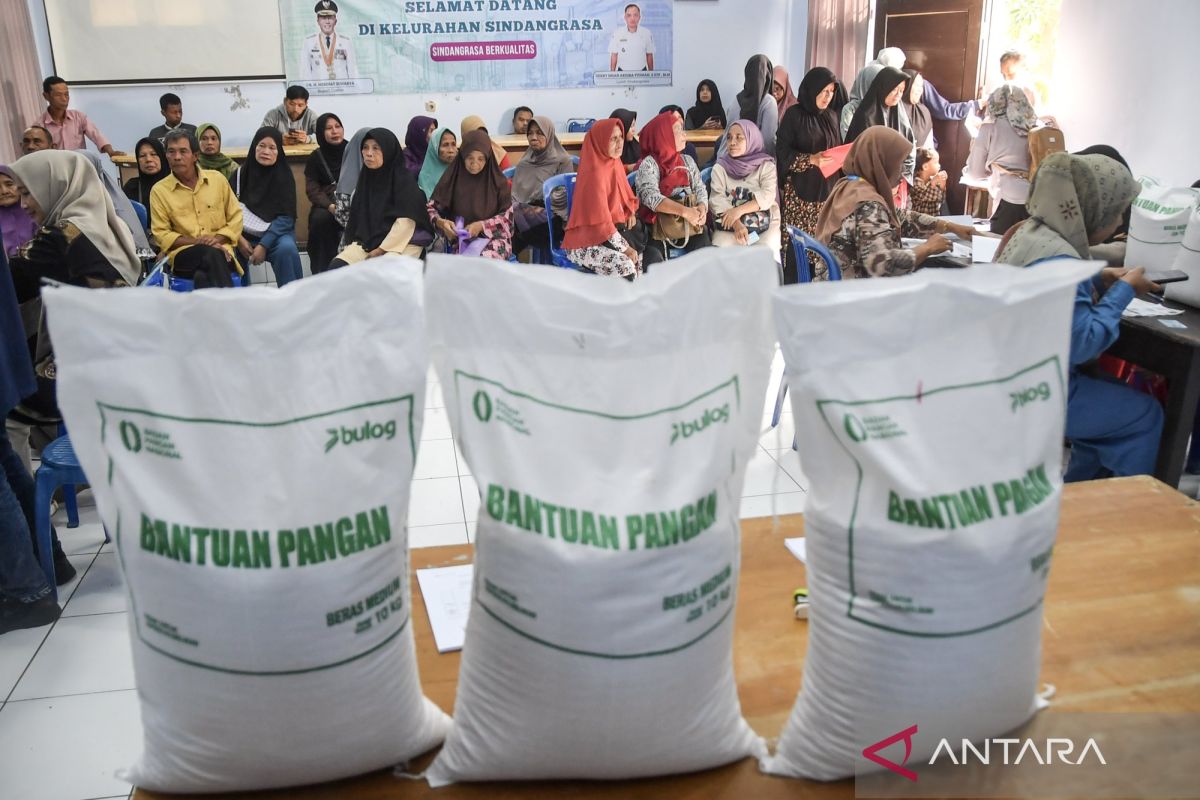
The benefits of strengthening DTSEN include reducing the level of inclusion error — affluent people who are not entitled to assistance yet receive it — and exclusion error, meaning poor citizens who are entitled but not recorded in the data.
Jakarta (ANTARA) - Esther Sri Astuti, Executive Director of the Institute for Development of Economics and Finance (INDEF), has assessed that strengthening the National Socio-Economic Single Data (DTSEN) as the unified basis for social protection delivers a positive impact, particularly through better-targeted distribution of assistance.
Speaking to ANTARA by telephone in Jakarta on Tuesday, Esther said that strengthening DTSEN can help the government reduce errors in determining beneficiaries, whether inclusion errors or exclusion errors.
This is because with more accurate data, social assistance can reach those who genuinely need it.
“The benefits of strengthening DTSEN include better targeting, namely reducing the level of inclusion error — affluent people who are not entitled but receive assistance — and exclusion error, such as poor citizens who are entitled but not recorded in the data,” she said.
According to her, DTSEN also serves as a single database that unites various sources of information from ministries, agencies and Statistics Indonesia (BPS). This gives the government a more consistent reference point in designing and implementing social protection policies.
Beyond improving the accuracy of beneficiary identification, Esther believes the existence of DTSEN can strengthen the efficiency of the state budget. Integrated data can prevent duplicate records, reduce overlapping beneficiaries, and narrow the potential for budget leaks.
Esther added that periodic data updates are also an important aspect of maintaining DTSEN’s quality. With updates every three months, the welfare level of the population based on decile rankings can remain valid and consistent with current conditions.
Furthermore, she said, strengthening DTSEN needs to be supported by interoperability between agencies through the government’s digital infrastructure.
“The hope is that by strengthening DTSEN for social protection, it will be useful in making the distribution of assistance better targeted and more transparent,” said Esther.
Previously, the Head of Statistics Indonesia (BPS), Amalia Adininggar Widyasanti, explained that the decile figures in DTSEN need to be understood as a picture of relative position in welfare rankings, not as a single measure of a family’s economic condition.
“Deciles show a family’s relative position compared to other families based on various socio-economic characteristics,” Amalia said in a statement received in Jakarta on Sunday (23/8).
BPS emphasised that a decile is neither an absolute measure of poverty nor a nominal measure of a family’s income or wealth.
For example, a family in decile 3 means it sits in the third group out of ten groups in the relative welfare ranking.
Families within the same decile do not necessarily have the same income, expenditure or socio-economic conditions.
Source: jawawa.id (https://jawawa.id/newsitem/economist-says-strengthening-dtsen-will-make-social-assistance-better-targeted-1788858144)
Originally published by Antara (Indonesian) (https://www.antaranews.com/berita/5731280/ekonom-nilai-penguatan-dtsen-buat-bantuan-jadi-tepat-sasaran), translated from Indonesian