
Economist says rice surplus must be followed by equitable distribution
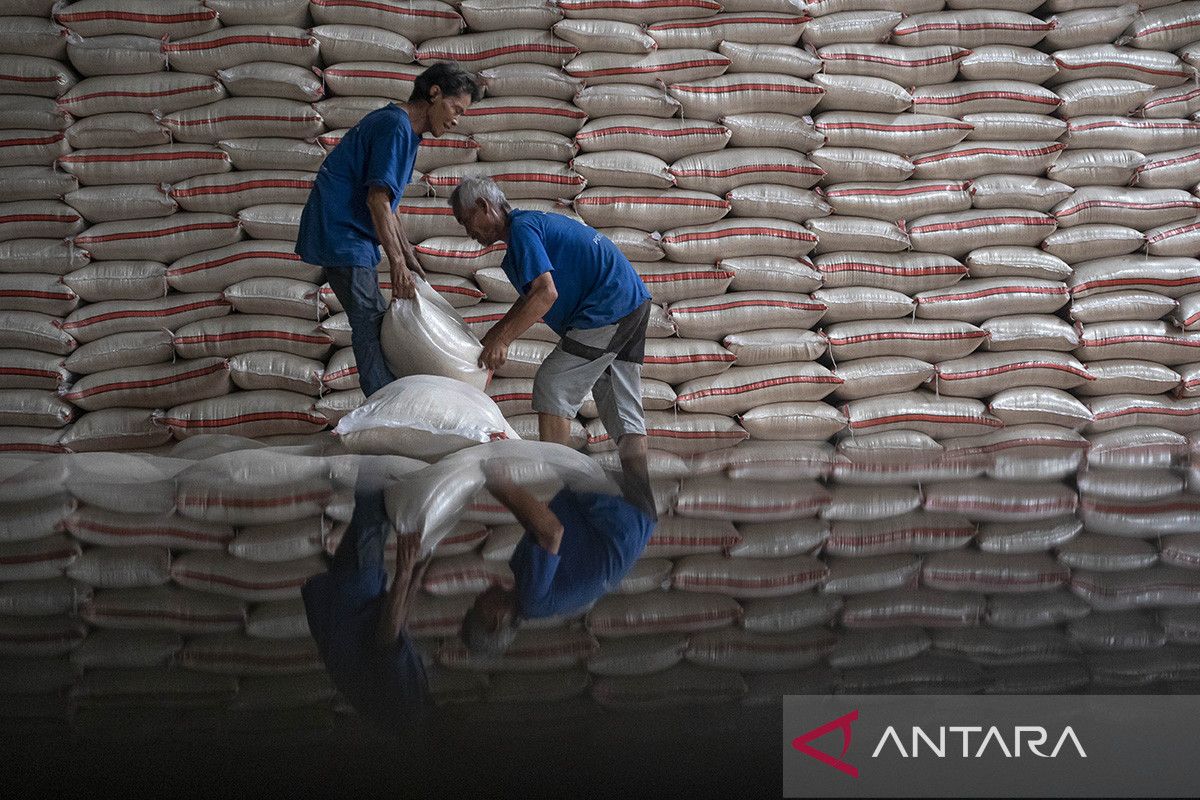
A researcher at the Center of Reform on Economics (CORE) Indonesia, Eliza Mardian, has said that the national rice surplus needs to be accompanied by more equitable distribution so that the abundant supply can be accessed by the public at affordable prices.
“Within a complete food security framework, the indicator is not only availability. Access, affordability and stability are also important,” Eliza said when contacted by ANTARA in Jakarta on Friday.
Based on the Ministry of Agriculture’s food balance projection, rice production in 2026 is estimated to reach 34.77 million tonnes, while national demand stands at 31.10 million tonnes, leaving a surplus of around 3.67 million tonnes.
Perum Bulog recorded that the Government Rice Reserve (CBP) stock under its management reached 5.25 million tonnes as of 9 August 2026. The government is also targeting rice exports to Malaysia with an initial shipment of 1,000 tonnes.
According to Eliza, an aggregate production surplus does not automatically mean that all Indonesians have adequate access to rice at affordable prices.
She said the main problems still lie in the inter-island distribution chain, high logistics costs, limited storage facilities in the regions, and limited market structures in remote areas.
Eliza assessed that the government needs to strengthen distribution infrastructure systematically through the addition of storage facilities in remote areas, more routine and measurable market operations, and improved inter-island connectivity to reduce transport costs.
According to her, rice exports still provide benefits in the form of additional foreign exchange and an improved trade balance, but they should be positioned as a secondary step once access and price stability across all domestic regions have been secured.
“Opening export opportunities, even in small volumes as a market test, should be positioned as a secondary step after access and price stability indicators in all domestic regions are monitored as safe,” she said.
She explained that the foreign exchange impact of the initial export plan of 1,000 tonnes to Malaysia is relatively small compared with Indonesia’s total non-oil and gas exports.
Meanwhile, distribution disruptions, she continued, have the potential to directly affect communities in geographically hard-to-reach areas.
Eliza assessed that the production surplus will be more meaningful if the increase in rice availability at the national level is followed by affordable prices and stable supply to small islands and inland areas.
“We should prioritise domestic distribution before expanding exports,” she said.
Distribution problems were previously raised by a student from Alor Regency, East Nusa Tenggara (NTT), Adriano Padama, who said that rice prices in inland areas can reach Rp25,000 to Rp30,000 per kilogram when distribution is disrupted.
Minister of Agriculture Andi Amran Sulaiman subsequently visited Alor and asked Perum Bulog to ensure stock availability and conduct market operations if needed so that people can obtain rice at affordable prices.
Meanwhile, the government continues to intervene in supply and distribution through the Food Supply and Price Stabilisation (SPHP) programme.
The National Food Agency (Bapanas) recorded that SPHP rice distribution from March to 8 August 2026 reached 610,300 tonnes, or 73.71 percent of the target of 828,000 tonnes.
Bapanas is also prioritising traditional markets as the main distribution points for SPHP rice to strengthen supply availability while maintaining rice price stability at the consumer level.
In addition to SPHP, Bapanas has tasked Perum Bulog with distributing 997,200 tonnes of rice food assistance to 33,244,408 recipients for the July-September 2026 allocation.
Each recipient receives 10 kilograms of rice per month for three months, or a total of 30 kilograms, which can be distributed at once.
Regarding Alor Regency, Bapanas together with Perum Bulog began distributing food assistance on 8 August 2026 to 37,338 recipients for the July-September allocation, with each recipient receiving a total of 30 kilograms of rice.