
Economist Says 'Red and White' Village Cooperatives Align with Founding-Fathers' Ideas
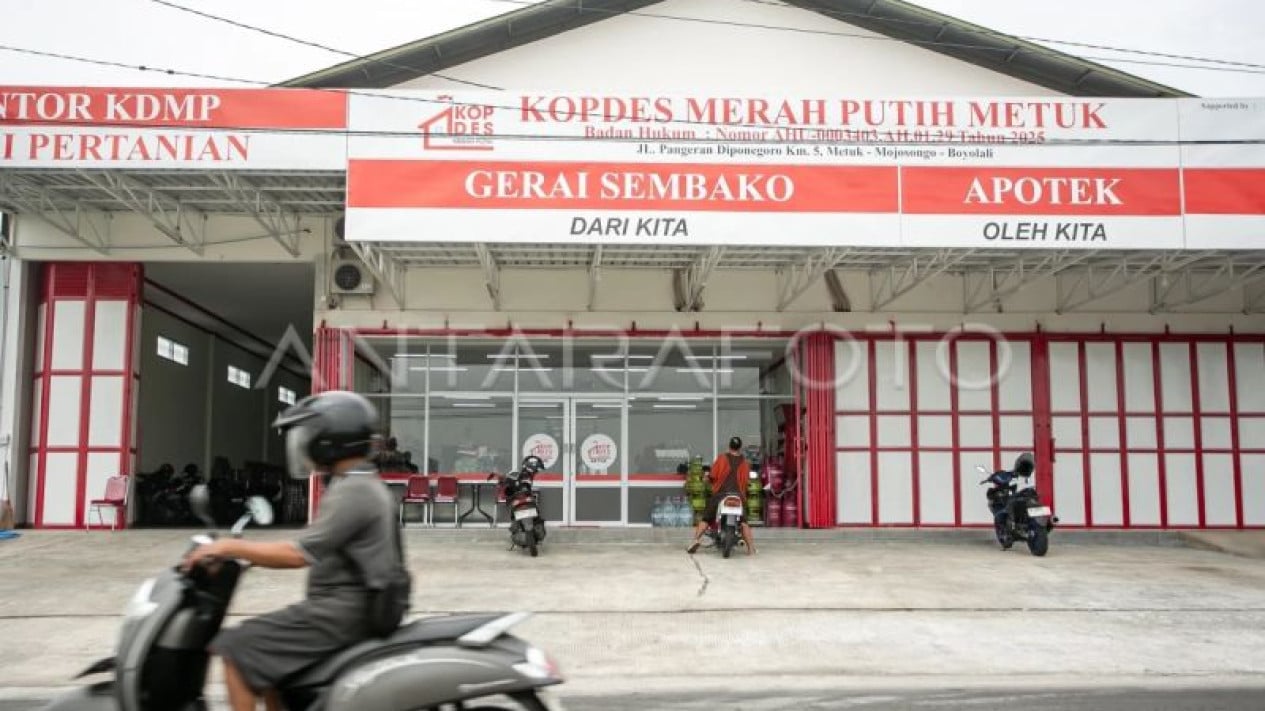
Jakarta, VIVA – Economist Dr. Surya Vandiantara has stated that the Red-and-White Village Cooperatives programme, known as Kopdes Merah Putih, is conceptually aligned with the thinking of Indonesia’s founding fathers.
Article 33 of the 1945 Constitution stipulates that the Indonesian economy shall be organised as a joint endeavour based on the principle of the family spirit.
One of the implementations of that article is the cooperative. Through cooperatives, economic development can be pursued without distinguishing between the classes and groups within society.
“The central idea behind the founding of cooperatives by our founding fathers was to advance the economy through mutual cooperation (gotong royong) without discriminating between classes or groups of society,” Surya said in a statement on Sunday, 12 July 2026.
According to Surya, one of the defining characteristics of a cooperative is mutual assistance. Members pool funds as shared capital, which can then be used to help fellow members through savings and loan schemes.
The profits generated from members’ loans are ultimately returned to the cooperative’s members to be enjoyed collectively in the form of SHU (Sisa Hasil Usaha, or surplus from business operations).
“This principle of mutual assistance, in a savings-and-loan cooperative scheme, is implemented through members’ principal savings and mandatory savings. These deposits can then provide assistance in the form of loans to other members of the cooperative, whether for productive or consumptive purposes,” he explained.
Through the KDMP, Surya said, the government is essentially pushing the cooperative concept down to the grassroots. State intervention is carried out by substituting the source of cooperative capital, from member contributions to taxes, but the principle remains mutual assistance.
“Unlike savings-and-loan cooperatives that rely on raising funds from members’ principal and mandatory savings, the KDMP relies on tax revenues collected from the public to help other members of the public. Thus the principle of mutual assistance, which is the core principle of cooperatives, remains the main foundation,” he said.
According to Surya, this intervention can bridge the classic problem of cooperatives, whereby people are reluctant to join because they cannot afford the principal and mandatory savings. Even so, its benefits can be felt by the wider public.
“This KDMP innovation is also able to answer the classic problem faced by earlier cooperatives, which struggled to persuade people to become members because of their inability to pay the principal and mandatory savings,” he explained.