
Economist says new finance minister's homework is making policy easy for markets to predict
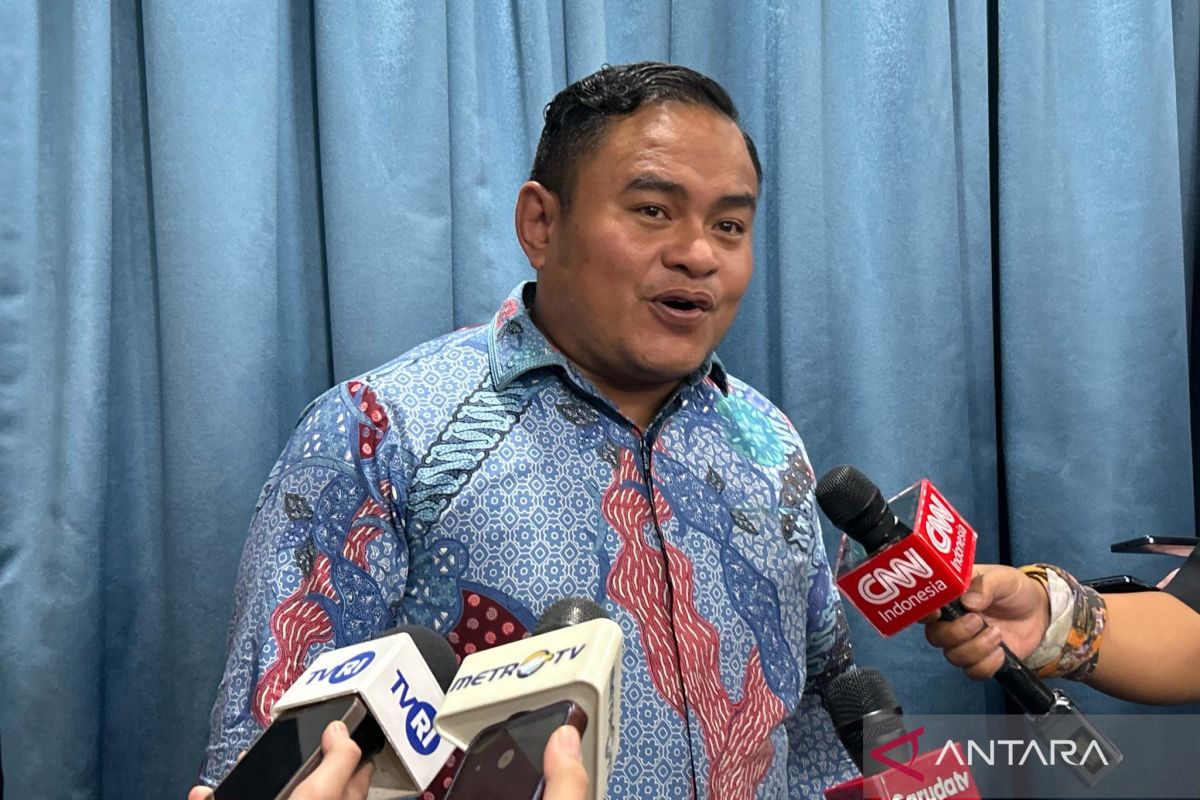
Jakarta (ANTARA) - Fakhrul Fulvian, chief economist at Trimegah Sekuritas Indonesia, believes the homework facing Suahasil Nazara as the new Finance Minister is to make fiscal policy easier for markets to read and predict.
According to him, Suahasil needs to build predictability and a clear sequence of policies so that market players can understand the direction of government policy, including who will implement it and the impact once the policy is applied.
“Markets do not merely read how large the deficit is. Markets read where policy is heading, who is executing it, when it will be done, and what happens afterwards. Credibility, in the end, is the ability to make the future slightly easier to read,” Fakhrul said in Jakarta on Tuesday.
He said there are a number of tasks the new Finance Minister Suahasil needs to complete.
First, according to him, Suahasil needs to ensure that every economic instrument of the state performs its respective function optimally.
“We already have plenty of tools. The next task is determining who does what, when, and to achieve which target. A good policy that comes in the wrong sequence can still produce a bad outcome,” he said.
For example, the placement of the Budget Surplus (SAL) needs to take into account Bank Indonesia’s (BI) liquidity operations.
Second, every policy needs to have a clear target. Fakhrul assessed that the government needs to distinguish between the instrument, the target, and the ultimate objective of a given policy.
This is because clarity of targets will also make it easier for the government to evaluate and discontinue a policy once the stated objective has been achieved.
“Economic policy needs an entrance and an exit. We are often very serious about discussing how a policy begins, but far less so about how it ends,” he explained.
Third, the management of relationships with stakeholders needs to be part of economic policy. The Finance Minister needs to strengthen coordination with BI, the banking sector, investors, the business community, state-owned enterprises (BUMN), Danantara, and other government institutions.
Fourth, budget balance needs to be viewed more broadly than merely the size of the deficit.
According to Fakhrul, the Finance Minister still needs to maintain fiscal discipline and the credibility of deficit limits. However, the quality of the State Budget (APBN) cannot be judged solely by how small the deficit figure is.
“The deficit is the end result of many decisions. What matters more is what lies behind the figure: the quality of revenue, the productivity of spending, the structure of financing, and obligations that may shift outside the APBN,” Fakhrul said.
Fifth, the taxation strategy needs to go hand in hand with the formalisation of the economy.
Fakhrul assessed that the Finance Minister’s homework is not only to raise the tax ratio but also to build a taxation strategy that can boost state revenue.
“We often treat a low tax ratio as a tax problem. In fact, part of the problem is the structure of the economy. The tax base can hardly grow if the formal economic base itself is not developing quickly enough,” he said.
Therefore, the revenue strategy needs to proceed alongside the digitalisation of transactions, data integration, improved compliance, wider access to finance, and the provision of incentives so that households and businesses see a benefit in entering and remaining within the formal system.
This approach is important so that revenue growth comes not only from intensification of the existing tax base, but also from the growing number of economic actors entering the formal system.
Furthermore, Fakhrul views the challenge for the new Finance Minister as not merely making fiscal policy more conservative or making it more expansionary.
“We safeguard the government’s balance sheet not so that it stays still. We safeguard it so that it has strength when one day it needs to be used. That is why overly rapid fiscal consolidation also needs to be avoided if domestic demand and private sector balance sheets still require support,” he said.
Source: jawawa.id (https://jawawa.id/newsitem/economist-says-new-finance-ministers-homework-is-making-policy-easy-for-markets-to-predict-1789444486)
Originally published by Antara (Indonesian) (https://www.antaranews.com/berita/5741223/ekonom-nilai-pr-menkeu-baru-membuat-kebijakan-mudah-diprediksi-pasar), translated from Indonesian