
Economist says large domestic market is key draw for petrochemical investment
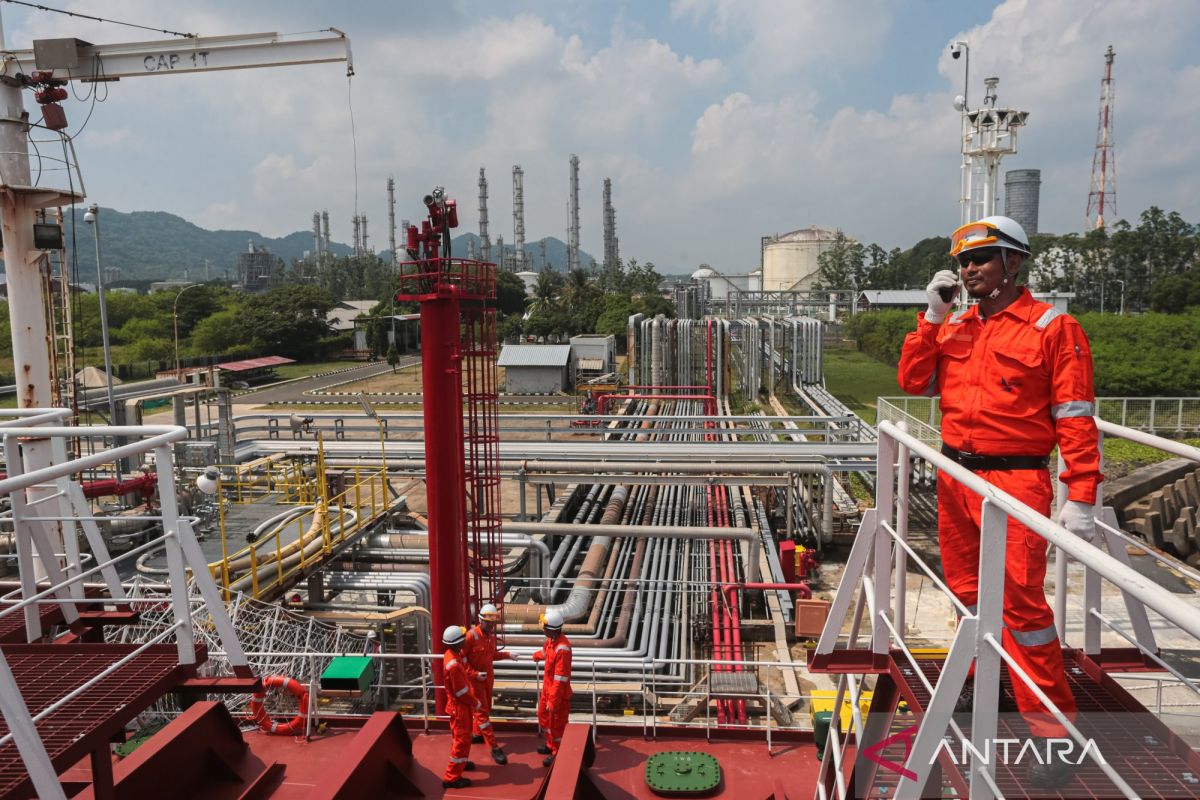
Researcher Ahmad Heri Firdaus from the Center of Industry, Trade and Investment (CITI) at the Institute for Development of Economics and Finance (Indef) has said that the large domestic market is one of the key attractions for investment in Indonesia’s petrochemical industry.
Heri therefore sees that investment prospects in the petrochemical sector remain wide open because its derivative products are needed by various manufacturing sectors, including the food and beverage, packaging, and automotive industries.
“Investment in the petrochemical sector is increasing, and the increase is quite substantial. But when that investment comes in, it must be accompanied by efforts to increase production capacity. Investment must also be supported by the availability of raw materials, infrastructure, a capable workforce, and sufficient energy supply,” Heri said in a statement confirmed in Jakarta on Thursday.
He assessed that strengthening the petrochemical industry cannot be achieved solely through the construction of downstream facilities. Investment also needs to be directed to the upstream sector to ensure the availability of basic materials such as oil and gas.
“Investment is not enough in petrochemicals alone; there must also be investment on the upstream side to increase or supply higher volumes of oil and gas for industries other than energy. So investment must also be made upstream,” he said.
Heri added that the government cannot rely solely on providing fiscal incentives to drive the growth of the petrochemical industry.
He explained that the large domestic demand for plastic raw materials actually presents an opportunity for the development of the national petrochemical industry.
However, dependence on imports makes the production costs of user industries vulnerable to global volatility.
“Yes, there are several components where we still depend on imports. So in the short term it is still not possible. For naphtha, for example, there is already a roadmap until we can meet our own raw material needs, but it requires even greater investment and a larger increase in production capacity,” Heri said.
He noted that import substitution efforts require not only the construction of new production facilities but also attention to the sustainability of the supply chain.
“The import substitution strategy must be able to run smoothly without disrupting an efficient supply chain. The supply chain will certainly change, but the change must not reduce efficiency. User industries certainly do not want their efficiency to decline. So there needs to be significant investment there first,” he said.
According to him, rising production costs due to expensive raw materials can affect companies’ strategies for maintaining product selling prices. One impact can be seen in changes to product size or content to maintain consumer purchasing power.
“If production costs continue to rise and selling prices are increased, the risk is that products will not sell or consumers will switch. Another way is to adjust the volume of the food or its contents. We feel that as a consequence of rising production costs, one of which is plastic,” Heri said.
Source: jawawa.id (https://jawawa.id/newsitem/economist-says-large-domestic-market-is-key-draw-for-petrochemical-investment-1788013226)
Originally published by Antara (Indonesian) (https://www.antaranews.com/berita/5714211/ekonom-nilai-pasar-domestik-jadi-daya-tarik-investasi-petrokimia), translated from Indonesian