
Economist says KEM-PPKF 2027 signals a new phase in Indonesia's economic development
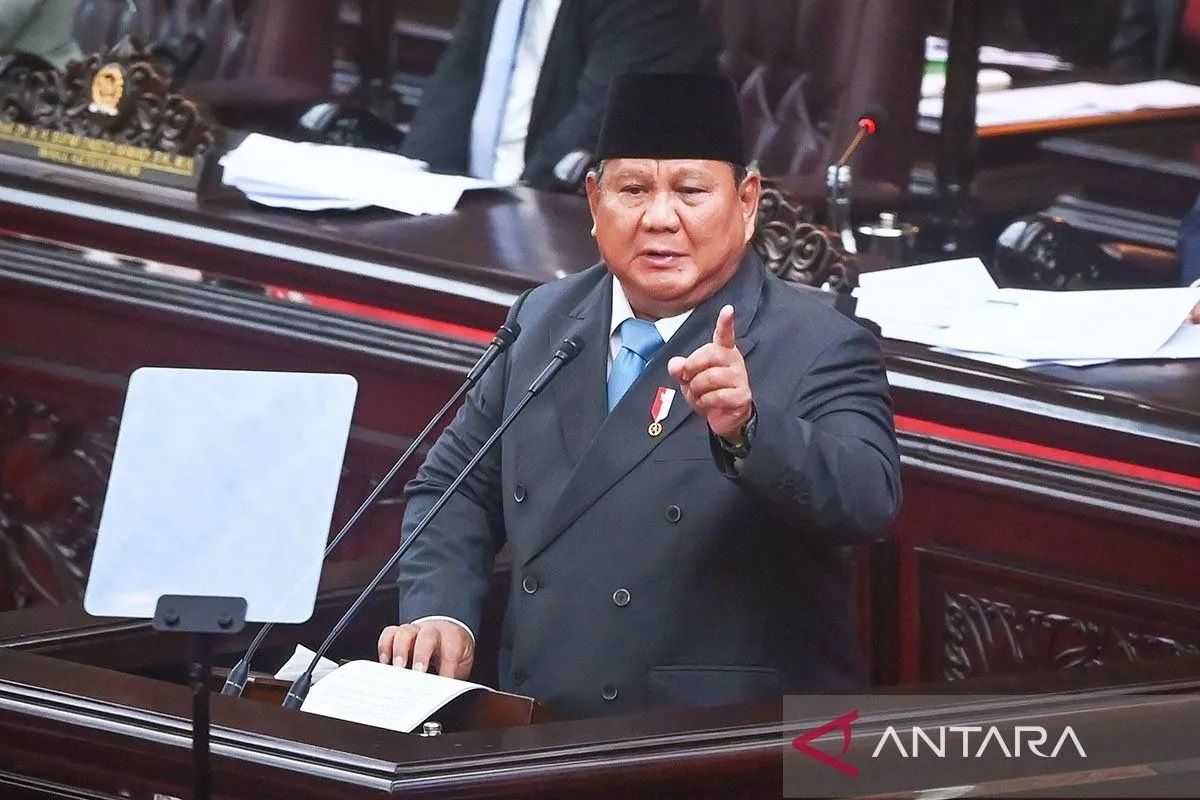
Jakarta (ANTARA) – Trimegah Sekuritas Indonesia Chief Economist Fakhrul Fulvian assessed that the KEM-PPKF 2027, as presented by President Prabowo Subianto to the DPR, signals that Indonesia is entering a new phase of economic development, namely to enlarge the state’s capacity to sustain long-term growth.
He believes the government’s target for high growth will only be realistic if Indonesia can strengthen fiscal capacity, deepen the financial markets, and build a stronger national financing strategy.
‘High economic growth cannot rely solely on consumption or commodity booms. To achieve higher, sustainable growth, the state’s capacity must also grow,’ Fakhrul said in a statement in Jakarta on Wednesday.
He explained that state capacity is not only about the size of the APBN, but also the government’s ability to maintain market confidence, strengthen external stability, and create sources of long-term, stable financing.
‘If we want to push downstreaming (hilirisasi), industrialisation, and enlarge the middle class, then the state needs fiscal space and funding structures that are far stronger than today,’ he said.
Fakhrul noted that Indonesia’s revenue-to-GDP ratio, still around 11 percent, shows that room to strengthen national fiscal capacity remains very large compared with many other emerging markets.
However, he emphasised that strengthening state capacity should not be done solely through increasing tariffs or new levies.
‘The main focus should be on improving tax compliance, broadening the formal economy, digitising administration, and most importantly maintaining confidence in the direction of government policy,’ he explained.
In an increasingly volatile global era, according to Fakhrul, policy that is consistent and predictable is a key factor in keeping the cost of funding for the state low.
‘The modern financial markets ultimately move on confidence. A trusted country will have cheaper funding costs. Conversely, policy uncertainty creates an expensive risk premium,’ he said.
Fakhrul noted one key point from the President’s briefing, namely the focus on the imbalance between Indonesia’s large trade surplus and the ongoing net outflow in the financial balance of payments.
‘This shows that Indonesia remains too vulnerable to the global dollar cycle. We have a large trade surplus, but when the dollar strengthens, pressure still hits the domestic financial markets. In other words, our balance of payments structure still needs strengthening,’ he explained.
Fakhrul also assessed that achieving high future growth can only be achieved if Indonesia succeeds in building a financing architecture that is more resilient to external shocks.
According to him, three main strategies need to be accelerated by the government and financial authorities: one, deepening the domestic derivatives market so that businesses and investors have better hedging instruments against global risk.
The second strategy is the gradual and realistic internationalisation of the rupiah, especially through expanding local currency settlement in the regional area.
The third is to broaden non-dollar financing sources through the issuance of renminbi-denominated bonds, by both the government and the private sector.
Additionally, he said, Indonesia needs to build a long-IDR environment to strengthen domestic long-term financing.
Fakhrul emphasised that Indonesia’s greatest challenge ahead is not only pursuing growth but ensuring the country has a sufficiently robust financing foundation to support the transformation.