
Economist says Indonesia's trade surplus still overshadowed by energy imports
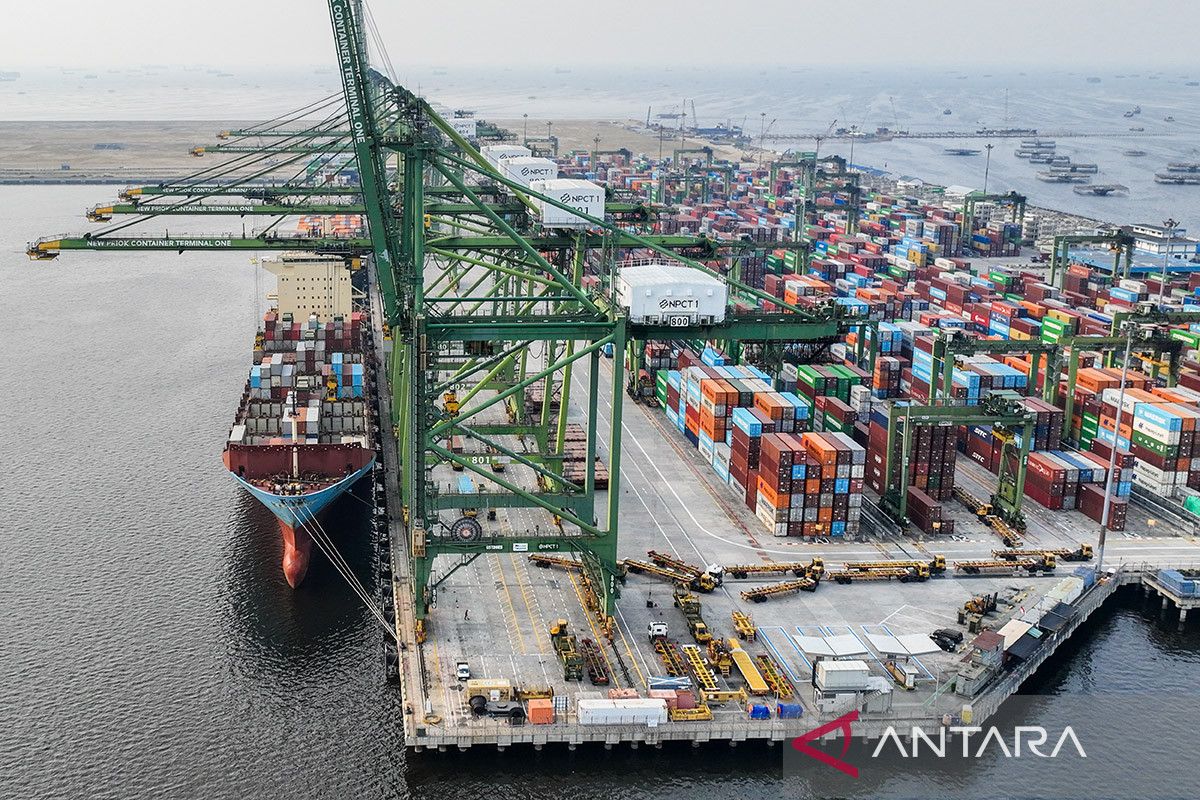
The US$450 million trade deficit in June shows that the external surplus is beginning to come under pressure, mainly due to rising energy imports and growing domestic demand.
Jakarta (ANTARA) — Yusuf Rendy Manilet, an economist at the Center of Reform on Economics (CORE) Indonesia, assesses that Indonesia’s trade balance in the first half of 2026 continues to show resilience, though its performance remains overshadowed by rising energy imports that have widened the oil and gas sector deficit.
Yusuf said that according to data from Statistics Indonesia (BPS), Indonesia’s trade balance in the first half of 2026 still recorded a surplus of around US$3.58 billion. However, a trade deficit of US$450 million in June 2026 signals that the external surplus is starting to come under pressure.
“The US$450 million trade deficit in June shows that the external surplus is beginning to be squeezed, mainly due to rising energy imports and increasing domestic demand,” Yusuf said when contacted by ANTARA in Jakarta on Monday.
According to him, the situation reflects that Indonesia’s trade resilience still relies heavily on certain commodities, making it vulnerable to changes in global prices, particularly in the oil and gas sector.
He explained that the greatest pressure on the trade balance comes from the widening oil and gas deficit, driven by high imports of crude oil and refined petroleum products.
Meanwhile, he noted that the non-oil and gas trade surplus is still able to support the national trade balance, although its margin is increasingly limited.
On the export side, Yusuf said the manufacturing industry remains the main engine of growth, particularly through nickel downstreaming.
Nevertheless, weakening exports from the agriculture, forestry, fisheries and raw mining sectors indicate that Indonesia’s export structure is not yet sufficiently diversified.
On the import side, Yusuf said the increase in imports of raw materials, capital goods and electrical equipment reflects investment and production activity that is still running.
Even so, he cautioned that the situation also shows that domestic industry remains highly dependent on imported inputs.
“If increased domestic production capacity cannot keep pace with import growth, pressure on the trade balance will re-emerge whenever energy prices rise or domestic demand strengthens,” Yusuf said.
He therefore considers strengthening domestic industrial capacity and diversifying the export structure to be essential steps for maintaining a sustainable trade balance surplus amid global economic dynamics.
Data from Statistics Indonesia (BPS) show that Indonesia’s trade balance in January–June 2026 still recorded a surplus of US$3.58 billion.
The surplus was supported by a non-oil and gas trade surplus of US$19.35 billion, although the oil and gas sector posted a deficit of up to US$15.77 billion.
In June 2026, the trade balance recorded a deficit of US$450 million due to an oil and gas trade deficit of US$3.49 billion, while the non-oil and gas sector still booked a surplus of US$3.04 billion.
On the export side, BPS recorded the manufacturing industry as the main pillar, with growth of 7.37 percent in the first half of 2026 compared with the same period last year, driven primarily by increased nickel exports.
The value of nickel and goods derived from it jumped 62.27 percent, or US$2.51 billion, the largest increase among the ten main non-oil and gas export commodities.
By contrast, exports from the agriculture, forestry and fisheries sectors fell 22.55 percent due to weakening coffee exports, while exports of mining products and others fell 5.12 percent amid declining copper ore exports.
Meanwhile, the value of Indonesia’s imports during January–June 2026 reached US$137.24 billion, up 18.69 percent compared with the same period the previous year.
The increase was driven by a 15.50 percent rise in non-oil and gas imports and a 38.71 percent surge in oil and gas imports, mainly due to a 39.96 percent increase in crude oil imports and a 38.27 percent rise in refined petroleum product imports.