
Economist says Indonesia's export fundamentals remain strong despite May contraction
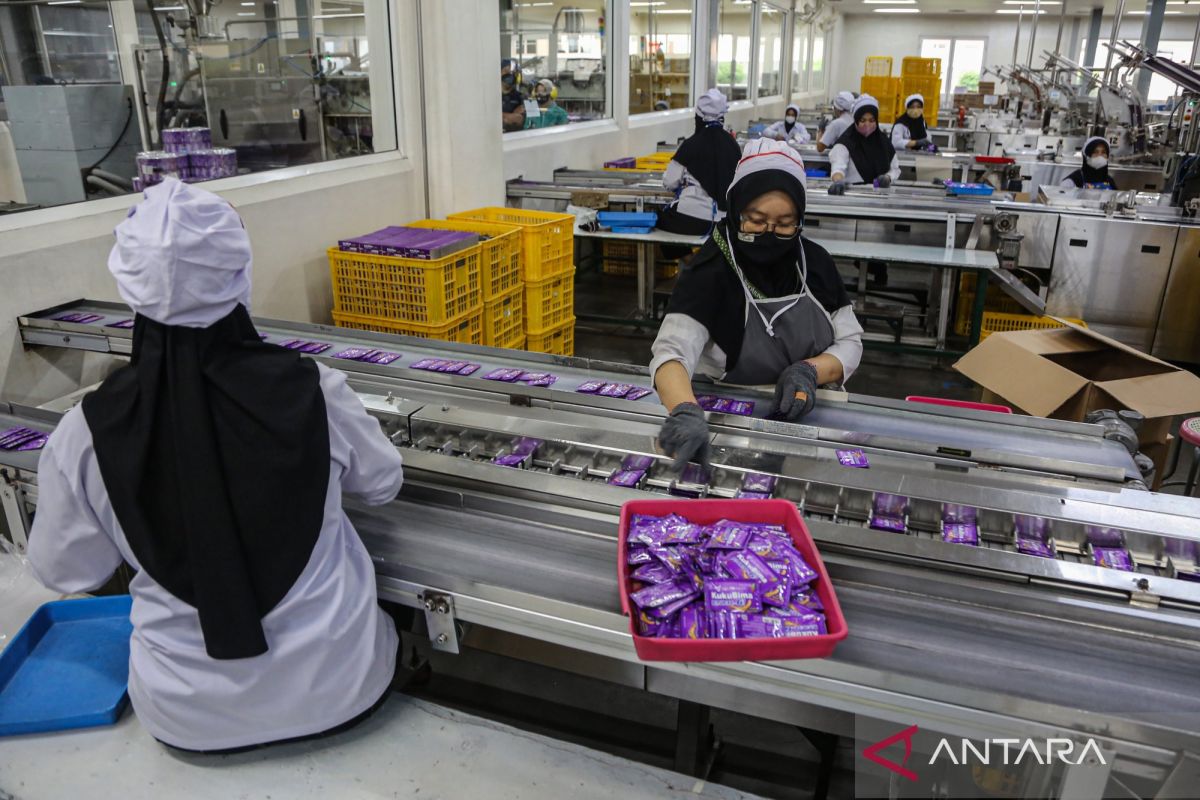
Economists from the Centre of Reform on Economics (CORE) Indonesia, Yusuf Rendy Manilet, assess that Indonesia’s export foundations remain sufficiently strong despite a 4.5 per cent year-on-year contraction in non-oil and gas export values in May 2026.
This decline is believed to be driven by a drop in certain specific commodities, while cumulative export performance continues to record growth. Speaking in Jakarta on Friday, Yusuf explained that the pressure on non-oil and gas exports in May 2026 is concentrated within a few key commodities rather than representing a widespread weakening.
“If we analyse the 4.5 per cent contraction in non-oil and gas exports in May 2026, the source of pressure is actually quite concentrated and does not indicate a decline across almost all commodities,” he said.
Statistics Indonesia (BPS) reported that Indonesia’s export value in May 2026 reached 23.2 billion US dollars, a decrease of 5.73 per cent compared to the same period last year. This weakening was primarily triggered by the decline in non-oil and gas exports.
The value of non-oil and gas exports reached 22.45 billion US dollars, representing a 4.5 per cent contraction compared to May 2025. In contrast, in April 2026, Indonesia’s export value was recorded at 25.30 billion US dollars, growing by 21.98 per cent.
In terms of commodities, the largest decline in non-oil and gas exports in May 2026 came from the export of precious metals, jewellery, and gemstones, which fell by 59.35 per cent, contributing a negative impact of approximately 2.93 per cent to non-oil and gas export performance. Additionally, exports of metal ores, slag, and ash plummeted by 99.25 per%, while iron and steel exports fell by 14.68%.
According to Yusuf, the decline in metal ore exports is a consequence of government policies banning the export of raw materials as part of efforts to encourage downstreaming. “Therefore, this is more a consequence of policy rather than a signal of weakening export competitiveness,” he added.
Meanwhile, he noted that the correction in precious metal exports was influenced by the normalisation of gold prices following a very high rally last year, making the base comparison effect less favourable. Furthermore, the decline in iron and steel exports is still driven by the lack of recovery in demand from China, particularly due to the weak property and construction sectors in that country.
He added that the 19 per cent US reciprocal tariff is beginning to place additional pressure on Indonesian exports. However, he assessed that the impact so far has been felt more by the textile, footwear, and electronics industries, and has not yet become the primary cause of the non-oil and gas export decline in May.
Nevertheless, Yusuf believes Indonesia’s export fundamentals remain intact. Cumulatively from January to May 2026, non-oil and gas exports grew by 3.89 per cent to 110.19 billion US dollars.
This growth was supported by an increase in the export of several downstream products, including processed nickel products, which rose by more than 61 per cent, crude palm oil (CPO), which grew by approximately 8.6 per cent, and inorganic basic chemicals, which surged by more than 84 per cent.
“This shows that downstreaming is starting to produce added value capable of cushioning the pressure from the decline of several main commodities. Therefore, a contraction in a single month should not be immediately read as a sign that Indonesia’s exports are entering a broader period of decline,” he concluded.