
Economist Says Halal Certification Could Boost Food and Beverage Industry Competitiveness
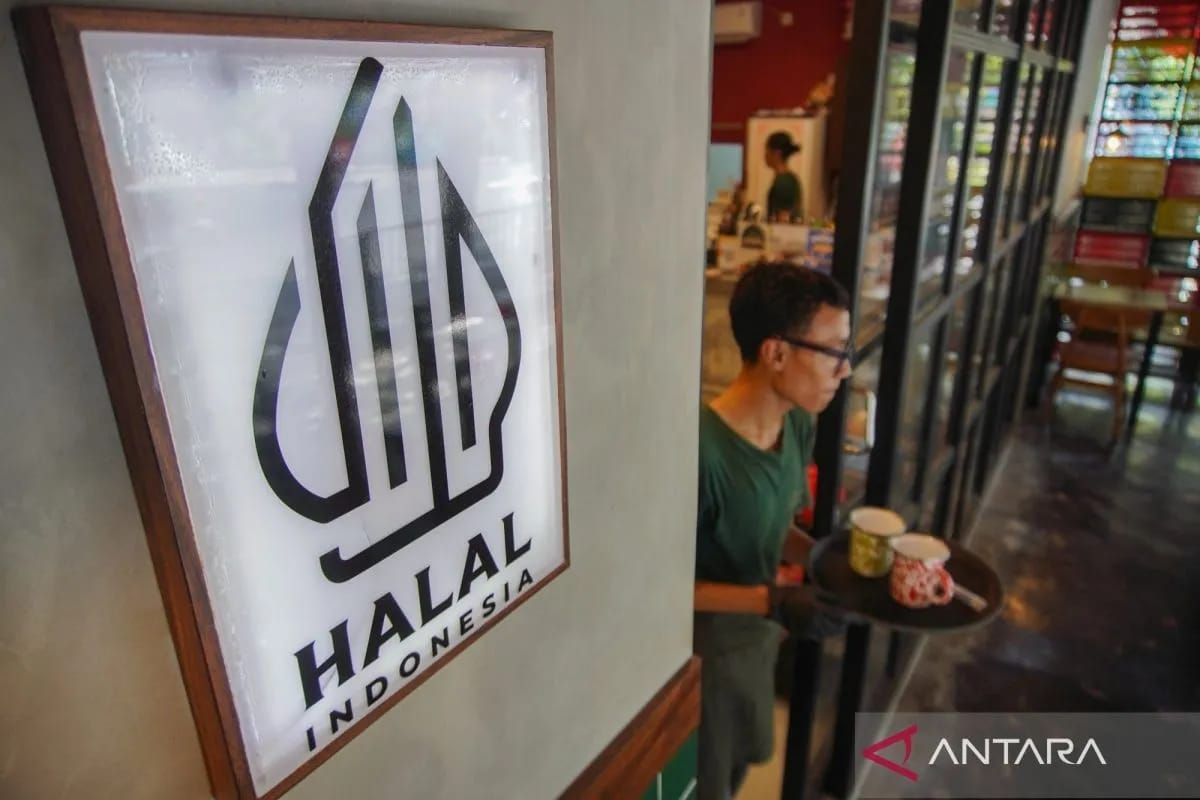
Jakarta (ANTARA) – Segara Research Institute senior economist YB Kadarusman said the government’s implementation of mandatory halal certification could act as a catalyst for improving the competitiveness of the food and beverage industry and its integration into global supply chains.
“First, it can support the transformation and scaling-up of the industry by formalising micro and small enterprises (MSEs), encouraging food and beverage businesses to join formal record-keeping systems and adopt food hygiene and quality standards,” Kadarusman said at a public discussion in Jakarta on Wednesday.
He said the opportunity for businesses to move up the value chain was consistent with macroeconomic conditions that could encourage the private sector to grow from micro-scale subsistence activity into a competitive industry.
“Halal certification also creates opportunities for MSEs to become official suppliers to modern retailers, state-owned food companies and franchise chains,” Kadarusman said.
He said halal certification could also be integrated with efforts to expand into the global halal export market, through international cooperation on halal product assurance with the authorities of trading partners.
Kadarusman added that mutual recognition agreements (MRAs) with foreign halal institutions, or the principle of reciprocity, could make it easier for Indonesian food and beverage products to enter markets in the Middle East, South-east Asia (ASEAN) and the Organisation of Islamic Cooperation (OIC).
“Halal labelling serves as a guarantee of quality and ethical integrity (thayyib), which global markets value, with a potential market worth trillions of dollars,” he said.
Kadarusman also said mandatory halal rules were expected to create quality formal jobs, both in food processing and across the wider halal ecosystem.
“They will create new formal jobs for halal auditors, halal supervisors, laboratory analysts and quality-assurance consultants,” he said.
At the same time, Kadarusman said compliance with mandatory halal regulations needed to be aligned with national economic resilience.
“First is timing: enforcement should be phased and include an educational approach. Introduce a grace period for enforcement, prioritising written warnings and administrative guidance before fines or product withdrawals, to prevent disruption to retail supplies, particularly food and beverages,” he said.
Second, he called for greater cost efficiency through optimised subsidies for MSEs. Measures could include expanding the allocation of free self-declared certification for micro food and beverage businesses, and involving state-owned enterprises and large private-sector companies through corporate social responsibility programmes and supply-chain partnerships to address limits on the state budget.
He also called for faster integration and recognition of foreign halal institutions through MRAs, to prevent shortages of imported raw materials for the food and beverage industry and encourage Indonesian halal exports. He proposed setting up a supply-control task force with the Ministry of Agriculture, the Ministry of Trade and the Halal Product Assurance Agency (BPJPH) to help curb food inflation.
Source: jawawa.id (https://jawawa.id/newsitem/economist-says-halal-certification-could-boost-food-and-beverage-industry-competitiveness-1791971549)
Originally published by Antara (Indonesian) (https://www.antaranews.com/berita/5785845/ekonom-sebut-sertifikasi-halal-katalis-daya-saing-industri-mamin), translated from Indonesian