
Economist says free meals programme helped support 5.29 percent growth in Q2
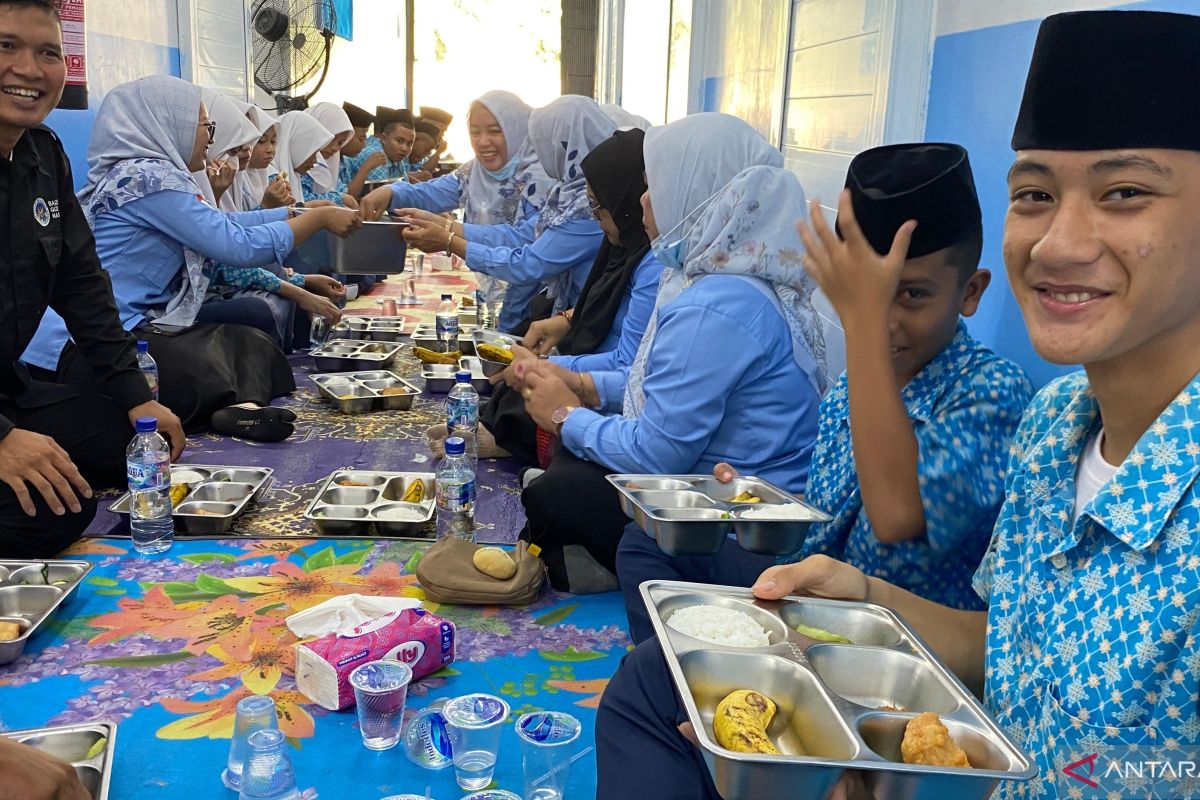
The contribution of the Free Nutritious Meals (MBG) programme is reflected in the performance of household consumption and government spending, according to Faisal Rachman, Head of the Macroeconomics and Financial Market Research Department at Bank Permata. Household consumption growth slowed to 5.06 percent year-on-year (yoy) from 5.52 percent yoy in the previous quarter, partly due to the seasonal normalisation following Ramadan and Idul Fitri and a high base effect from the same period last year. Despite the slowdown, household spending was still supported by the school holiday period, the continued implementation of the MBG programme, and strong digital economic expansion.
Government consumption also slowed to 15.97 percent yoy from 21.81 percent yoy in the first quarter of 2026, but Faisal noted that it continued to play an important role in maintaining a pro-growth fiscal balance while acting as a buffer against external shocks. Government spending was primarily supported by the disbursement of the 13th-month salary for civil servants and the ongoing MBG programme. Meanwhile, gross fixed capital formation, or investment, strengthened to 6.87 percent yoy from 5.96 percent yoy in the previous quarter, driven by vehicle investments related to the MBG programme and the Koperasi Desa Merah Putih (KDMP) initiative. Net exports continued to weigh on GDP growth, with exports facing pressure from prolonged global uncertainty and weak external demand, while imports remained relatively resilient in line with solid domestic demand supported by government policy stimulus.
Deputy for Balance Sheet and Statistical Analysis at BPS, M. Edy Mahmud, also highlighted the contribution of the MBG programme to economic growth. From the government spending side, the realisation of goods expenditure channelled through the MBG programme in the second quarter of 2026 increased compared to the same period last year. According to Ministry of Finance data, cumulative MBG budget realisation up to June 2026 reached Rp98.8 trillion for the first and second quarters. Of that total, realisation in the first quarter was Rp54.1 trillion, while the second quarter recorded Rp44.7 trillion. Although the second quarter figure was lower than the first quarter, it represented a sharp increase compared to the Rp2.9 trillion realised in the second quarter of 2025. Edy noted that the increase in government spending realisation helped drive economic growth, as every rupiah spent by the government flows into the business sector and circulates throughout the economy.