
Economist says DSI transparency is important to preserve business certainty
Jakarta, ANTARA – An economist from the Centre of Reform on Economics (CORE) Indonesia, Dipo Satria Ramli, says transparency and governance are important factors in the government’s policy that designates a state-owned enterprise (BUMN) as the sole exporter for several natural resource commodities (SDA).
According to Dipo, openness of trading mechanisms and the role of PT Danantara Sumber Daya Indonesia (DSI), prepared by the government as a platform for managing and recording the export trade of strategic SDA commodities, are important to maintain business certainty amid the dynamics of the global economy.
“Governance and information transparency issues are important so as not to add to business operators’ concerns,” Dipo told ANTARA in Jakarta on Wednesday.
He said that, in principle, the policy to regulate the export of SDA commodities by the government has a good aim, particularly to address under-invoicing practices that have been perceived to have persisted for a long time.
“Spiritually, I view the policy (governance of SDA exports under a single BUMN) as okay, because there have long been issues of under-invoicing,” he said.
The government previously said that under-invoicing in the export of SDA commodities is estimated to have cost the state up to around Rp15,400 trillion over 34 years.
However, Dipo reminded that the policy’s implementation needs to be done carefully given that the business world is still facing various global challenges.
According to him, geopolitical uncertainty, a weakening rupiah exchange rate, and imported inflation pressures mean many business players are still in a wait-and-see position.
Dipo said the government must ensure the DSI implementation mechanism operates openly, including the trading process, price-determination mechanism, and the role of the BUMN in the SDA export chain.
He said clarity of these mechanisms is required so that business players still have certainty in conducting trading and investment activities.
“Nah, this must also be clear from the mechanism side: whether the BUMN will simply act as a pass-through for exports, or will also take profits. If it takes profits, the amount must also be clearly defined,” Dipo said.
In addition, he warned that the policy’s implementation must take into account the business environment to avoid creating new uncertainty in the market.
According to Dipo, the government must ensure the transition process runs clearly and transparently so as not to raise concerns among exporters and investors.
“The main concerns also lie in the execution. For example, those who have exported coal for the past 20 years with one partner may suddenly have a new intermediary. So, in my view, the governance of this BUMN must be truly open and transparent,” he said.
Furthermore, Dipo said the policy should also consider its impact on the profit levels of exporting companies because it could affect the valuations of listed entities operating in related commodity sectors.
He said the government should anticipate possible spillovers into the capital market and investor confidence to ensure policy implementation remains conducive.
President Joko Widodo, President of Indonesia, Prabowo Subianto, previously announced the issue of Government Regulation (PP) on the Governance of Exports of Natural Resource Commodities, which regulates the management of trade for several national strategic commodities.
Under this policy, state-owned enterprises are designated as the sole exporters of palm oil, coal, and ferroalloys.
The Minister of Investment and General Industry Rosan Roeslani previously said the government is currently focusing on data collection and reporting of SDA commodity export transactions as part of strengthening the governance of national trade.
According to Rosan, all SDA strategic commodity export transactions will eventually be required to be recorded in the DSI system to enhance transparency and accuracy of trade data.
The government has also prepared a transition period from June to December 2026 before the full implementation of the export trade system via the platform prepared by the government.
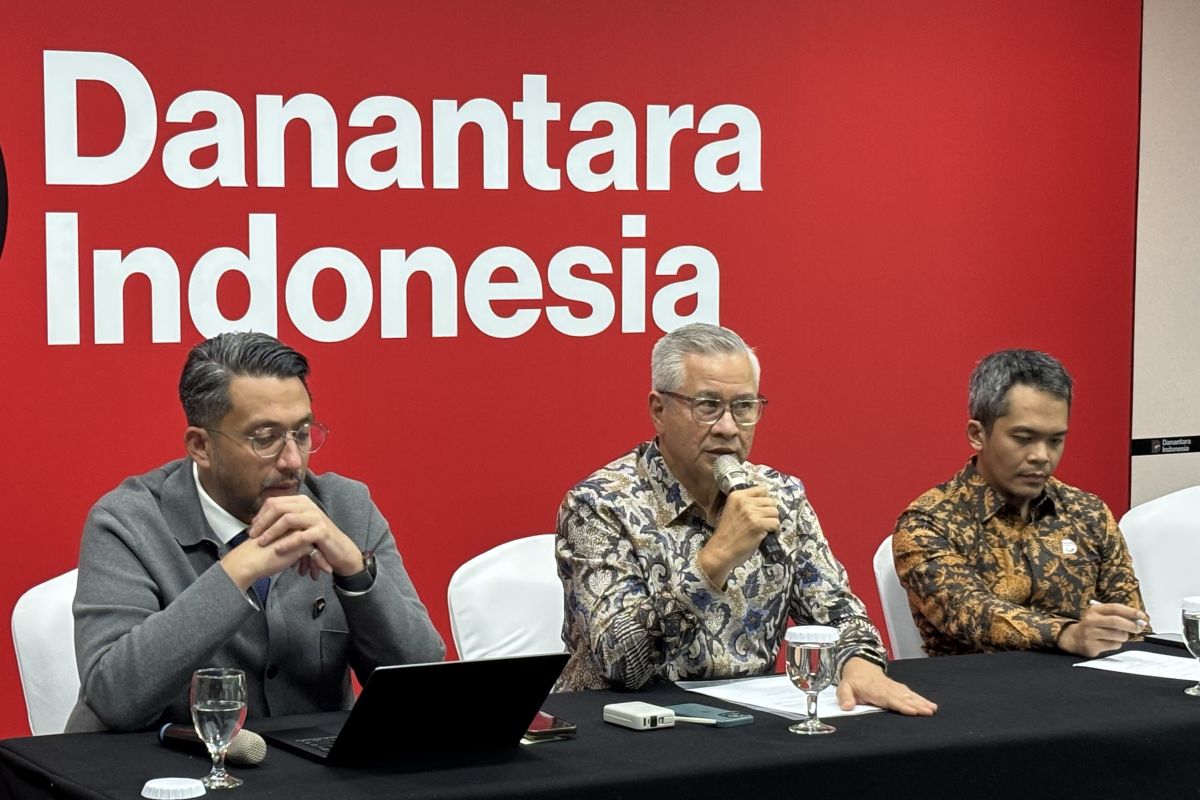
Danantara Indonesia Managing Director of Stakeholders Management and Communications, Rohan Hafas, later said that DSI will, in the next phase, act as a buyer of national strategic commodities before marketing them again to the global market as part of strengthening the governance of SDA export trade.