
Economist Says B50 Mandate Will Strengthen Trade Balance and Reduce Import Dependency
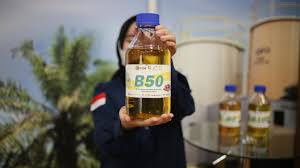
Economist Hendry Cahyono from Surabaya State University (Unesa) stated that the B50 biodiesel mandate is a strategic move to strengthen national energy security and reduce Indonesia’s dependence on diesel imports. The programme, which involves blending 50 percent palm oil-based biofuel into diesel, is also expected to benefit the country’s foreign exchange reserves and the rupiah exchange rate. “If what is conveyed is correct, it will indeed lower import figures. One of the impacts could also be an appreciation of the rupiah exchange rate,” Hendry said on Thursday (18/6/2026).
The government estimates that implementing B50 could allow Indonesia to stop diesel imports entirely and save up to Rp157 trillion in foreign exchange. Hendry believes this target is achievable provided the government has carefully calculated raw material needs, biodiesel industry capacity, and financing schemes.
He also sees the B50 mandate as a key project in achieving energy resilience. While energy self-sufficiency does not rely solely on biodiesel, increasing the use of domestically sourced fuels can reduce dependence on foreign supplies. “If B50 is used and the industrial sector also adopts B50, it could become a pilot project for energy resilience,” he said.
Hendry added that the policy could spur growth in the national biodiesel industry. Rising demand for biofuel could attract new investment, increase factory utilisation rates, and create multiplier effects for the plantation and palm oil processing sectors. He noted that Indonesia has the opportunity to become a pioneer in high-blend biodiesel adoption, as other countries currently use lower blends, such as Malaysia at B10 to B20, Thailand at around B20, and several European countries at 7 to 10 percent.
On the environmental front, Hendry cautioned that the increased need for palm oil should be met through productivity improvements and technology, rather than massive expansion of plantations that could lead to deforestation and carbon debt.
Energy expert Rishal Asri from the Sumatra Institute of Technology (ITERA) assessed that the government’s move to raise the mandate from B40 to B50 is economically sound. “The government’s action is correct. Reducing subsidies through blending raw materials up to B50 is economically right,” he said. From an environmental perspective, higher biofuel content can lower combustion emissions, as reduced fossil diesel content leads to lower carbon monoxide and hydrocarbon emissions.
The government has officially set the nationwide implementation of the B50 biodiesel mandate for 1 July 2026. The policy aims to strengthen energy independence and security while halting diesel imports. The transition journey includes key milestones: B20 starting in 2016, B30 in early 2020, B35 in February 2023, and intensive B50 field trials conducted by the Ministry of Energy and Mineral Resources and Pertamina until early 2026. Based on positive trial results, full B50 implementation is confirmed for 1 July 2026. Ministry data projects foreign exchange savings of Rp157.28 trillion and the creation of over 2.2 million jobs. Environmentally, B50 is targeted to reduce greenhouse gas emissions by 46.72 million tonnes of CO2 in 2026.
Source: jawawa.id (https://jawawa.id/newsitem/economist-says-b50-mandate-will-strengthen-trade-balance-and-reduce-import-dependency-1781801466)
Originally published by Media Indonesia (https://mediaindonesia.com/ekonomi/902007/ekonom-sebut-mandatori-b50-perkuat-neraca-dagang-dan-kurangi-ketergantungan-impor), translated from Indonesian