
Economist: S&P Global's Retention of Indonesia's Rating is Positive News
This means Indonesia remains in the investment-grade category, so investor confidence in the country’s economic stability is preserved.
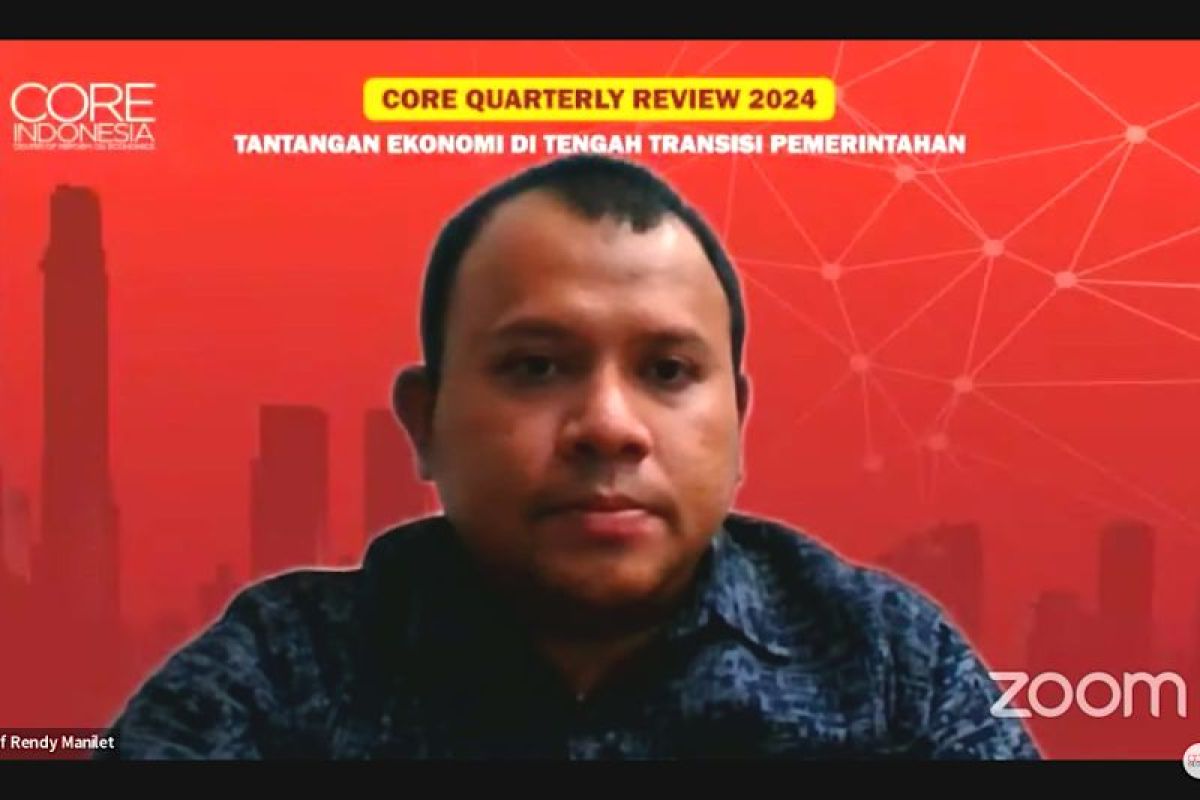
Jakarta (ANTARA) - Yusuf Rendy Manilet, an economist at the Center of Reform on Economics (CORE) Indonesia, stated that S&P Global Ratings’ decision to maintain Indonesia’s rating at BBB with a stable outlook is positive news.
“This means Indonesia remains in the investment-grade category, so investor confidence in the country’s economic stability is preserved,” he told ANTARA in Jakarta on Tuesday.
Even so, he emphasised that Indonesia’s rating was only maintained, not upgraded. What deserves attention is the message behind the stable outlook and the conditions attached to it.
For investment, the unchanged rating is seen as helping to keep the government’s debt costs under control and maintaining the appeal of Indonesian bonds in the eyes of global investors. However, S&P’s optimism still largely rests on projections of improving state revenues driven by rising commodity prices.
This indicates that part of the positive assessment still depends on external factors beyond the government’s control, rather than deriving entirely from strengthening economic fundamentals through structural reform.
On the other hand, S&P also gave a fairly clear message that it appreciates Indonesia’s relatively strong economic growth, prudent macroeconomic policy, and government debt ratio that remains low compared with peer countries.
Nevertheless, they continue to highlight weaknesses Indonesia has long faced, namely low per capita income, a narrow export and state revenue base, and suboptimal financial sector deepening.
“The core issue is the ratio of state revenue to GDP (Gross Domestic Product), which remains low. As long as fiscal space rests on a limited revenue base, any weakening in commodity prices will immediately increase pressure on the state budget (APBN),” he said.
Yusuf himself is interested in S&P’s view on the downstreaming policy. S&P is said to recognise that downstreaming has the potential to increase added value, exports, and state revenue. At the same time, they caution that overly rapid policy changes or inconsistent implementation could reduce investor confidence, put pressure on the rupiah exchange rate, and increase volatility in financial markets.
“So what is being assessed is not only the direction of policy, but also regulatory certainty and the credibility of its implementation,” said the CORE economist.
Furthermore, he sees three priorities in the effort to carry out structural reform: broadening the economic base so that it no longer depends on raw commodities; raising productivity through investment in human resource quality and financial sector deepening; and strengthening institutional quality and regulatory certainty.
On the fiscal side, Yusuf argues that dependence on revenues that follow commodity price cycles must begin to be reduced.
“A healthier fiscal foundation comes from stronger and more sustainable domestic revenues. The focus is not merely on raising tax rates, but on broadening the tax base through formalisation of the informal sector, improving taxpayer compliance, refining tax administration, and closing various revenue leaks. That way, the ratio of state revenue to GDP can rise gradually and fiscal space becomes stronger,” he said.
Source: jawawa.id (https://jawawa.id/newsitem/economist-s-p-globals-retention-of-indonesias-rating-is-positive-news-1784037342)
Originally published by Antara (Indonesian) (https://www.antaranews.com/berita/5649340/ekonom-sp-global-pertahankan-peringkat-ri-jadi-kabar-positif), translated from Indonesian