
Economist Reveals Efficiency of BUMN Streamlining Depends on This Factor
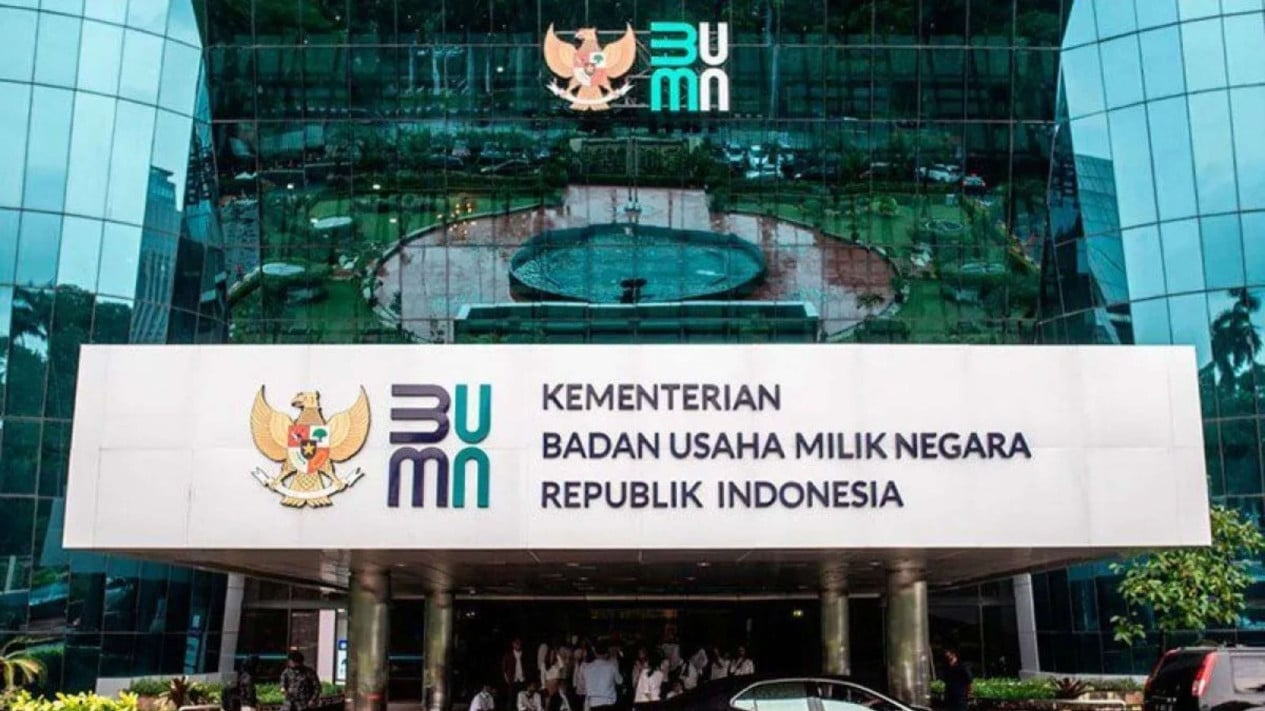
Economist from the Center of Reform on Economics (CORE) Indonesia, Yusuf Rendy Manilet, has assessed that streamlining efforts to improve the health of state-owned enterprises (BUMN) have the potential to increase operational efficiency. However, he noted that its success is highly dependent on the implementation of consolidation and governance.
Yusuf explained that the current structure of BUMN, which consists of parent companies, subsidiaries, and sub-subsidiaries, incurs additional costs. "Each layer adds administrative, coordination, and decision-making costs without increasing productivity," Yusuf said in Jakarta on Wednesday, 8 July 2026.
He added that with a leaner structure, BUMN are expected to focus more on their core business, achieve a larger business scale, and make business decisions more quickly. He assessed that the experience of merging several sub-holdings of PT Pertamina (Persero), which reportedly generated efficiency savings of around USD 600 million to USD 700 million, demonstrates that the benefits of consolidation are indeed achievable.
Nevertheless, Yusuf noted that merging hundreds of companies with different systems, work cultures, and financial conditions would naturally require time and a complex process. He also stated that the target to complete the consolidation within a short period is quite ambitious, meaning its success will be largely determined by the quality of implementation on the ground.
Yusuf also highlighted the government’s commitment to avoiding layoffs during the BUMN streamlining process. However, from an economic perspective, he argued that efficiency is not only measured by the reduction in the number of companies but also by the increase in labour productivity. "If employees are merely transferred without adjustments to their functions and organisational needs, some of the potential efficiency gains could be lost," he said.
Furthermore, Yusuf assessed that governance is the most decisive factor for the success of the BUMN streamlining programme. He argued that the large-scale consolidation of state assets must be accompanied by a strong oversight system to ensure that the liquidation, merger, and divestment processes are conducted transparently and accountably. He added that the involvement of the Attorney General’s Office, the Audit Board of Indonesia (BPK), the Financial and Development Supervisory Agency (BPKP), and the Ministry of Law is a strategic step to strengthen the credibility of the consolidation process.
The government is targeting a reduction in the number of BUMN from approximately 1,077 entities to between 200 and 300 companies through schemes involving liquidation, divestment, consolidation, and restructuring. In line with the directive of President Prabowo Subianto, the streamlining process is targeted for completion by 2026.