
Economist: Quality of domestic salt is key to reducing industrial salt imports
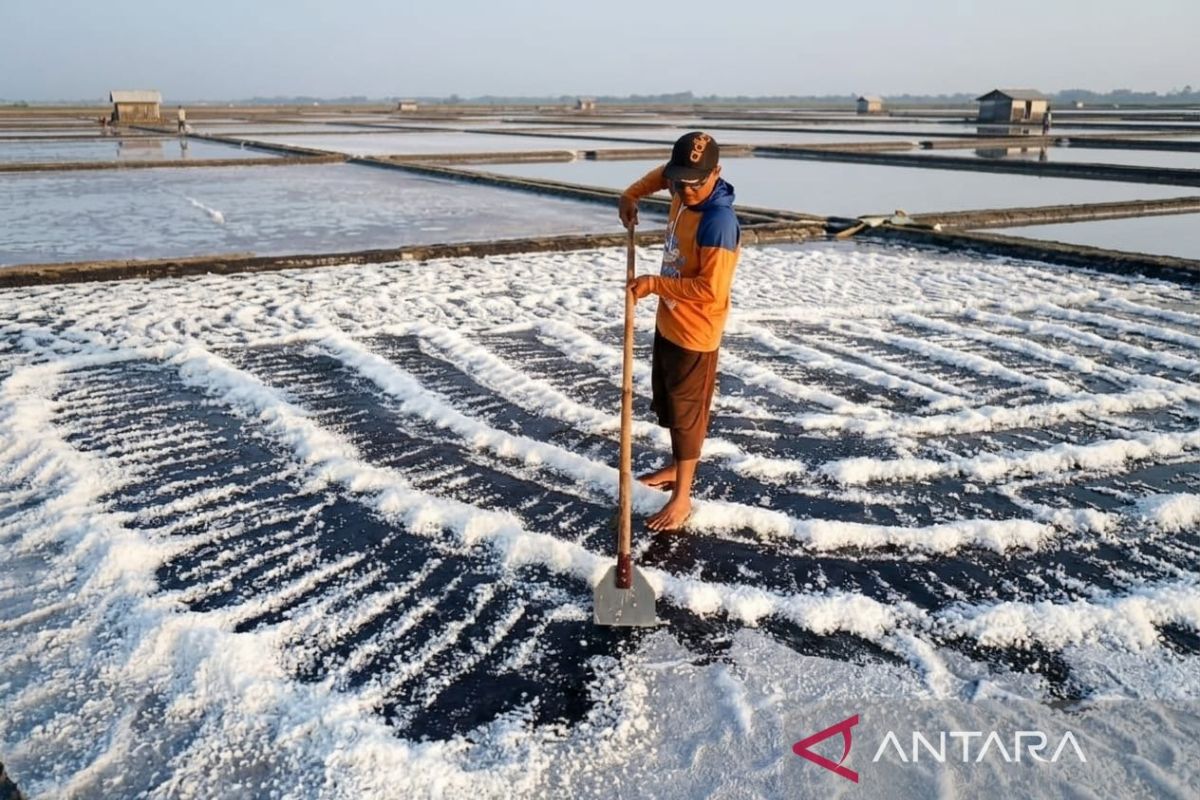
Jakarta (ANTARA) - Esther Sri Astuti, Executive Director of the Institute for Development of Economics and Finance (Indef), believes that improving the quality and specification compliance of domestic salt is the key to reducing dependence on imported industrial salt.
Esther said that for the chemical industry, particularly chlor-alkali plants (CAP), salt is a continuous-process raw material that must be available in sufficient quantities, of the right quality, competitively priced, and consistently supplied.
“The issue is not simply replacing imported tonnage with locally produced tonnage. Industry requires fit-for-purpose salt — salt that consistently meets process specifications,” Esther told ANTARA in Jakarta on Tuesday.
Data from the Ministry of Marine Affairs and Fisheries (KKP) shows that national salt demand in 2024 reached approximately 4.8 million tonnes. More than 55 per cent of that requirement was still met through imports, particularly high-specification industrial salt.
The KKP’s 2025–2029 Strategic Plan records national salt demand at between 4.5 million and 4.9 million tonnes per year in 2024–2025.
Of that requirement, more than 2.5 million tonnes is used by the industrial sector, which requires sodium chloride (NaCl) content above 97 per cent.
CAP is the dominant user, followed by, among others, the pulp and paper, textile, petrochemical, pharmaceutical, and food and beverage industries.
The KKP notes that the inconsistent quality of salt produced by smallholder farmers remains one of the obstacles to industry absorbing domestic production.
This condition means industrial salt imports are still necessary, with imports averaging around 2.72 million tonnes per year between 2019 and 2023.
Specification compliance is important because the characteristics of the raw material required can differ according to each industry’s technology and production process.
The government is developing a number of technologies to improve the quality of domestic production, including closed and semi-mechanical evaporation methods, sea water reverse osmosis (SWRO), washing plant facilities, and crystallisation.
The KKP is targeting the application of these technologies to produce industrial salt with NaCl content above 97 per cent, so that domestic production can increasingly meet the specifications required by industry.
The need for salt with specific specifications was also evident in March 2026, when the government declared a state of certain conditions for the salt commodity after weather factors affected domestic production.
The supply shortfall at that time mainly affected the processed food industry as well as the pharmaceutical and medical device industries, which require specific specifications.
Esther considers that standardising industrial salt cannot rely solely on the percentage of NaCl content. In her view, impurity characteristics and other parameters also need to be tailored to the process requirements of each user industry.
For example, in membrane-based CAP industries, certain impurity content can increase the burden of brine purification and disrupt membrane performance.
“For membrane-based CAP processes, salt specification is not merely a matter of efficiency and cost. Certain impurities can disrupt brine purification and membrane performance and increase the risk of operational failure,” said Esther.
She said such disruptions could develop into process safety issues if they affect the integrity of membranes or equipment.
Nevertheless, impurity content cannot be simplistically attributed as a direct cause of accidents, as safety risks are also influenced by a range of factors, from the effectiveness of purification to membrane and equipment integrity, control systems, and plant protective layers.
For this reason, she believes domestic salt intended for use as CAP feedstock must undergo technical testing and validation before being used in the production process.
“Domestic salt entering CAP must go through technical validation and a process-safety assessment. There must be no pressure to use local raw materials that forces plants to reduce their process safety margins,” said Esther.
The government is targeting a gradual reduction in salt imports until they are halted in 2029, in line with increasing national production to five million tonnes.
Esther stressed that increasing production quantity must go hand in hand with the ability of domestic salt to consistently meet industry specifications.
Source: jawawa.id (https://jawawa.id/newsitem/economist-quality-of-domestic-salt-is-key-to-reducing-industrial-salt-imports-1788850492)
Originally published by Antara (Indonesian) (https://www.antaranews.com/berita/5731041/ekonom-mutu-garam-domestik-kunci-kurangi-impor-garam-industri), translated from Indonesian