
Economist proposes low individual ownership cap for Indonesia Stock Exchange demutualisation
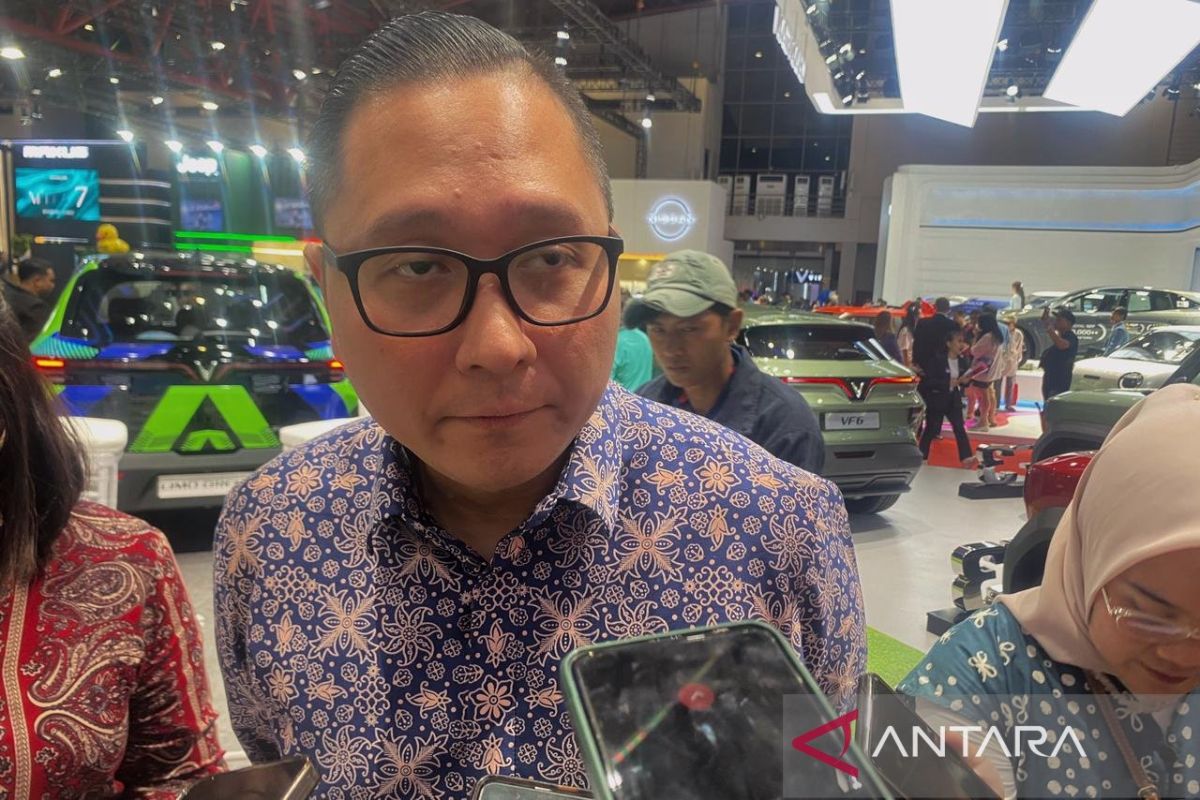
A higher ownership limit should only be possible after obtaining OJK approval and following an examination of the source of funds, affiliations, and the purpose of ownership.
PermataBank chief economist Josua Pardede has recommended a highly dispersed ownership structure with a relatively low ownership cap for any single party, for example in the range of 5-10 percent, under the demutualisation scheme for the Indonesia Stock Exchange (IDX).
He also suggested that a higher ownership limit should only be possible after obtaining approval from the Financial Services Authority (OJK) and following an examination of the source of funds, affiliations, and the purpose of ownership. This measure serves as the first mitigation to ensure that ownership does not develop into control over the IDX.
“More importantly, the Ministry of Finance, Bank Indonesia and Danantara must not collectively form a group that has positive control or the ability to block strategic decisions of the IDX,” Josua said in a written response to ANTARA in Jakarta on Friday.
As is known, Law Number 4 of 2026 states that the Ministry of Finance, Bank Indonesia and Danantara may become shareholders of the IDX as stipulated in Article 8B paragraph (1), while such ownership must still maintain the independence of the Stock Exchange as regulated in Article 8B paragraph (2).
Josua assessed that state involvement in IDX ownership is not automatically detrimental because public shareholders can provide an anchor for national interests, strengthen the continuity of investment in market infrastructure, and reduce the risk of the IDX being controlled by a group of securities firms or particular investors.
The law has even anticipated the issue of concentration by explaining that the founders of the Stock Exchange must not be affiliated with one another and that ownership needs to be widely open to prevent collusion and market domination by particular groups.
However, ownership by each institution still needs to take into account potential conflicts of interest. Josua explained that for the Ministry of Finance, conflicts may arise because capital market policy can intersect with state financing needs and the interest of deepening the financial market.
Therefore, if the Ministry of Finance becomes a shareholder, its ownership must not influence operational decisions relating to listed companies, trading, rule enforcement, or disciplinary decisions.
Meanwhile, the potential conflict of interest for Bank Indonesia is more institutional in nature. BI has a mandate to maintain the stability of the rupiah, the payment system, and financial system stability to support sustainable growth.
Accordingly, if BI becomes a shareholder of the IDX, Josua believes that its ownership should be viewed as strategic ownership for the interest of stability and market deepening, not as a commercial investment pursuing profit and dividends.
In addition, BI should also not be in a position that raises questions about whether monetary policy or market development is influenced by its interest as an IDX shareholder.
As for Danantara, it has a more direct potential conflict of interest if companies in its portfolio are listed companies or will seek funding through the IDX.
In such a condition, Danantara could find itself on two sides at once, namely as an IDX shareholder and as a party with an interest in the listing or supervisory decisions concerning particular companies.
Therefore, according to Josua, Danantara’s ownership needs to be accompanied by a strict prohibition on influencing the listing process, trading suspension, information disclosure, disciplinary actions, or delisting of companies with which it has a relationship.
Josua reminded that the OJK also needs to look at affiliations as a whole. Shareholders that are formally different but have the same controller, economic relationship, or voting agreement must be treated as a single group.
“The actual beneficial owner must be disclosed. In this way, the ownership limit cannot easily be circumvented by using several legal entities,” he explained.
He also did not recommend a model in which one strategic shareholder automatically receives one commissioner seat. If every large institution obtains a seat based on its ownership, the IDX Board of Commissioners would turn into an arena for representing interests.
According to him, members of the Board of Commissioners and Board of Directors must be selected based on capability, integrity, market experience and independence, not because they are delegates of the Ministry of Finance, BI, Danantara, securities firms, or particular investor groups.
For the Board of Commissioners, Josua recommended a strong majority, around two-thirds, to be genuinely independent of large shareholders, Exchange Members, large listed companies, the Ministry of Finance, BI and Danantara.
The chairman of the board of commissioners should also be independent. Active officials who directly make decisions relating to monetary policy, state financing, state investment management, or investment decisions concerning listed companies should not concurrently serve as IDX commissioners.
Meanwhile, the Board of Directors must be entirely professional and must not use a division of seats based on ownership groups. Appointments should still be made through an assessment of capability and propriety by the OJK.
“The term of office, performance measures, and dismissal must also not be so easily controlled by a single shareholder that management feels it has to please a particular group,” Josua said.
Source: jawawa.id (https://jawawa.id/newsitem/economist-proposes-low-individual-ownership-cap-for-indonesia-stock-exchange-demutualisation-1786110945)
Originally published by Antara (Indonesian) (https://www.antaranews.com/berita/5684809/soal-demutualisasi-bei-ekonom-usul-porsi-kepemilikan-rendah-per-pihak), translated from Indonesian