
Economist Proposes Keeping Indonesia’s Mining Revenues Out of the State Budget, Following Norway’s Example
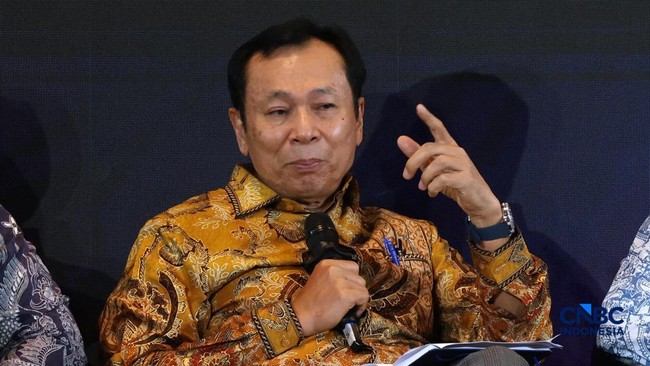
Jakarta, CNBC Indonesia — Senior economist and founder of the CReco Research Institute Raden Pardede believes Indonesia could manage state revenue from natural resources through an endowment fund, or sovereign wealth fund.
He said Norway had already adopted a similar policy. The country has an endowment fund called Norway’s Oil Fund. Its oil and gas income does not all flow directly into the state budget (APBN), but is managed through the fund.
According to the official website of Norges Bank Investment Management, the fund managed US$2,296 billion as of August 2026. The money is managed and invested in a range of instruments, including equities, fixed-income securities and infrastructure.
“[The revenue] goes into a sovereign wealth fund and is managed. They hold various shares, including technology stocks. In this way, they are preparing for future generations. They will not be poor,” Raden said on CNBC Indonesia’s Cuap Cuap Cuan programme, as quoted on Monday (9 November 2026).
Raden emphasised that Indonesia’s natural resources could be depleted within the next 10 to 15 years. Revenue from those resources should therefore be invested for future generations rather than spent entirely on the current one. Potential areas for investment include manufacturing technology, biotechnology, agribusiness and supply chains that can deliver long-term benefits.
“What should we do with revenue from coal, nickel and copper? We know these natural resources will run out. Where should we invest the money? Investing it in property or in more mining, for example, would not be quite right, because these resources will be depleted,” he said.
He said Saudi Arabia was pursuing a similar policy, recognising that its natural resources would eventually run out. The country has begun making large-scale investments in technology, research and development, and future technologies.
Raden said he did not know the precise amount of Indonesia’s natural-resource revenue that could be invested for the long term. He stressed that Indonesia could make use of its natural resources today, but should not spend the proceeds solely on the current generation.
He believes such a policy could help Indonesia avoid a wave of protests by young people, such as those recently seen in European countries including Germany and France.
State non-tax revenue (PNBP) from dividends paid by state-owned enterprises (SOEs) is already no longer paid into the state treasury, as the dividends are managed by the Danantara Investment Management Agency. This has also contributed to lower PNBP in 2025 than in 2024. The Ministry of Finance reported that total PNBP was Rp534.1 trillion, around Rp50 trillion less than the Rp584.4 trillion recorded the previous year.
Suahasil Nazara, who was then deputy finance minister, said the decline was due to SOE dividends being managed by BPI Danantara rather than paid into the state treasury.
“Remember that this PNBP category includes SOE dividends, which were initially due to be paid into the 2025 state budget. But under Law No. 1 of 2025, they are now managed by Danantara,” Suahasil said at a press conference on Thursday (9 January 2026).
Source: jawawa.id (https://jawawa.id/newsitem/economist-proposes-keeping-indonesias-mining-revenues-out-of-the-state-budget-following-norways-example-1794225039)
Originally published by CNBC Indonesia (https://www.cnbcindonesia.com/news/20261109165105-4-783660/ekonom-usul-setoran-tambang-ri-tak-masuk-apbn-tiru-praktik-norwegia), translated from Indonesian