
Economist: PMI Decline a Momentum to Strengthen National Industry
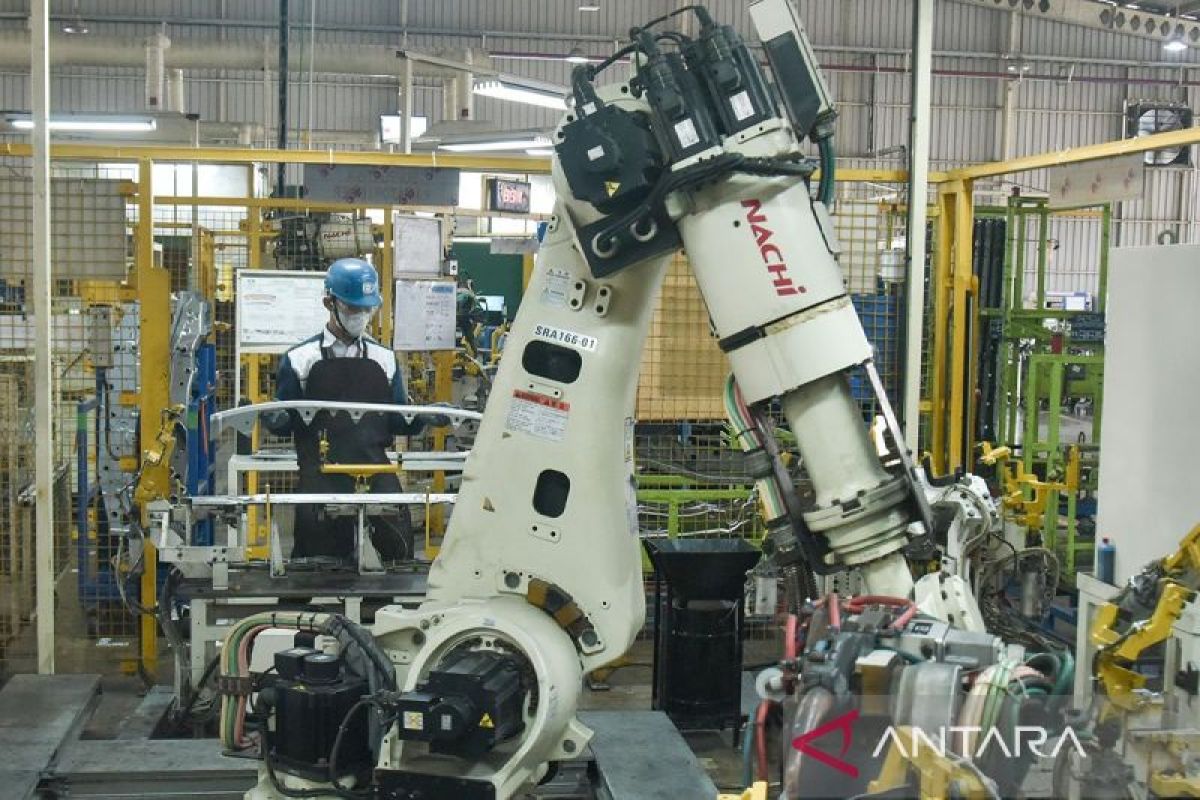
Economist and Rector of Paramadina University Didik J Rachbini has stated that the decline in Indonesia’s manufacturing Purchasing Managers’ Index (PMI) to 46.9 in June 2026 should be a momentum to strengthen national industrial transformation through quality investment and an improved business climate. According to Didik, a manufacturing PMI below the 50 level indicates the sector is facing challenges, necessitating more consistent policies to enhance manufacturing competitiveness in the long term. ‘This PMI figure is an indication that our industrial sector has been ailing for a long time and has now entered a red danger zone at an index level below 50,’ Didik said in an official statement received in Jakarta on Sunday. He said strengthening the industrial sector is important because economic growth requires support from robust manufacturing activity, productive investment, and job creation. According to him, the business world needs policy certainty, bureaucratic simplification, and incentives that can increase investment interest in the industrial sector. ‘Businesses will not invest as long as there are no clear policies, convoluted bureaucratic obstacles, and inadequate incentives to make the industry grow rapidly,’ he stated. Didik assessed that industrial transformation must be accompanied by deregulation and debureaucratisation to increase productivity while strengthening the competitiveness of Indonesian manufacturing. He cited the example of Indonesia recording economic growth of around 7-8 percent with industrial sector growth reaching 10-12 percent in the 1980s to 1990s when industrial development policies were implemented consistently. According to Didik, this experience shows that strengthening the industrial sector can be a driver of sustainable economic growth. He also noted that Indonesia can learn from Vietnam, which built an export-oriented industry through quality foreign direct investment (FDI) and subsequently improved domestic industrial capabilities through technology transfer and innovation. ‘Vietnam’s industrial strategy is an outward-looking strategy, exactly the same as what Indonesia did in the 1980s. The stages involve attracting quality FDI,’ he said. According to him, Vietnam’s success in achieving 8 percent economic growth is inseparable from industrial transformation policies implemented consistently over the last two to three decades. He explained that in July 2026, the World Bank classified Vietnam as an upper-middle-income country after its gross national income (GNI) per capita reached approximately US$4,970, surpassing the threshold of US$4,636. He expressed hope that consistent strengthening of industrial policy, improvement of the business climate, and enhancement of investment quality could be steps to increase manufacturing competitiveness while supporting national economic growth amid global economic challenges. ‘Without concrete steps to revive the industrial sector and improve the business climate, Indonesia risks falling further behind neighbouring countries in the ASEAN region,’ Didik stated. Meanwhile, the Ministry of Industry stated that the national industrial sector remains optimistic about growth despite facing global challenges. This is reflected in the June 2026 Industrial Confidence Index (IKI), which stood at 52.90, still in the expansion zone. Ministry spokesperson Febri Hendri Antoni Arif said the ministry views the large domestic market, increased government spending, and improving export prospects as factors supporting industry players’ optimism. The government, he continued, is also continuously strengthening downstreaming policies, maintaining raw material supply, expanding the use of domestic products, and opening export market access to boost manufacturing industry competitiveness. Febri emphasised that strengthening the implementation of the Specific Natural Gas Price (HGBT) programme is one of the strategic steps to spur optimism in the manufacturing industry amid global economic pressures while enhancing national competitiveness. According to him, the pressure on the manufacturing PMI in June was largely influenced by weakening demand and rising production costs, thus requiring the strengthening of various strategic policies. ‘We need to view this condition as a challenge that must be answered through strengthening policies to increase the competitiveness of the national industry,’ Febri said. The Ministry of Industry also noted the government’s move to lower the price of liquefied natural gas (LNG) for the industrial sector to US$13 per MMBTU as an effort to maintain industrial competitiveness and prevent layoffs. In addition to strengthening the HGBT implementation, the government is also accelerating the increased use of domestic products, facilitating manufacturing investment, securing the domestic market, and expanding export access to push the manufacturing sector back onto an expansionary path.
Source: jawawa.id (https://jawawa.id/newsitem/economist-pmi-decline-a-momentum-to-strengthen-national-industry-1783241415)
Originally published by m.antaranews.com (https://m.antaranews.com/amp/berita/5636019/ekonom-penurunan-pmi-jadi-momentum-perkuat-industri-nasional), translated from Indonesian