
Economist: PFII Needs Strong Foundation Before Tax Incentives
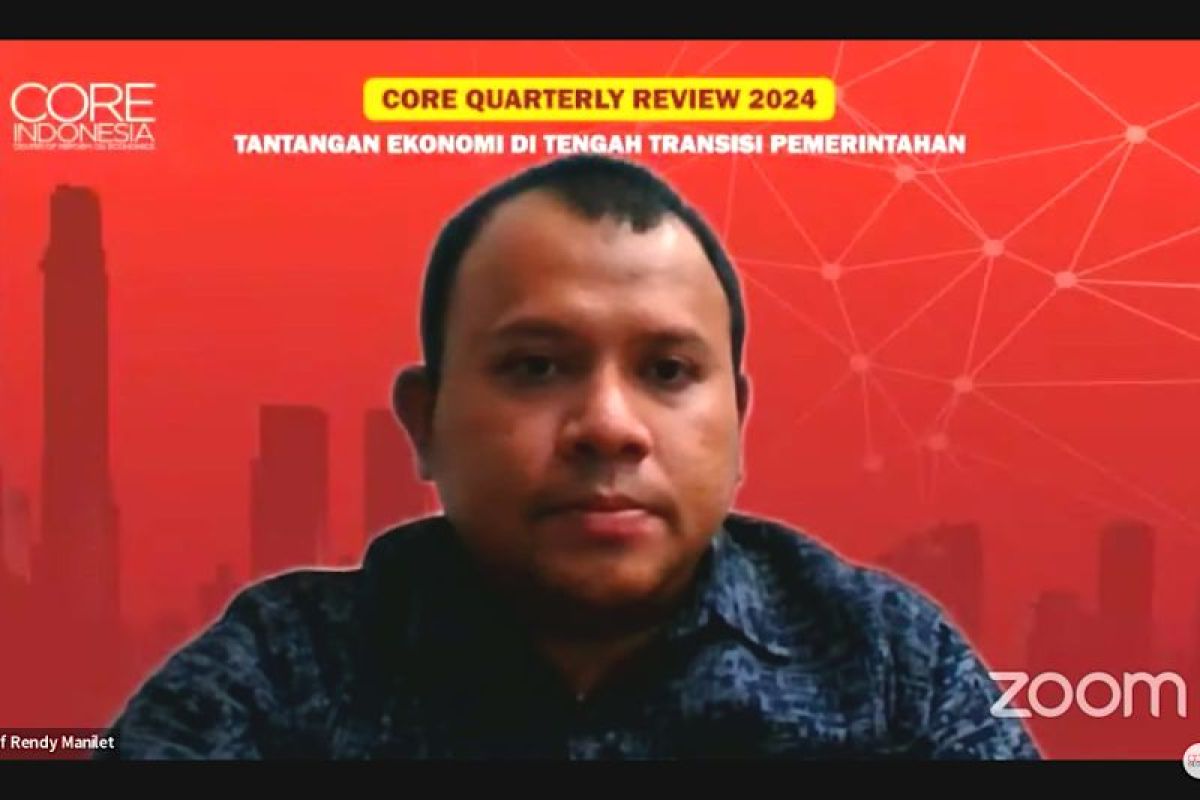
Economist Yusuf Rendy Manilet from the Center of Reform on Economics (CORE) believes the planned Indonesian International Financial Centre (PFII) requires a strong foundation before offering tax incentives to attract investors, including legal certainty and credible regulators. Based on the experience of various financial centres, he noted that investors also consider the ease of capital repatriation, deep financial markets, and certainty in dispute resolution. “Tax becomes an added value only when the foundation is strong. If the foundation is not ready, overly large incentives become a signal that we are trying to cover structural weaknesses with tax discounts,” he said on Friday. Yusuf also assessed that the effectiveness of tax incentives to attract investors is limited, especially since Indonesia has adopted the 15 percent global minimum tax under the OECD’s Pillar Two. For large multinational companies, if Indonesia does not collect the tax, the shortfall can be collected by the investor’s home country, causing Indonesia to lose potential revenue without genuinely increasing investment appeal. The greatest benefit might be enjoyed by entities outside the scope of such rules, like family offices or medium-sized investment funds. He added that the challenge in supervision is not about increasing the number of supervisory bodies, but ensuring the regulatory design does not create loopholes for abuse from the outset. Facilities should be limited to entities with genuine economic activity in the zone, not just those shifting their administrative address. “It is no less important that tax facilities do not become a gateway for diverting income that actually originates from Indonesia. If that happens, the PFII will not create new investment but merely shift the tax base from one region to another,” he said. Yusuf also warned of the high risk of round-tripping, noting that some Indonesian capital has historically returned through other jurisdictions and is recorded as foreign investment. If the PFII’s design is not careful, the zone could become a cheaper channel for such practices. Therefore, oversight must go beyond identifying the investor’s country of origin to identifying the ultimate beneficial owner and ensuring incoming funds are genuinely new capital. From a governance perspective, he views the credibility of the regulator as far more important than the size of fiscal incentives. The regulator must be independent from the zone’s management and business actors to avoid conflicts of interest. Investors also need certainty that contracts are enforceable, disputes are resolved quickly, rules do not change arbitrarily, and capital can flow in and out without hindrance. “Without all that, no amount of tax incentives will be enough to build trust,” he said. The government and the House of Representatives (DPR) are currently drafting the PFII Bill, with approval targeted at a plenary session on 21 July 2026. The bill is expected to be enacted within three months, between June and August 2026. The Chair of Commission XI of the DPR, Mukhamad Misbakhun, revealed the government is proposing a 0 percent tax incentive for businesses in the PFII zone for up to 50 years. “Personally, I think the incentive should be permanent as long as the PFII exists, but the government wants 50 years. However, 50 years is okay, because we will see how things develop over the next 50 years,” he said at an investment forum.