
Economist: Pertamax price adjustment maintains investor confidence
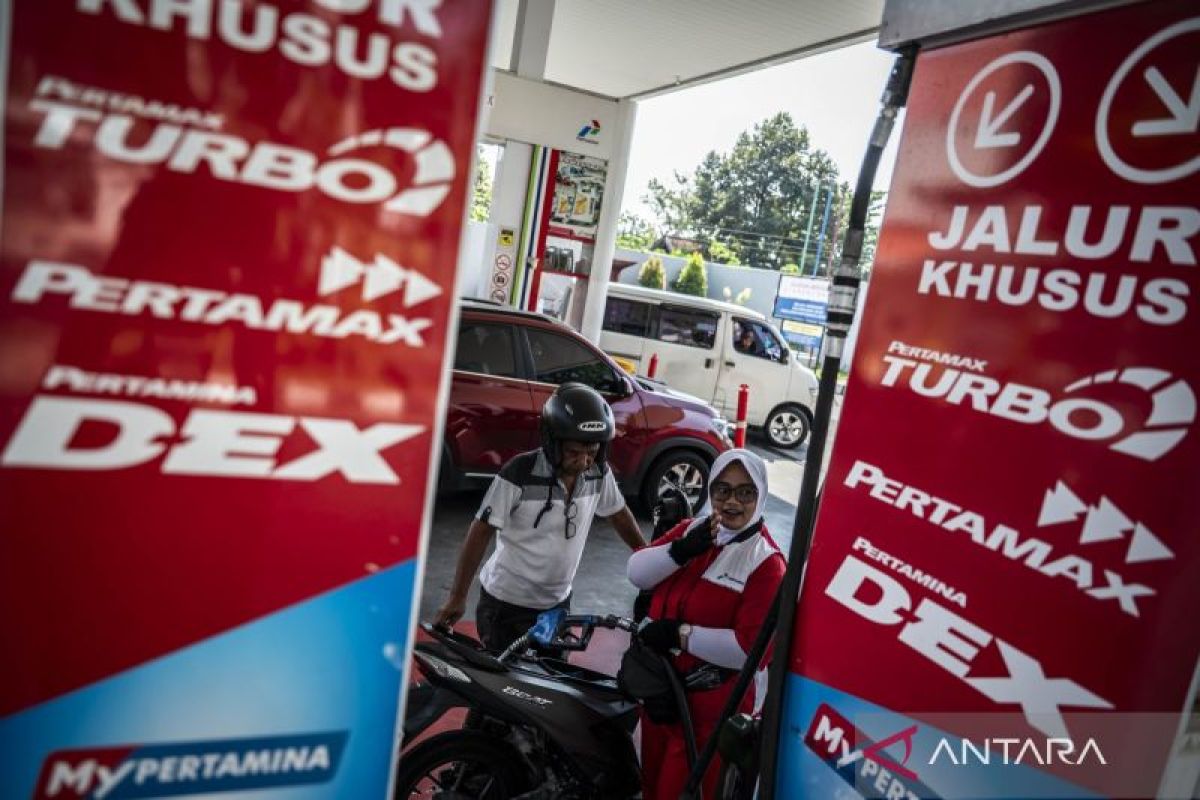
Jakarta - Surabaya State University economist Hendry Cahyono stated that the adjustment in the price of Pertamax fuel aims to maintain investor confidence and the company’s financial health. “Investors look at profit ratios and financial performance. If it keeps losing money, who would want to invest?” Hendry said in a statement received in Jakarta on Saturday. Hendry explained that Pertamina has been using company bridging funds to keep Pertamax below its economic price. However, Pertamina’s bridging funds are essentially a temporary instrument to cushion price spikes so they are not immediately felt by the public. When the rupiah exchange rate and oil prices continue to rise, he said, the room to maintain that policy becomes increasingly narrow. “Pertamina’s bridging funds are also limited. Because Pertamax is a non-subsidised fuel. There is no state budget subsidy in it. So it purely follows the market price,” Hendry said. He added that if Pertamina continuously bears the price difference without adjustment, this condition could erode the company’s profits. Therefore, he assessed that the step to adjust Pertamax prices was difficult to avoid after Pertamina had held the selling price of the non-subsidised fuel below its economic price for the past few months. “Eventually, after being held for some time, the non-subsidised fuel could no longer be restrained and was released to follow the market mechanism. That is why the current increase is quite high. Like it or not, Pertamax had to go up,” Hendry said. The price of Pertamax (RON 92) fuel, previously Rp12,300 per litre, rose to Rp16,250 per litre, and Pertamax Green (RON 95) changed from Rp12,900 per litre to Rp17,000 per litre. Pertamina Patra Niaga Corporate Secretary Roberth MV Dumatubun explained that the adjustment of non-subsidised fuel prices follows prevailing regulations and is part of the implementation of energy governance aimed at maintaining a balance between business sustainability, service quality, and certainty of energy supply for the public.